Apocalypse – not


Matt Ridley (from rationaloptimist.com)

Matt Ridley, writing in Wired, exposes the end-of-the-world cultism that infects environmental activism, and shows how in almost every case, they got it spectacularly wrong.

From SARS to mad cow disease to acid rain to ozone holes, the environmentalists cannot resist the temptation to invoke apocalyptic prophesies to scare the public witless (and secure more funding perhaps?).

What’s the betting that climate alarmism will eventually be relegated to the dustbin of failed environmental scares? They all have several things in common:

  • an element of reality, which can be large or small;
  • which in each case is elevated to a full-blown scare;
  • by activists, who are usually driven by emotional, political, financial or other non-scientific motives;
  • the scare will command wall-to-wall media coverage, often for many years;
  • eventually, however, possibly decades later, it will be shown to have been exaggerated;
  • followed by a collective wringing of hands and gnashing of teeth from those in power;
  • and the public becomes ever more cynical and untrusting of such prophesies in the future.

In the climate debate, the extraordinary hysteria of the alarmists has polarised the debate to such an extent that outright denial (no matter how irrational) has sprung up almost out of necessity to counter it. Balanced elucidation of a potential crisis usually results in balanced responses – frenzied Chicken Little rants will inevitably result in precisely the same in response.

Ridley correctly concludes that the middle ground is where the debate should be focussed:

So, should we worry or not about the warming climate? It is far too binary a question. The lesson of failed past predictions of ecological apocalypse is not that nothing was happening but that the middle-ground possibilities were too frequently excluded from consideration. In the climate debate, we hear a lot from those who think disaster is inexorable if not inevitable, and a lot from those who think it is all a hoax. We hardly ever allow the moderate “lukewarmers” a voice: those who suspect that the net positive feedbacks from water vapor in the atmosphere are low, so that we face only 1 to 2 degrees Celsius of warming this century; that the Greenland ice sheet may melt but no faster than its current rate of less than 1 percent per century; that net increases in rainfall (and carbon dioxide concentration) may improve agricultural productivity; that ecosystems have survived sudden temperature lurches before; and that adaptation to gradual change may be both cheaper and less ecologically damaging than a rapid and brutal decision to give up fossil fuels cold turkey.

We’ve already seen some evidence that humans can forestall warming-related catastrophes. A good example is malaria, which was once widely predicted to get worse as a result of climate change. Yet in the 20th century, malaria retreated from large parts of the world, including North America and Russia, even as the world warmed. Malaria-specific mortality plummeted in the first decade of the current century by an astonishing 25 percent. The weather may well have grown more hospitable to mosquitoes during that time. But any effects of warming were more than counteracted by pesticides, new antimalarial drugs, better drainage, and economic development. Experts such as Peter Gething at Oxford argue that these trends will continue, whatever the weather.

Just as policy can make the climate crisis worse—mandating biofuels has not only encouraged rain forest destruction, releasing carbon, but driven millions into poverty and hunger—technology can make it better. If plant breeders boost rice yields, then people may get richer and afford better protection against extreme weather. If nuclear engineers make fusion (or thorium fission) cost-effective, then carbon emissions may suddenly fall. If gas replaces coal because of horizontal drilling, then carbon emissions may rise more slowly. Humanity is a fast-moving target. We will combat our ecological threats in the future by innovating to meet them as they arise, not through the mass fear stoked by worst-case scenarios.

Read it all, and enjoy Ridley’s list of apocalyptic predictions that didn’t come to pass.

Matt Ridley blogs at Rational Optimist.

(h/t WUWT)

ABC Environment on Muller and crumbling scepticism


Sara Phillips

This article, by ABC’s environment editor, Sara Phillips (pictured), encapsulates all that is wrong with the national broadcaster’s treatment of the climate debate. Written, as always, from a position of belief, and institutionally critical of any dissent, Phillips attempts to show that scepticism is crumbling in the face of ever-mounting evidence to the contrary:

American physicist Richard Muller is one climate sceptic who has recently changed his mind after reviewing the evidence.

Muller crunched a bunch of numbers to do with global temperatures and announced in the New York Times that he is a “converted sceptic”. It was this opinion piece in arguably the world’s most influential paper that set tongues wagging about climate change all over again.

Muller had previously been claimed by those unconvinced by the science as one of their own, because he questioned the validity of Mann’s ‘hockey stick’ graph, used by Al Gore in his film An Inconvenient Truth.

Muller was never a sceptic, and there are plenty of rusted on believers who have problems with both Mann’s hockey stick and AIT, which is nothing more than a propaganda film. Muller’s subsequent evidence-free claim of attribution to human causes has led to widespread ridicule from within the warmist community.

She then attempts to frame Bjorn Lomborg as a convert from scepticism, using some highly selective quotes from past newspaper interviews:

Bjorn Lomborg is another high-profile climate sceptic who changed his mind after reviewing the evidence. He now believes climate change is real, but that it won’t be the calamity predicted by some.

However, Lomborg directly addressed his alleged switch in a Guardian article cited indirectly:

He reiterates that he has never denied anthropogenic global warming, and insists that he long ago accepted the cost of damage would be between 2% and 3% of world wealth by the end of this century. This estimate is the same, he says, as that quoted by Lord Stern, whose report for the British government argued that the world should spend 1-2% of gross domestic product on tackling climate change to avoid future damage. (source)

He has never doubted the role of CO2, but has rightly questioned the cost-benefit analysis of the proposed solutions. Phillips then describes Alan Jones as “frothing” to David Karoly. Whether you agree with Jones or not, Phillips would never describe a consensus climate scientist as “frothing”, a highly inappropriate term to use. But it just helps to paint the picture of “deniers” as being deluded and crazy.

Of course there is a spectrum of views on climate – as she points out – which range from outright disbelief that temperatures are rising at all to acceptance of a measurable human signal in the global temperature record. However, she portrays this range of views in a very simplistic manner in an attempt to ridicule those who dare question the consensus.

Her conclusion appears to be that scepticism is on the wane and that “denial” is harder to sustain. But her view, distorted as it is by the prism of belief in AGW, fails to appreciate that the majority of sceptics accept the role of CO2 and that there is a human contribution to warming.

However, the reality is that there are problems with the surface temperature record, and there are problems with feedbacks in climate models, and there are serious questions to be answered regarding the proposed mitigation policies in response. Nothing in Muller’s alleged conversion changes any of those issues.

More importantly, she completely ignores the fact that, due in part to an endless barrage of scare stories which have failed to eventuate, scepticism of the alarmist claims of The Cause™ has increased substantially over the past decade, to the point where a significant proportion of the public are now highly suspicious of the pronouncements of climate scientists and government advisers such as Tim Flannery.

Unfortunately, the article is just the latest in a very long line of examples of ABC’s climate groupthink, where the utterances of climate scientists are beyond reproach and questioning of the consensus is frowned upon. That is not how science works: the motto, which the ABC, our taxpayer-funded and supposedly impartial national broadcaster, would do well to remember, is “question everything”.

Read it here.

CSIRO: oceans are changing


Impartial?

The latest “ocean report card” is published today from Australia’s scientific sausage factory:

Key findings show

  • warming sea temperatures are influencing the distribution of marine plants and animals, with species currently found in tropical and temperate waters likely to move south
  • new research suggests winds over the Southern Ocean and current dynamics are strongly influencing foraging of seabirds that breed in south-east Australia and feed close to the Antarctic each summer
  • some tropical fish species have a greater ability to acclimatise to rising water temperatures than previously thought
  • the Australian science community is widely engaged in research, monitoring and observing programs to increase our understanding of climate change impacts and inform management
  • adaptation planning is happening now, from seasonal forecast for fisheries and aquaculture, to climate-proofing of breeding sites for turtles and seabirds.

Led by CSIRO, more than 80 Australian marine scientists from 34 universities and research organisations contributed to the 2012 report card. The report card draws on peer-reviewed research results from hundreds of scientists, demonstrating a high level of scientific consensus.

As with anything from the CSIRO, we have to be very wary of its alleged impartiality. CSIRO has become a highly politicised, environmental activist organisation rather than a free-thinking scientific body, which is funded by a government that accepts the pronouncements of the IPCC without question and is committed to taking action on climate change. Readers can make up their own minds.

Source.

CSIRO silliness


A few idle minutes with a marker pen and Photoshop, inspired by yet another CSIRO scare story today:

I think I’m becoming vegetarian…

Lomborg on extreme weather myths


© Scientific American

Climate sense

UPDATE: Australia’s own local alarmism “sausage factory”, CSIRO, comes up trumps right on cue, predicting “more droughts, floods and cyclones” as a result of “global warming”:

“SOUTH Pacific island nations will be hit by almost twice as many droughts, floods and extreme tropical cyclones over the next 80 years due to global warming, according to research led by the CSIRO.

The study, published in Nature today, suggests that the countries will face an even tougher time adapting to climate change than previously thought. Most previous studies have focused on sea level rise.” (source)

Apparently, they selected the best climate models (translation: least worst) and used those. So that’s OK, then.

As has been said many times on this blog, there is no weather condition that would not be “consistent with” some global warming model somewhere or other. More rain: global warming. More drought: global warming. More snow: global warming. Less snow: global warming. Etcetera etcetera.

So whenever there is an episode of extreme weather, the alarmists crawl out of their holes to link it to “global warming” in order to advance The Cause™. As always, we should ask what weather would “not be consistent” with their projections? None. Zip. Nada. It’s our old friend the unfalsifiable hypothesis again. Not so much science as astrology.

Bjørn Lomborg, writing in The Australian, takes apart the latest hysteria in the US over links between extreme weather and climate change:

A hot, dry summer (in some places) has triggered another barrage of such claims. And, while many interests are at work, one of the players that benefits the most from this story is the media: the notion of “extreme” climate simply makes for more compelling news.

Consider Paul Krugman, writing breathlessly in The New York Times about the “rising incidence of extreme events” and how “large-scale damage from climate change is happening now”.

He claims that global warming caused the current drought in the US midwest and that supposedly record-high corn prices could cause a global food crisis.

But the UN climate panel’s latest assessment tells us precisely the opposite: for “North America, there is medium confidence that there has been an overall slight tendency toward less dryness (wetting trend with more soil moisture and runoff)”.

Moreover, there is no way Krugman could have identified this drought as being caused by global warming without a time machine: climate models estimate that such detection will be possible by 2048, at the earliest.

[…]

Bill McKibben similarly frets in The Guardian and The Daily Beast about the midwest drought and corn prices.

Moreover, he confidently tells us that raging wildfires from New Mexico and Colorado to Siberia are “exactly” what the early stages of global warming look like.

In fact, the latest overview of global wildfire incidence suggests that, because humans have suppressed fire and decreased vegetation density, fire intensity has declined during the past 70 years, and is now close to its pre-industrial level.

When well-meaning campaigners want us to pay attention to global warming, they often end up pitching beyond the facts.

And while this may seem justified by a noble goal, such “policy by panic” tactics rarely work and often backfire.

Remember how, in the wake of Hurricane Katrina in 2005, Al Gore (and many others) claimed that we were in store for ever more devastating hurricanes?

Since then, hurricane incidence has dropped off the charts; indeed, by one measure, global accumulated cyclone energy has decreased to its lowest levels since the late 70s. Exaggerated claims merely fuel public distrust and disengagement. (source – paywalled)

In which case, I say to Krugman and McKibben: carry on!

Sydney's coldest weekend in four years


Brass monkeys

It certainly felt like it. Another from the Weather Isn’t Climate Department:

The skies are finally clearing in Sydney, allowing it to warm up above average after the coldest weekend in four years.

Today’s sunshine enabled it to reach 19 degrees early in the afternoon, one degree above average, Brett Dutschke, senior meteorologist at Weatherzone, said.

This is noticeably warmer than it got all weekend, which had a 15.6-degree maximum and a wind chill of 10 degrees at times.

Not only was it the coldest weekend since 2008, it was the gloomiest weekend since the start of winter with less than six hours of sunshine. This was quite a contrast to the previous weekend, which had more than three times the amount of sunshine. (source)

Urban warming 'as important as AGW'


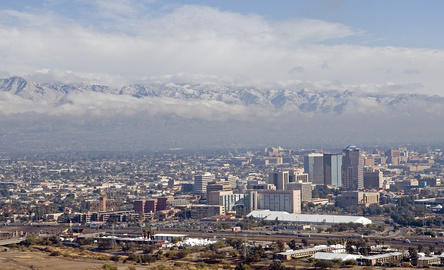
Tuscon, Arizona (Credit: © John Miller / Fotolia)

Whilst the possible warming from AGW in the last 100 years can be measured in tenths of a degree, a new study suggests that warming from urbanisation may be even more significant:

In the first study to attempt to quantify the impact of rapidly expanding megapolitan areas on regional climate, a team of researchers from Arizona State University (ASU) and the National Center for Atmospheric Research has established that local maximum summertime warming resulting from projected expansion of the urban Sun Corridor [the four metropolitan areas of Phoenix, Tucson, Prescott and Nogales] could approach 4 degrees Celsius. This finding establishes that this factor can be as important as warming due to increased levels of greenhouse gases. Their results are reported in the early online edition (Aug. 12) of the journal Nature Climate Change.

[…]

“The actual contribution of urban warming relative to summertime climate change warming depends critically on the path of urbanization, the conversion of natural to urban landscapes, and the degree to which we continue to emit greenhouse gases,” said Alex Mahalov, a co-author and principal investigator of the National Science Foundation grant, “Multiscale Modeling of Urban Atmospheres in a Changing Climate,” which supported the research.

“As well as providing insights for sustainable growth of the Sun Corridor and other rapidly expanding megapolitan areas, this research offers one way to quantify and understand the relative impacts of urbanization and global warming,”said Mahalov, the Wilhoit Foundation Dean’s Distinguished Professor in ASU’s School of Mathematical and Statistical Sciences. (source)

The abstract is here.

MUST LISTEN: Lord Oxburgh speaks on climate and Climategate


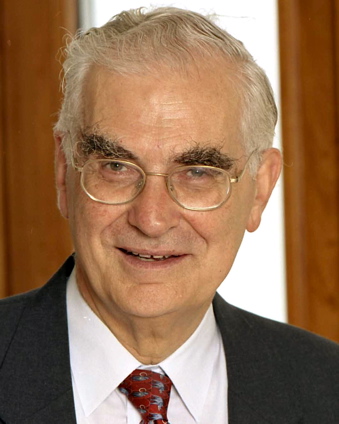
Lord Ron Oxburgh

Lord Oxburgh is in Queensland for the 34th International Geological Congress and granted a 20 minute audience to ABC host Steve Austin. Oxburgh’s inquiry into the Climategate affair was superficial and failed to ask the right questions of the right people. It was also hopelessly biased, and allowed the “accused” to select the “evidence” on which the inquiry was based.

Andrew Montford’s review of the inquiries (PDF here) concluded:

The Scientific Assessment Panel headed by Lord Oxburgh was chosen so that only a minority of members could be expected to look at the evidence with ‘questioning objectivity’. Despite their claim to the contrary, the research papers the panel examined were not selected “on the advice of the Royal Society.” They were, in reality, selected by UEA itself and were apparently approved by its director, Professor Phil Jones. The papers examined avoided most of the key criticisms of CRU scientists’ published work and all of the criticisms relating to their involvement in IPCC report. No records were kept of interviews and important papers have been destroyed.

Oxburgh himself was compromised from the outset, being president of the Carbon Capture and Storage Association and chairman of a company involved in construction and operation of windfarms. This obvious conflict of interest didn’t trouble Oxburgh clearly. I wonder if the same blind eye would have been turned if he was chairman of a fossil fuel company.

That said, he had some interesting things to say on a variety of subjects and I highly recommend listening to the whole interview here. I have transcribed some key sections below.

On Climategate:

“Most of the allegations that had been made basically by bloggers and others against the UEA, certainly against their honesty and reputation, were really unfounded.”

“[Scientists] were like rabbits in the headlights and they did some stupid things, but they weren’t dishonest and really anything that happened then didn’t reflect on the fundamental science of climate change.”

On climate in general:

Austin: You are very worried about climate change – tell me why.

Oxburgh: Well the science is pretty clear, that the things that human beings are doing are likely to be having a big effect on the climate.”

“Doing things about climate change now is equivalent to taking out fire insurance on your house. You hope it’s not going to burn down but it’s smart to be provident.”

On climate models:

“As a modeller myself, the models are only as good as the numbers and the assumptions that you put into them. It isn’t as if there is just one set of models, there are a very very large number of models and they all point in the same direction… is a very strong indicator that they are right.”

Oxburgh and Shell:

Austin: Here you are, the former head of a major oil company and you’re one of the people most worried about climate change.

Oxburgh: Correct.”

On shale gas:

“Gas is the big new kid on the block. You have it in Queensland as coal-bed methane, other parts have it as shale gas. […] The attraction of gas is that it is far less environmentally damaging than coal.”

On fracking:

“Like almost any job it can be done badly or it can be done well and if it’s done badly it can have poor local environmental consequences, but I think done responsibly and sensibly it should be just fine.”

On carbon sequestration:

“There is no doubt that it will work. I can say that categorically. It can be done. […] All of the elements of the process have been established. What hasn’t been done, but which should not present a major problem, is doing these in sequence as a single coherent process. […] The doubts and the questions arise over cost. I think that what you’ve been doing here in Australia with the CCS Institute is a real lesson to the world.”

“Where we really want to see this deployed is in China and India because these are the big burners of coal and we’re talking about the global commons here, doing something for our grandchildren and their children and so on and we need to get the CCS process at a cost which can be afforded in these relatively poor countries.”

On China:

“I think China has as part of its strategy to become the clean tech capital of the world. China is a country with a lot of problems, a third of its population not on mains electricity and extreme poverty, so China is building power stations, dirty power stations by anyone’s standards, because they see this as the path to internal stability.

What they’re doing in parallel, they have the biggest wind turbine industry in the world, they have more wind turbines set up in China, perhaps not all connected to the grid, than any country in the world, obviously they’ve got the solar panel business and I think that they are really pushing to become the clean tech capital of the world. […]

They realise that if everything that the climate scientists predict happens, China will be one of the really big losers and they don’t want that.”

On Peak Oil:

“We’ve got oil around $100 a barrel at the moment, spiking up, spiking down and so on, but I think that the price of oil is likely to rise somewhat, but if the price of oil gets significantly above $100 and looks as if it’s going to stay there, other ways of making oil are going to cut in. For example, you can take natural gas, which is your coal seam gas or gas from any source, and you can actually make a very nice clean liquid from it. The economics of that are quite good – the implications for climate change are not good because it’s a fairly carbon intensive process. […] You may see synthetic oils coming in from other sources as well.

[…]

It looks as if we are going to run out [of oil] gradually, and I say ‘run out’, but perhaps your listeners should appreciate, when an oil company abandons an oil field, in many cases there can be 40 or 50% of the oil still there in place, because it wasn’t worth getting out for the price that they thought they would get for it, so if we become desperate for oil and we can’t find an alternative there are many places you can go back in and actually pull some more out, at enormous cost, but it’s there.”

On biodiesel:

Biodiesel is of local significance and where it’s sensible to produce it locally by all means use it. Crop fuels are not likely to be a global solution simply because plants are very inefficient at the way they use sunlight – about 2% efficiency – and really for this to be a global solution, to transport fuels would just be too area intensive – you just can’t spare the land.”

On ethanol:

It depends how you make ethanol. I said that plants have about 2% efficiency use of sunlight. Sugar cane has 8% and the Brazilians make ethanol from sugar cane and probably you can justify that on environmental grounds, but if you look at the other big source of ethanol, which is for example the United States, where it tends to be made from corn, and where farming subsidies have been used to do this and we have seen corn diverted from human consumption to the production of liquid fuels, I don’t think it makes common sense or environmental sense.”


Why should we believe anything James Hansen says?


Climate activist (source: PA)

UPDATE [1.35pm AEST]: Pat Michaels writes “[Hansen’s] hypothesis is a complete and abject failure.” and quotes from the paper itself, which states:

“we were motivated in this research by an objective to expose effects of human-made global warming as soon as possible…”

So there you have it. From the horse’s mouth.

The lamestream media has pounced upon James Hansen’s latest announcement, blaming “global warming” for recent heat waves. This article, from the UK Telegraph is as good an example as any, illustrated as it is with a flattering portrait of the great man:

Recent heat waves can only be attributed to climate change, a top US scientist has warned.

James Hansen, who cautioned of the dangers of climate change as long ago as 1988, said the deadly European heat wave of 2003, the Russian heat wave of 2010 and the catastrophic droughts in Texas and Oklahoma last year could all be linked to climate change.

He predicted the same would also be true of the hot summer the US is currently experiencing.

Dr Hansen, director of the NASA Goddard Institute for Space Studies, reached his conclusions after he and his colleagues analysed the past 60 years of global temperatures.

Writing in The Washington Post, he said: “Our analysis shows that for the extreme hot weather of the recent past there is virtually no explanation other than climate change. (source)

The Telegraph doesn’t bother to look for any alternative viewpoint, merely parroting what Hansen says with no critical questioning or thought. It’s left to the blogosphere to provide that.

The ABC does much the same, including rehashing the Richard Muller “conversion” non-story, just in case you missed it the first time (unlikely if you rely on ABC for your news).

But in any case, why should we believe anything Hansen says in the first place? This is a person whose activism has completely swamped any vestige of impartial scientific enquiry, even going so far as to get himself arrested four times at environmental demonstrations. How can Hansen be relied upon to provide unbiased scientific conclusions in such circumstances?

What would happen if Hansen were to be confronted with evidence that challenges his entrenched position? Would he come out publicly and say it or simply post it down the memory hole because it doesn’t fit the agenda? You decide.

Even some of Hansen’s colleagues are sick of his surrender to activism (and kudos to the New York Times for actually bothering to seek an alternative perspective):

Martin P. Hoerling, a researcher with the National Oceanic and Atmospheric Administration who studies the causes of weather extremes, said he shared Dr. Hansen’s general concern about global warming. But he has in the past criticized Dr. Hansen for, in his view, exaggerating the connection between global warming and specific weather extremes. In an interview, he said he felt that Dr. Hansen had done so again.

Dr. Hoerling has published research suggesting that the 2010 Russian heat wave was largely a consequence of natural climate variability, and a forthcoming study he carried out on the Texas drought of 2011 also says natural factors were the main cause.

Dr. Hoerling contended that Dr. Hansen’s new paper confuses drought, caused primarily by a lack of rainfall, with heat waves.

“This isn’t a serious science paper,” Dr. Hoerling said. “It’s mainly about perception, as indicated by the paper’s title. Perception is not a science.” (source)

In reality, I suppose we should be glad that Hansen is out there making this kind of noise. Every exaggerated claim gradually chips away at the credibility of The Cause. And the eagerness with which the mainstream media regurgitated the story with barely a second thought (with notable exceptions) shows how out of touch they are with reality.

John Christy on climate change


Lubos Motl at The Reference Frame posts a video of Dr John Christy’s testimony to the US Environment and Public Works Committee on global warming. It is well worth watching: