Mainstream media responds to Climategate 2.0


Generic Climategate 2.0 story:

“Waffle, waffle, waffle. UEA. Platitude, platitude. Storm in a teacup. Out of context. Flannel, flannel. Michael Mann. Filthy deniers. Cliché, cliché. Evil plot to ruin Durban. Phil Jones. Science is settled. Rhubarb, rhubarb. Fully investigated. Three hundred enquiries. Scientists cleared of wrongdoing. Waffle, waffle. Al Gore. IPCC robust. 2500 scientists. Yawn, yawn. Move along. Nothing to see here. Hey, look at that polar bear drowning! (© All the world’s media).”

Or in cartoon form:

The usual story from the lame stream media (with apologies)

Reminds me of Lieutenant Frank Drebin in The Naked Gun…

Climategate 2.0


A second release of emails on the second anniversary of Climategate 1. It looks like emails held back from the original release. Currently downloading…

Perfect timing, just before Durban (as it was two years ago, just before Copenhagen)

More to follow but here are some links:

Watts Up With That: Climategate 2.0 emails – They’re real and they’re spectacular!

Jo Nova:  Breaking! Apparently, more emails released. Climategate II?

Here’s the read me file (courtesy of Tallbloke)

[Read more…]

Rich nations "give up" on climate deal as GHGs reach record levels


The ABC thinks particulates and toxins are GHGs…

Greenhouse gases are continuing their steady rise, and the climate is stubbornly refusing to play the game:

The amount of global warming-causing greenhouse gases in the atmosphere rose to a new high in 2010 and the rate of increase has accelerated, the UN weather agency said on Monday.

Levels of carbon dioxide – a greenhouse gas and major contributor to climate change – rose by 2.3 parts per million between 2009 and 2010, higher than the average for the past decade of 2.0 parts per million, a new report by the World Meteorological Organisation found.

“The atmospheric burden of greenhouse gases due to human activities has yet again reached record levels since pre-industrial time,” said WMO secretary-general Michel Jarraud. (source)

No emotive language there. Despite the fact that emissions have risen significantly over the last decade or so, the increase in global temperature has slowed significantly. This alone is sufficient to demonstrate that the hypothesis of “dangerous global warming” is false. As Bob Carter explained in a recent email exchange:

The greenhouse hypothesis, which is almost never formulated correctly in the public discussion, but is “That human carbon dioxide emissions are causing dangerous global warming”. 

Given that the mixing time of the atmosphere is ~1 yr, and that physical radiative effects are instantaneous, a 10 year period is plenty of time to test that hypothesis. And the data that I cited invalidate it.

Note that that DOESN’T mean that humans have no effect on global temperature, because we know they do. What is indicated is that that effect is small, and for the time being lost in the noise of natural variation of the climate system.

So it is fortunate, then, that there is no chance of any global agreement on reducing emissions in the near future, because it would be a complete and utter waste of time and money. Headline of the day, in The Guardian, is not exactly what their moonbattish environmental staff would like to be writing a few days before Durban:

“Rich nations give up on climate treaty until 2020”

Governments of the world’s richest countries have given up on forging a new treaty on climate change to take effect this decade, with potentially disastrous consequences for the environment through global warming.

Ahead of critical talks starting next week, most of the world’s leading economies now privately admit that no new global climate agreement will be reached before 2016 at the earliest, and that even if it were negotiated by then, they would stipulate it could not come into force until 2020.

The eight-year delay is the worst contemplated by world governments during 20 years of tortuous negotiations on greenhouse gas emissions, and comes despite intensifying warnings from scientists and economists about the rapidly increasing dangers of putting off prompt action.

After the Copenhagen climate talks in 2009 ended amid scenes of chaos, governments pledged to try to sign a new treaty in 2012. The date is critical, because next year marks the expiry of the current provisions of the Kyoto protocol, the only legally binding international agreement to limit emissions.

The UK, European Union, Japan, US and other rich nations are all now united in opting to put off an agreement and the United Nations also appears to accept this. (source)

Hang on a minute, didn’t Julia Gillard sell her carbon tax on the premise that Australia was lagging behind the rest of the world? Ah, that was a lie, wasn’t it? In fact, we are at the bleeding edge of climate madness, with our economy set to haemorrhage billions of dollars over the next forty years thanks to a pointless carbon tax which morphs into an ETS, neither of which will do anything for the climate. What it will do, however, is send thousands of jobs overseas, and funnel your hard-earned taxes to developing countries. Great move.

Barely a month after the carbon tax was passed into law, the chance of any global deal, on which all the highly favourable treasury modelling was based, has evaporated. What was that about the rest of the world following Australia’s lead? Greg? Hello?

The reality is that there is no chance of a “global deal” on anything. With 190-odd countries’ competing interests battling it out, the possibility of reaching an agreement about something as simple as what colour the sky is today is all but impossible.

At least this gives us all some breathing space. The Coalition will repeal the carbon tax in 2013, and a few cold winters in Europe and the US, combined with ever increasing fuel poverty, will finally force their governments to think twice about setting nonsensical renewable energy targets. Politicians will begin to realise that adaptation might be a better way of allocating valuable and scarce resources, rather than mitigation which simply won’t work.

By the way, if you would like to relive some of the dramas of Copenhagen, go here.

CSIRO scientist: zero emissions ain't enough


A synthetic tree...

Yet more climate nonsense to spoil my day. It won’t be sufficient to halt dangerous climate change “merely” to reduce CO2 emissions to zero, according to a report on ABC’s AM programme this morning. We need to go further (beyond zero, if you will excuse the pun), and start sucking CO2 out of the atmosphere (no, really):

MIKE RAUPACH: There is very little wiggle room left, perhaps none at this stage and the issue of course is that a large fraction of the CO2 that goes into the atmosphere stays there for a very long time and that means that what we do now has a long-term future shadow. 

SIMON LAUDER: Dr Raupach is part of an international team which used mathematical models to see what will happen to the climate in the long term under various scenarios. He says if emissions aren’t rapidly reduced to zero, future efforts will have to go further and remove CO2 from the atmosphere to prevent warming of more than two degrees. 

MIKE RAUPACH: If we do reduce emissions rapidly then zero emissions will do but even a small leakage in the long term like over a hundred years from now, of about 10 per cent of current emissions, is enough to keep temperatures slowly rising. (source)

“Zero emissions will do”!! Phew, that’s OK then. For as we all know, reducing emissions to zero is the easy bit. You only have to look at global energy consumption to see that we’re really, really close to a fully renewable energy budget (the renewables component of the chart is that wafer thin segment on the right, just in case you can’t quite see it):

Only 90-odd percent to go…

So once we’ve done that, and we’re all living in the cold and the dark, with no cars, buses, planes and electricity, we can then use whatever energy is left over (which won’t be much) to power synthetic trees (like those pictured above) to remove the CO2 out of the atmosphere. It will be an environmentalist’s dream – a landscape littered with useless windmills and fake trees, with no humanity and no prosperity. Just what Bob Brown wants for Australia. And the climate will continue to do exactly what the hell it wants, because that’s what the climate does.

And Lauder gets full marks for conducting, to the letter, the standard ABC interview of a climate alarmist, where the alarmist is allowed to talk as much nonsense as he/she likes completely unchallenged, and without having to account for any of the ridiculous assertions he/she makes. At no point does Lauder challenge the scientific basis of the UN’s 2 degree target, or the reliability of the “mathematical models” of which he is obviously so in awe, or whether adaptation strategies might provide better value for money than mitigation, or whether the release of this story is simply clever timing a few days before yet another pointless climate gab-fest in Durban.

But that would be asking too much of the “groupthink-infested” ABC, wouldn’t it?

IPCC admits uncertainty in extreme weather link


Yasi - no link to climate change

[I know I’m on a break, but this story was too important not to comment – Ed]. The risk of more frequent extreme weather is one of the most potent scare tactics used by climate alarmists and politicians alike. The Greens are the experts at this kind of moral posturing, with the following being a classic example:

GREENS leader Bob Brown is facing mounting condemnation after calling on coal companies to foot the bill for the Queensland flood recovery.

Senator Brown said coal companies, as major climate change contributors, should pay a 40 per cent resources super profits tax to pay for the clean-up. (source)

Or this:

The Australian Greens say Tropical Cyclone Yasi is a “tragedy of climate change”.

The party was heavily criticised after it linked the Queensland floods to climate change and blamed coal miners.

Greens deputy leader Christine Milne says the cyclone is another example of why it is important to cut carbon pollution.

“This is a tragedy, but it is a tragedy of climate change,” she said. (source)

But the Greens don’t care about the facts. They are more interested in pushing their extreme-Left agenda of social change via the Trojan horse of environmentalism, and they will use any tools and tactics they can find to achieve that aim.

The UN is very similar in its response, blaming global warming for increased extreme weather events (naturally to justify its position of advocating urgent action on climate). The Russian heatwave and Pakistani floods were a prime example (see here).

But today we read that a leaked report, astonishingly from the IPCC itself, analysing the link between climate change and extreme weather, has admitted to considerable uncertainties:

WIDELY-HELD assumptions that climate change is responsible for an upsurge in extreme drought, flood and storm events are not supported by a landmark review of the science.

And a clear climate change signal would not be evident for decades because of natural weather variability.

Despite the uncertainties, politicians – including US President Barack Obama in his address to federal parliament yesterday – continue to link major weather events directly to climate change.

Greens leader Bob Brown yesterday highlighted Mr Obama’s climate change comments and said the extreme weather impacts were “not just coming, they are happening”.

But rather than bolster claims of a climate change link, the scientific review prepared by the world’s leading climate scientists for the UN’s Intergovernmental Panel on Climate Change highlights the level of uncertainty. After a week of debate, the IPCC will tonight release a summary of the report in Kampala, Uganda, as a prelude to the year’s biggest climate change conference, being held in Durban, South Africa.

The full report will not be released for several months but a leaked copy of the draft summary, details of which have been published by the BBC and a French news agency, have provided a good indication of what it found.

While the human and financial toll of extreme weather events has certainly risen, the cause has been mostly due to increased human settlement rather than worse weather.

There is only “low confidence” that tropical cyclones have become more frequent, “limited to medium evidence available” to assess whether climatic factors have changed the frequency of floods, and “low confidence” on a global scale even on whether the frequency has risen or fallen. (source – behind paywall)

They can’t even determine the sign of the effect! You can’t get much more uncertain than that!

Overconfidence in its own results by the IPCC is one of the greatest challenges that must be overcome to sweep away the political spin that clouds the IPCC’s reports. Suppression of uncertainty is one of the main criticisms of later reports (especially 2003 and 2007), so an acknowledgement that uncertainty exists is a positive step. It’s very surprising to see the IPCC apparently reporting the science in a more impartial way than has been seen before. Previously such off-message results would have been twisted and spun to keep the agenda going. But here we have the IPCC publishing material which challenges the agenda.

This story is important for two reasons: firstly, that politicians can no longer continue to parade extreme weather events as evidence of climate change to justify their policies, and secondly, it shows (I hope) a change in the attitude of the IPCC, which appears to be more willing to accept the level of uncertainty in the science of climate change in general.

However, I wouldn’t hold out too much hope – the next main report will no doubt be back to business as usual…

ACM on vacation


ACM will be taking a break for a while. Other priorities are demanding more of my attention for the time being, and the passing of the pointless carbon tax into law seemed an appropriate juncture for a time out.

Keep checking the blog roll on the right for the latest news on the fight against global climate madness.

ACM will be blogging again soon.

Cheers, Simon

So that's that, then


The carbon tax we would never have will today pass the Senate, finally legislating the tax that Julia Gillard promised there wouldn’t be, back in August 2010. “Australian climate madness” finally comes true.

Let’s remind ourselves. This is a tax that:

  • will do nothing for the climate – nothing at all
  • is based on corrupted and partial science, influenced by environmental activist groups
  • will disadvantage our economy when most other nations are backing away from climate action
  • is a breach of an express pre-election promise
  • is nothing more than a bribe to buy the support of the Greens, who are today crowing at their “success”
  • commits economic suicide when GFC Mk II is just around the corner
  • the majority of the population opposes.
There isn’t much more to be said. We just have to sit and wait until the next election, and pray that the people of Australia have long memories.

G20 to Australia: "You're on your own" on carbon


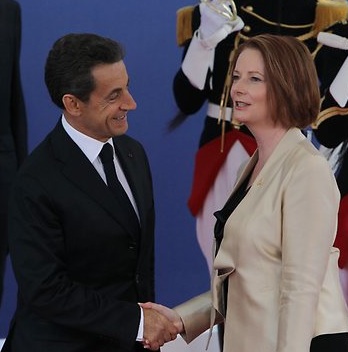
"Congratulations, Julia, on wrecking your economy"

“Courageous” is how the G20 describes Australia’s action on climate change! What a wonderful euphemism for bat-sh*t crazy. Yet Gillard and Combet will no doubt still argue that Australia is being “left behind” and that it’s all in the “national interest” – delusional!

As Europe sinks into economic oblivion, the US debt creeps up by the day, and a GFC Mk II looks ever more likely, the rest of the world is starting to realise that there are more important things than pointless environmental gestures which will be hugely damaging for standards of living but which will do nothing for the climate.

JULIA Gillard’s introduction of a carbon tax has been praised at the latest economic summit for showing the way on climate change but Australia is being isolated within the G20 on carbon pricing as members retreat due to changing priorities and economic pressure.

As the government prepares to cut the carbon tax debate in the Senate to pass the bills with Greens’ support, the final communique from the G20 summit in France recognises Australia’s leading role on climate change.

But with the increased economic pressures from the global debt crisis and a shift in priority to food security, particularly in Africa, climate change action is dropping down the order of importance.

Critics of the G20’s lack of action on climate change have praised Australia’s action as “courageous” and said the diminishing priority for climate change was a “big problem for the G20”.

The shift at the G20 and the praise for Australia expected in the communique highlights the Gillard government’s move ahead of the developed economies on carbon pricing.

While Australia is pursuing the most comprehensive carbon tax in the world to combat the effects of climate change, other G20 members are retreating from emissions trading schemes to cut greenhouse gas emissions, such as Canada, while others are giving greater emphasis to dealing with the immediate effects of climate change. [In other words, adaptation – Ed.]

Australia (and Gillard) are turning into standing jokes on the world stage. How embarrassing.

Read it here.

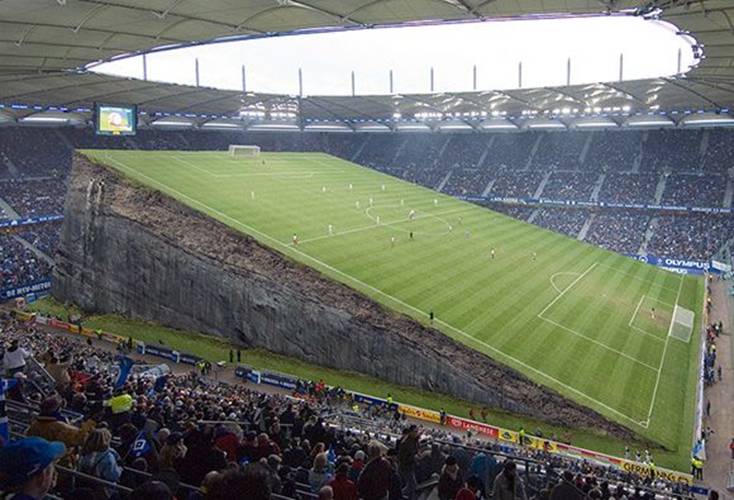
A level playing field


Alarmists playing left to right

Carl Sagan famously said “Extraordinary claims require extraordinary evidence.” In the case of climate change, this could be rewritten to say “Extraordinarily expensive mitigation strategies require extraordinarily unbiased and impartial evidence, resulting from research carried out with the greatest possible levels of scientific integrity.”

In other words, it is the “consensus” camp that is insisting that we take drastic climate action costing trillions of dollars in order to avert their projected catastrophe. Therefore, we should subject their claims to the highest levels of scrutiny and examination before acquiescing to their demands.

Is that what we have? No – in fact, precisely the opposite. A compliant media and scientifically illiterate governments give the consensus boys a free pass. Grey literature abounds in the IPCC reports. Environmental activist groups are in bed with lead authors and scientists. Journalists in the mainstream media are unashamedly advocates for action on climate change. Governments, desperate to appear politically correct, have swallowed the hysterical nonsense of the Greens.

Matt Ridley in his brilliant speech on “Scientific Heresy” (see here) argued:

Suppose I am right that much of what passes for mainstream climate science is now infested with pseudoscience, buttressed by a bad case of confirmation bias, reliant on wishful thinking, given a free pass by biased reporting and dogmatically intolerant of dissent. So what?

After all there’s pseudoscience and confirmation bias among the climate heretics too.

Well here’s why it matters. The alarmists have been handed power over our lives; the heretics have not. Remember Britain’s unilateral climate act is officially expected to cost the hard-pressed UK economy £18.3 billion a year for the next 39 years and achieve an unmeasurably small change in carbon dioxide levels.

At least sceptics do not cover the hills of Scotland with useless, expensive, duke-subsidising wind turbines whose manufacture causes pollution in Inner Mongolia and which kill rare raptors such as [this] griffon vulture.

At least crop circle believers cannot almost double your electricity bills and increase fuel poverty while driving jobs to Asia, to support their fetish.

At least creationists have not persuaded the BBC that balanced reporting is no longer necessary.

At least homeopaths have not made expensive condensing boilers, which shut down in cold weather, compulsory, as John Prescott did in 2005.

At least astrologers have not driven millions of people into real hunger, perhaps killing 192,000 last year according to one conservative estimate, by diverting 5% of the world’s grain crop into motor fuel*.

That’s why it matters. We’ve been asked to take some very painful cures. So we need to be sure the patient has a brain tumour rather than a nosebleed.

“The alarmists have power over our lives.” That is the key point that differentiates the alarmists from the sceptics. If we reverse the situation, with the consensus position being that the likelihood of catastrophic climate change is minuscule and in any event climate mitigation is practically useless, and the sceptics arguing that we should turn our economies upside down to counter what they allege to be a real risk, spending billions of dollars which could be otherwise spent on alleviating poverty or disease, which side of this hypothetical argument would be subjected to the greater scrutiny?

I am not suggesting such uneven scrutiny, merely a level playing field. But at the moment, we are a very long way from that.

Daily Bayonet GW Hoax Weekly Roundup


Skewering the clueless

As always, a great read!