Climate sense in Victoria: climate-driven planning laws relaxed


What the alarmists think will happen…

More climate sense, this time from Victoria, where draconian planning restrictions based on fanciful sea level rise predictions have been “watered down” (ho, ho):

The State Government will relax planning rules designed to address the impact of climate change in town’s along Victoria’s coastline.

The previous Labor government blocked construction in areas that would be affected by a predicted 80 centimetre sea level rise.

A report by the Coastal and Climate Change Advisory Committee recommended reducing those restrictions to a predicted 20 centimetre sea level rise by 2040 for existing towns. (source)

It’s a small step, but at least it’s in the right direction.
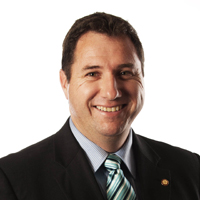
Queensland environment minister questions scale of human climate impact


Climate sense

A glimmer of climate sense from the new Queensland environment minister, who states the realist position that yes, humans affect the climate, but how much we can’t be sure. He should have gone on to say that the remedies proposed are eye-wateringly expensive, will cripple our economy and will do nothing for the climate – maybe he will next time.

The ABC reports this as heresy, of course, and wheels in a “conservationist” to put the ABC’s view, er, I mean the opposing view:

Queensland’s new Environment Minister is the latest politician to voice scepticism about man-made climate change.

Andrew Powell says he is yet to be convinced of the degree to which humans are responsible, but he does support efforts to reduce carbon pollution.

“I believe the climate is changing, I am still to be convinced of the degree to which we are influencing that,” Mr Powell said.

“But having said that, are we polluting the environment? Certainly. Are we using a non-renewable source of energy? Certainly. Do we need to address both of those factors? Most definitely.”

But his comments have alarmed conservation groups.

Toby Hutcheon, from the Queensland Conservation Council, says his comments are inconsistent with the State Government’s official position.

“I hope that Andrew is simply talking as an individual, and not as the responsible minister for Queensland,” Mr Hutcheon said.

“Because that would certainly suggest a change of position by the Government that has long held the view that climate change is a serious threat to Queensland and is being caused predominantly by human activity.” (source)

But there’s more good news as pointless environmental gestures are being wound back, allegedly because the carbon tax will make them redundant. That’s not the correct reason – they are redundant anyway and should be abandoned even without the carbon tax. None of them will do anything for the climate, after all.

ABC finally corrects 2011 ANU death threat story


FOI request

UPDATE: Marc has written to the ABC requesting they amend the sloppy and partisan wording of this update. We’ll see how far he gets…

Thanks to Marc Hendrickx for this update, which now appears on the original 4 June 2011 story. It still however refers to “climate sceptics” as if the only reason they were forced to issue the correction was because of evil deniers, rather than the fact that the story was incorrect:

UPDATE (June 4 2012):  Following  the release  of specific emails under Freedom of Information request, climate change sceptics have claimed that the released emails contradict suggestions that any death threats were received, but a spokesperson for the ANU says the university is standing by its claims that death threats were received. Questions have also been raised about whether one of the released emails did, in fact, constitute a threat to use a gun, with a person involved in the kangaroo culling program claiming the comments were made by him, and were in no way intended as a threat. The specific emails released under FOI were found by the Privacy Commissioner to contain abuse, but not overt threats.

Note the ANU still claims “death threats” were received – I’m still waiting for the ANU to provide them.

Gillard facing 'carbon tax revolt'


Stop burning that money! It's bad for the climate!

By the law of averages, there had to be a few MPs in the Labor party who were smart enough to question the nonsensical reasoning behind the carbon tax (and possibly the futility of any kind of unilateral climate action).

The Sunday Telegraph reports that there may be rumblings on the back benches:

JULIA Gillard faces growing backbench unrest over the carbon tax with sceptics quietly planning to push for changes to the incoming tax – or the leadership.

Labor MPs have voiced concerns about the level of the July 1 fixed carbon price – $23 a tonne – and the timetable to transition to an emissions trading scheme in 2015.

A new caucus sub-committee, created to cool MPs’ anger over the government’s foreign-worker deal with mining magnate Gina Rinehart, is set to be a forum for sceptics to push for change, several Labor MPs suggested.

“I just hate the carbon tax. Never wanted it,” one Labor MP told The Sunday Telegraph.

‘We might have a few like-minded sceptics coming out. If I had my way we wouldn’t be having a carbon tax but that’s not possible.” (source)

Now this would be a fight I want ringside seats and a ton of popcorn for.

Australian 'scientists' refuse access to data


UPDATE: The quote marks around “scientists” in the title have been added because, as a commenter pointed out, real scientists wouldn’t refuse access to data.

A short time ago, ACM wrote of the recent paper by climate activist, sorry, scientist, Joelle Gergis (see here: Hockey Stick lives! In Australia, apparently…) which allegedly showed the last 50 years in Australia were hotter than any other period in the past 1000 years, just like Michael Mann’s hockey stick.

Gergis used to have a WordPress blog which revealed her true activist side, but guess what? It’s been deleted! Image at end of post. Unfortunately, some really annoying blogger at ACM decided to preserve it in Webcite, so you can see it here, and her bio here.

Bishop Hill reports that Steve McIntyre’s requests for data have been met with snotty and offhand refusals:

Steve McIntyre’s latest post seems to me to be of huge importance. The refusal by Joelle Gergis and colleagues to release data behind their paper follows on behind similar refusals from authors in the same clique – principally Raphael Neukom. This stonewalling of reasonable requests represents yet another blow at the credibility of paleoclimate. To make things worse, the credibility of the Gergis paper is shattered by the revelation that it is based on circular reasoning – a fallacy that has been repeatedly noted in paleoclimate papers, yet one which is constantly given the seal of approval by peer reviewers in the field.

Despite the refusal of authors in the Gergis-Neukom clique to release data, as thing stand the IPCC will allow their work to be cited in the Fifth Assessment Report. This seems to me to be a ringing endorsement of pseudoscience. (source)

Gergis’ charming final words to McIntyre:

We will not be entertaining any further correspondence on the matter.

That’s the spirit. Trust us, we’re scientists. If you want the data, it’s available somewhere else – maybe.

You can never delete anything from the Interwebs, Joelle.

Media's double standards on threats


Chris Merritt writes about the threats endured by those on the other side of the climate debate and politics in general, which, naturally, are rarely reported or mentioned by our PC media, whose self-appointed job is to defend the climate consensus:

At the moment, climate change is one of the “hot button” issues that brings out the crazies. But it’s not just climate change.

Melbourne columnist Andrew Bolt has also had threats of physical violence for criticising Islamism and Anita Heiss’s book Am I Black Enough for You?.

He has even been threatened for opposing a national day of mourning for the Black Saturday bushfires.

Bolt puts it down to the morally superior manner of those who play a leading role in setting the tone of public policy debate.

The most startling incident occurred a decade ago when an activist organisation published his home address on its website “along with an exhortation to burn the house down”.

Two weeks ago a filmmaker, whom he named, used Twitter to urge his followers: “Let’s assassinate Andrew Bolt.” It was later removed.

A Greens candidate at the last federal election used Twitter to publish this: “Andrew Bolt is a vile c … of a man. I openly condone hunting him down and beating him to within an inch of his life.” (source)

But hey, Bolt’s fair game right? In the politically correct, groupthink world of ABC and Fairfax, Bolt is the very embodiment of the antichrist. What’s wrong with saying he should be done in?

Comments from the consensus side about their desired treatment of sceptics is of course all waved through without protests, such as these examples:

And conservative journalists are subjected to much the same abuse and threats as the climate scientists for daring to question shoddy and politicised science, or for having the temerity to question why we should be spending billions on a carbon tax which will do nothing for the climate, but we rarely hear anything about that.

Media Watch's Holmes on The Drum


Jonathan Holmes

Jonathan Holmes, presenter of Media Watch, writes a lengthy defence of his team’s reporting of the ANU death threats story on ABC’s The Drum. You can read it here.

The only point I am going to comment on is detail is the following claim:

In any case – and this is a factor which The Australian keeps dodging around, although it is crucial – the 11 emails were in fact irrelevant to the ANU scientists being moved to more secure offices, because that had happened 16 months earlier, in February 2010.

The Canberra Times’s Rosslyn Beeby no doubt knew this, but did not make it clear in her report. The ABC and the AAP don’t seem to have taken it aboard, and certainly didn’t report it back in June 2011. Simon Turnill didn’t understand it when he put in his FOI request.

Well actually, it’s nothing to do with understanding – Beeby didn’t make it clear, as Holmes states, if indeed she did “no doubt” know it. In any event, my FOI request was based on the ABC’s reporting of this event, which says:

Several of Australia’s top climate change scientists at the Australian National University have been subjected to a campaign of death threats, forcing the university to tighten security.

Several of the scientists in Canberra have been moved to a more secure location after receiving the threats over their research.

Vice-chancellor Professor Ian Young says the scientists have received large numbers of emails, including death threats and abusive phone calls, threatening to attack the academics in the street if they continue their research.

He says it has been happening for the past six months and the situation has worsened significantly in recent weeks.

I cannot see any way of construing the above to mean anything other than the following: death threats have been received at ANU in the last six months and we’ve moved staff as a result.

Holmes then quotes a number of emails, none of which contain “death threats”, but simply confirm the unfortunate truth that scientists (along with many others public figures) receive abusive emails from a tiny minority of disturbed individuals. This fact should not have been used as a way to tar all critics of the climate consensus as being a bunch of dangerously unhinged lunatics who would resort to sending death threats to climate scientists because they disagree with what they are saying (the inference – intended or unintended – from the Canberra Times and ABC reporting).

Holmes ends thus:

Who you believe on this matter – The Australian, or Media Watch – should have nothing at all to do with whether or not you accept what the vast majority of qualified scientists are telling us about climate change. 

Science by consensus again. And still the ANU haven’t produced evidence of any death threats to any staff at any time. They are welcome to do so whenever they like and then we’d all be happy to see an end to this farce.

Carbon tax: $10bn up in smoke


Stop burning that money! It's bad for the climate!

It’s been said many times before, but it bears repeating again and again:

The carbon tax will do nothing for the climate.

Terry McCrann points out the blindingly obvious (to everyone except Julia Gillard and the Labor/Green government), namely that China’s increasing emissions will dwarf any reduction in Australia’s already tiny carbon footprint.

Australia’s planned reduction of 5%, of the 1.5% of global emissions it produces, equates to less than eight hundredths of one percent of global emissions. Even if we assume global emissions remain constant, such a tiny change will make no difference to the climate.

But of course, as the alarmists like to say, it’s worse than we thought! Since global emissions will continue to increase as China chews through more and more coal every year to support its rapidly growing economy, Australia’s token reduction will be swamped many times over.

So we know that the carbon tax will do nothing for the climate. So what is it for?

It’s a very expensive, very damaging political gesture to keep the Gillard minority government in power by buying the support of the Greens (I wouldn’t pay 10c for a Green, let alone $10bn), and to kowtow to the pointless political correctness that pervades the climate agenda, run as it is by the UN and mega-environmental groups like WWF and Greenpeace.

The Australian roasts Media Watch – again


Media Watch

Your humble correspondent gets another mention in an editorial in The Australian today:

IT’S no surprise that the ABC’s Media Watch has no bite when it comes to scrutinising the national broadcaster’s own news coverage. On Monday night it lost its bark as well. Host Jonathan Holmes fell silent over an issue that he bungled badly the week before — the ABC’s erroneous report in June last year that: “Several of Australia’s top climate change scientists at the Australian National University have been subjected to a campaign of death threats, forcing the university to tighten security.”

The sensationalised story, which followed up a report in The Canberra Times, gained such wide airplay on radio, on television and online that it was picked up internationally by The Guardian and the scientific journal Nature, fuelling a perception that climate sceptics are dangerous fanatics.

The problem was that a crucial element of the story was wrong, which the ABC now concedes — sort of — in a “clarification” buried deep on its website.

But, curiously, most of [Holmes’] wrath was directed at The Australian — for factual news stories that revealed that FOI requests by climate change blogger Simon Turnill had uncovered 11 emails at odds with last year’s ABC report. 

Read the rest here.

And, no, there is still no response from ANU to my questions seeking clarification regarding their claim (in the ABC correction) that they did receive death threats, but just not within the scope of the original FoI…

Climate fears decrease with increasing scientific literacy


Who’da thunk it? The more you know about science, the less likely you are to worry about “global warming”. One of the great myths is that people are sceptical of the global warming scare because they are scientifically ignorant – people like me for example, with a degree in Engineering from the University of Cambridge.

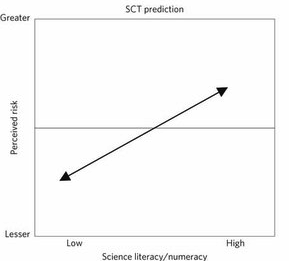
So they assumed that as scientific literacy increased, fear of climate catastrophe would similarly increase:

Dumb sceptics, right?

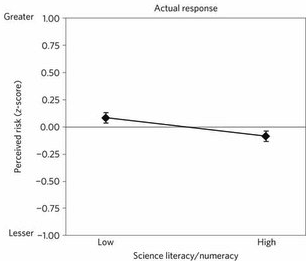
So it was a bit of a blow when the results were precisely the opposite:

Oops. Maybe not.

The abstract reads:

Seeming public apathy over climate change is often attributed to a deficit in comprehension. The public knows too little science, it is claimed, to understand the evidence or avoid being misled. Widespread limits on technical reasoning aggravate the problem by forcing citizens to use unreliable cognitive heuristics to assess risk. We conducted a study to test this account and found no support for it. Members of the public with the highest degrees of science literacy and technical reasoning capacity were not the most concerned about climate change. Rather, they were the ones among whom cultural polarization was greatest. This result suggests that public divisions over climate change stem not from the public’s incomprehension of science but from a distinctive conflict of interest: between the personal interest individuals have in forming beliefs in line with those held by others with whom they share close ties and the collective one they all share in making use of the best available science to promote common welfare.

Paper here.