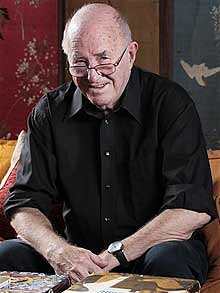
I am delighted that Clive James is back writing TV reviews for the UK Telegraph. When I was a teenager, I devoured his volumes of reviews from The Observer, which made me roar with laughter. It didn’t matter if you hadn’t seen the programme itself, the descriptions were often more entertaining in many cases. His turn of phrase was, and is, wonderful – describing a famous 1979 battle at Wimbledon (or Wmbldn as BBC commentator Harry Carpenter called it), James wrote*:

Frontiers editor throws Lew under a bus
Handbags at ten paces:
The authors of the retracted paper and their followers are doing the climate change crisis a tragic disservice by attacking people personally and saying that it is ethically ok to identify them in a scientific study. They made a monumental mistake, refused to fix it and that rightfully disqualified the study. The planet is headed for a cliff and the scientific evidence for climate change is way past a debate, in my opinion. Why even debate this with contrarians? If scientists think there is a debate, then why not debate this scientifically? Why help the ostriches of society (always are) keep their heads in the sand? Why not focus even more on the science of climate change? Why not develop potential scenarios so that society can get prepared? Is that not what scientists do? Does anyone really believe that a public lynching will help advance anything? Who comes off as the biggest nutter? Activism that abuses science as a weapon is just not helpful at a time of crisis. (link)
Ouch. And that’s from a warmist.
(h/t Bishop Hill)
Science ‘abused’ by Lewandowsky paper, says Frontiers
The journal Frontiers, which by now no doubt wishes it had never heard of Lewandowsky, attempts once again to set the record straight, but ends up stirring the pot even more:
For Frontiers, publishing the identities of human subjects without consent cannot be justified in a scientific paper. Some have argued that the subjects and their statements were in the public domain and hence it was acceptable to identify them in a scientific paper, but accepting this will set a dangerous precedent. With so much information of each of us in the public domain, think of a situation where scientists use, for example, machine learning to cluster your public statements and attribute to you personality characteristics, and then name you on the cluster and publish it as a scientific fact in a reputable journal. While the subjects and their statements were public, they did not give their consent to a public psychological diagnosis in a scientific study. Science cannot be abused to specifically label and point out individuals in the public domain.
Really? Perhaps someone should tell the Human Research Ethics Committee (HREC) at UWA, since, as Steve McIntyre has noted, the ‘application’ was nothing more than a casual email from Lewandowsky to Kate Kirk in the ethics office, which read:
Dear Kate:
this is just to inform you of the fact that I will be writing a follow-up paper to the one that just caused this enormous stir. This follow-up paper will analyze the response to my first paper in the blogosphere, by keeping track of events and conspiracy theories that were launched in response to the publication of my paper.
None of this follow-up research will involve experimentation, surveys, questionnaires, or a direct approach of participants of any sort. Instead, we will be analyzing “Google trends” and other indicators of content that are already in the public domain (e.g. blog posts, newspapers, comments on blogs, that type of thing).
In other words, this research will basically just summarize and provide a timeline of the public’s response.
It is my understanding that this type of work does not require ethics approval as there is no human participation as such—whatever people do and say, they do this in public anyhow, irrespective of whether we then summarize that activity. I would appreciate it if you could confirm this, or point out why this would not be the case.
Regards Steve
Translation: move along, nothing to see here. Note that Lewandowsky claims it was ‘his understanding’ that it didn’t require ethics approval, and the HREC were almost completely taken in by this sleight of hand, their only change being to regard the email as an ‘amendment’ to the earlier ‘moon landing’ approval. The HREC wrote back:
I confirm receipt of your correspondence requesting an amendment to the protocol for the above project.
Approval has been granted for the amendment as outlined in your correspondence and attachments (if any) subject to any conditions listed below.
Any conditions of ethics approval that have been imposed are listed hereunder:
1. Follow-up research – writing of Follow-up paper
If you have any queries, please do not hesitate to contact Kate Kirk on (08) [redacted]
Please ensure that you quote the file reference RA/4/1/4007 and the associated project title in all future correspondence.
Yours sincerely
Peter Johnstone
At no point did anyone within the UWA ethics department raise the concerns outlined by the editor of Frontiers, namely that one cannot provide a psychological diagnosis to identifiable individuals in a journal paper without consent, whether or not that is based on publicly available statements.
When will UWA stop pretending that these papers were subject to proper ethical review?
(h/t Bob K)
Lewandowsky tries to rationalise ‘Fury’ retraction
Popcorn time. Stephan Lewandowsky ties himself in knots attempting to reconcile his unshakeable belief that Recursive Fury was scientifically and ethically sound with Frontiers’ statement that the paper ‘does not sufficiently protect the rights of the studied subjects’ and ‘categorises the behaviour of identifiable individuals within the context of psychopathological characteristics’.
According to Lew:
No other cause was ever offered or discussed by Frontiers to justify the retraction of Recursive Fury. We are not aware of a single mention of the claim that our study “did not sufficiently protect the rights of the studied subjects” by Frontiers throughout the past year, although we are aware of their repeated explicit statements, in private and public, that the study was ethically sound.
This brings into focus several possibilities for the reconciliation of Frontier’s contradictory statements concerning the retraction:
First, one could generously propose that the phrase “did not sufficiently protect the rights of the studied subjects” is simply a synonym for “defamation risk” and that the updated statement therefore supports the contractually-agreed statement. This is possible but it puts a considerable strain on the meaning of “synonym.”
Second, one could take the most recent statement by Frontiers at face value. This has two uncomfortable implications: It would imply that the true reason for the retraction was withheld from the authors for a year. It would also imply that the journal entered into a contractual agreement about the retraction statement that misrepresented its actual position.
Third, perhaps the journal only thought of this new angle now and in its haste did not consider that it violates their contractually-agreed position.
Whichever it is, it’s truly astonishing that Lew finds it so difficult to grasp that labelling those who disagree with him as suffering from some psychopathology is ethically and morally unacceptable.
For the record, according to Recursive Fury, my particular pathologies are nefarious intention and persecution-victimisation – and of course, I am a ‘denier’ and rabid conspiracy theorist. If the paper cannot even characterise my view on AGW correctly (lukewarmer), it really has little hope of getting anything else right.
Lucia considers her free diagnosis here – I have to say, she comes off worse than me.
Email to UWA Ethics Department
I have written the following email to the Associate Director for Research Ethics at the University of Western Australia:
I refer to our previous correspondence on the issue of Stephan Lewandowsky.
You will no doubt be aware that the journal Frontiers has issued a statement regarding the retraction of the paper, which states (my emphasis):
As a result of its investigation, which was carried out in respect of academic, ethical and legal factors, Frontiers came to the conclusion that it could not continue to carry the paper, which does not sufficiently protect the rights of the studied subjects. Specifically, the article categorizes the behaviour of identifiable individuals within the context of psychopathological characteristics.
I suggest that this reveals a significant failing on the part of UWA to properly consider the human research ethical implications of Recursive Fury (and, by implication, the predecessor paper, NASA faked the moon landings), and as a result the paper(s) have breached the requirements of the National Health and Medical Research Council policies on human research.
Do you stand by your previous assertion that you believe the research carried out by Stephan Lewandowsky was fully in compliance with the relevant human research ethics policies of UWA and/or the NHMRC? I intend to publish your response on my blog, Australian Climate Madness.
Stay tuned!
Lewandowsky cheer squad slapped down by journal
Lewandowsky’s cheer squad in the moonbat media have been breathlessly proclaiming that his ‘academic’ paper Recursive Fury was withdrawn from the journal Frontiers as a result of ‘bullying by contrarians’.
Lew even published a roundup of all the hyperbole to save me the bother (thanks, by the way), the prime example being Über-cheerleader Dana Nuccitelli from Un-Sk Ps-Sc, who writes in an article entitled ‘Contrarians bully journal into retracting a climate psychology paper’:
Frontiers may very well be worse off having lost the confidence of the academic community than if they had called the bluffs of the contrarians threatening frivolous lawsuits.
Fortunately, several journals and organizations have stood up against this type of contrarian bullying. The journal Environmental Research Letters easily withstood the campaign against our consensus paper, and the Australian Psychological Society has been very supportive of Lewandowsky and his team, as has the Association for Psychological Science.
These groups offer a good example for journals to follow when subjected to organized bullying from contrarians trying to censor sound but inconvenient research.
This, together with all the other manufactured outrage from Lew’s hangers-on, has forced the Journal to respond, and it’s a massive slap-down for the Lewsters:
There has been a series of media reports concerning the recent retraction of the paper Recursive Fury: Conspiracist ideation in the blogosphere in response to research on conspiracist ideation, originally published on 18 March 2013 in Frontiers in Psychology. Until now, our policy has been to handle this matter with discretion out of consideration for all those concerned. But given the extent of the media coverage – largely based on misunderstanding – Frontiers would now like to better clarify the context behind the retraction.
As we published in our retraction statement, a small number of complaints were received during the weeks following publication. Some of those complaints were well argued and cogent and, as a responsible publisher, our policy is to take such issues seriously. Frontiers conducted a careful and objective investigation of these complaints. Frontiers did not “cave in to threats”; in fact, Frontiers received no threats. The many months between publication and retraction should highlight the thoroughness and seriousness of the entire process.
As a result of its investigation, which was carried out in respect of academic, ethical and legal factors, Frontiers came to the conclusion that it could not continue to carry the paper, which does not sufficiently protect the rights of the studied subjects. Specifically, the article categorizes the behaviour of identifiable individuals within the context of psychopathological characteristics. Frontiers informed the authors of the conclusions of our investigation and worked with the authors in good faith, providing them with the opportunity of submitting a new paper for peer review that would address the issues identified and that could be published simultaneously with the retraction notice.
The authors agreed and subsequently proposed a new paper that was substantially similar to the original paper and, crucially, did not deal adequately with the issues raised by Frontiers.
We remind the community that the retracted paper does not claim to be about climate science, but about psychology. The actions taken by Frontiers sought to ensure the right balance of respect for the rights of all.
One of Frontiers’ founding principles is that of authors’ rights. We take this opportunity to reassure our editors, authors and supporters that Frontiers will continue to publish – and stand by – valid research. But we also must uphold the rights and privacy of the subjects included in a study or paper.
Ouch. It also raises significant queries regarding the level of ethical approval for Recursive Fury if, as the statement claims, it ‘fails to uphold the rights and privacy of the subjects.’ Sounds like a fairly major ethical blunder to me.
I’m betting the journal had wished they’d never got entangled with the likes of Lewandowsky.
UWA closes ranks behind Lew – refuses access to data
Warmists hiding data? Who would have thought it possible?
Steve McIntyre writes:
I particularly take exception to [UWA Vice Chancellor Paul] Johnson’s claim that this blogpost demonstrates that I have become “unbalanced”. On the contrary, it seems to me that the blogpost shows my usual carefulness in avoiding needless editorializing. Even my severest critics have long recognized that Climate Audit posts avoid libelous claims and, when re-read, seldom offer targets. Oscar Wilde once observed that a true gentleman never hurts someone’s feelings unintentionally. If I have unintentionally hurt anyone’s feelings within the University of Western Australia administration, I apologize.
In addition, as is my policy, if there are any inaccuracies in the criticized blogpost, I will undertake to promptly correct them when brought to my notice.
In any event, even if my blogpost did contain “inflammatory language” about university administrators (which I deny), that is not grounds for refusing data.
Johnson seems to be unaware of how data obstruction played out in climate. Phil Jones famously said “Why should I make the data available to you, when your aim is to try and find something wrong with it.” This attitude has never been acceptable to the wider public that pays the salaries of Jones and other climate scientists. Much of the public distaste for Phil Jones, Michael Mann and the Climategate correspondents arose from their attempts to obstruct data access.
Post Climategate, it has become somewhat harder for climate scientists to obstruct data access, even to critics, though problems remain at many journals. One notable exception is Nature which has moved decisively to eliminate the charade under which obstructing authors used third parties an excuse for not providing data. Nature now requires that authors must obtain permission from third party authors to release any previously unarchived data, thus cutting off the daisy chain previously beloved by obstructing authors.
Now Vice Chancellor Johnson of the University of Western Australia has joined the ranks of data obstructionists. I believe that this was an unwise decision on Johnson’s part, one that I hope that he promptly reconsiders.
Yeah, that’ll happen.
Lewandowsky: UWA general counsel a Greenpeace supporter
Many complaints were filed at the University of Western Australia about the appalling research techniques employed in the Moon Landing Denier paper and the subsequent Recursive Idiocy paper, and yet the UWA has staunchly defended Lewandowsky, and has repeatedly refused to take any action against him.
In a recent post on Lewandowsky’s Shaping Tomorrow’s World blog, UWA general counsel, Kim Heitman, jokes about the ‘confected outrage’ of those making complaints about the Recursive Idiocy paper:
Given its popularity, and given that approximately 29,300 viewers did not complain about our work, it would be a shame to deprive the public of access to this article. Because the work was conducted in Australia, I consulted with the University of Western Australia’s chief lawyer, Kim Heitman, who replied as follows:
“I’m entirely comfortable with you publishing the paper on the UWA web site. You and the University can easily be sued for any sorts of hurt feelings or confected outrage, and I’d be quite comfortable processing such a phony legal action as an insurance matter.”
— Kimberley Heitman, B.Juris, LLB, MACS, CT, General Counsel, University of Western Australia
A little googling reveals (Webcite) where Heitman’s sympathies lie:
I support human rights and environmental activists and I am a supporting member of Greenpeace and Amnesty International.
I like to read news articles online, and subscribe to a number of news services including The New York Times [left – Ed], The Guardian [very left – Ed], The Nation [oh, very left again – Ed], Al-Jazeera [oops, and again – Ed], Matilda [and yet again! – Ed] and The Onion.
No further comment required…
Hietman’s blog homepage is here.
Lew Paper: Dana’s catalogue of excuses
LOL moment ahead! Dana is far more of a denier than any of those to whom he liberally applies that moniker. He denies reality itself.
An embargoed post on Un-Sk Ps-Sc, inadvertently published and captured by Google’s cache, lists all the reasons why Dana thinks the Lewandowsky paper ‘Recursive Fury‘ has allegedly been retracted (all links removed):
Given that fewer than 3 percent of peer-reviewed climate science papers conclude that the human influence on global warming is minimal, climate contrarians have obviously been unable to make a convincing scientific case. Thus in order to advance their agenda of delaying climate solutions and maintaining the status quo in the face of a 97 percent expert consensus suggesting that this is a high-risk path, contrarians have engaged in a variety of unconventional tactics.
- Funding a campaign to deny the expert climate consensus.
- Harassing climate scientists and universities with frivolous Freedom of Information Act requests.
- Engaging in personal, defamatory public attacks on climate scientists.
- Flooding climate scientists with abusive emails.
- Illegally hacking university servers and stealing their emails.
- Harassing journals to retract inconvenient research.
That final tactic has evolved, from merely sending the journal a petition signed by a bunch of contrarians, to sending journals letters threatening libel lawsuits. Unfortunately, this strategy has now succeeded.
Even after repeating (yet again) the oft-discredited 97% lie, Dana has unfortunately ignored [‘denied’ perhaps? – Ed] the real reason, staring everyone in the face:
THE PAPER WAS A PIECE OF SHIT – SQUARED
The Moon-landing paper was the original lump of ordure, and Recursive Fury was that lump multiplied by itself.
On a tip from The Bish, who has more here.
A PDF of the page is here in case the cache is ‘disappeared’.
Lindzen, Christy and Curry appointed to APS climate statement review panel
That faint noise you can hear in the distance is the sound of John Cook’s and Dana Nuccitelli’s heads popping.
The American Physical Society, which previously issued a highly alarmist statement regarding climate change, is to review it, and has appointed three climate realists to the panel of six. The news release states:
Preparations are under way by the APS Panel on Public Affairs (POPA) to review and possibly update the society’s statement on climate change. In the coming months, the APS membership will have a chance to weigh in on any proposed revisions before the society adopts a final draft.
“We intend to keep the membership informed at every stage in this process,” said Robert Jaffe a physicist at MIT and Chair of POPA. “We’re quite eager to make sure that the revision of the climate change statement is done in the most open and orderly way.”
The subcommittee of POPA that is conducting the review posted its background and research materials to the APS website, along with its charge. The research materials include the transcripts of the subcommittee’s January workshop, biographical information on outside climate experts who participated in the workshop, and their slide presentations. These materials are now available online.
The APS recognises that Richard Lindzen, John Christy and Judith Curry have a great deal to contribute to the climate debate. How long will the headbangers at Un-Skeptical Pseudo-Science continue to refer to them as ‘climate misinformers’ (i.e. people we disagree with)? Or perhaps they will simply add the APS to the list instead…! Nothing would surprise me.
Tony Thomas at Quadrant Online has much more here.


Recent Comments