Another climate sceptic gets what's coming…
Frank Furedi, writing in The Australian, correctly compares the hysteria of climate alarmists today to the paranoia of witch-hunters of the Medieval:
The term extreme weather speaks for itself and has become the new normal. “Extreme weather on the rise,” warns the website of the Australian Weather Channel. It communicates a sense of helplessness: “But our emergency response teams are under stress” so “who is going to help you”? This is a rhetorical question.
Extreme weather is not so much a scientific as a cultural metaphor that expresses the anxieties of our time. The conceptual linkage of weather with extreme symbolises a growing tendency to endow natural phenomena with moral meaning.
We can no longer accept that sometimes harsh climatic conditions just happen. As in ancient times when superstition reigned, we interpret bad weather as a symptom of divine displeasure.
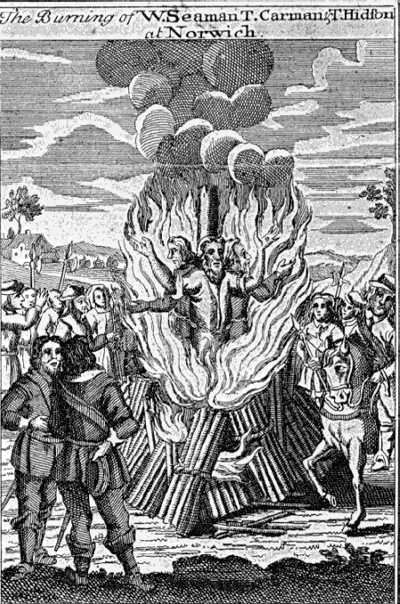
Today unexpected weather conditions are blamed on the impact of human beings on the environment. In medieval times unusual climatic episodes were seen as the handiwork of wicked demonic forces. Witchcraft was used to account for virtually every misfortune and unpleasant act. It was the climatic change brought by the so-called Little Ice Age in the 16th century that led to a resurgence of witch-hunting in Europe. From 1380 onwards, accusations of magic and weather-making increased dramatically in inquisitorial trials.
The resurgence of witch-hunting in the late 16th century was influenced by the belief that witches possessed demonic powers that could manipulate the climate in order to undermine the welfare and health of the communities in which they lived.
Throughout history people have sought to blame unusual climatic conditions on demonic forces. What the association of witchcraft with weather-making accomplished was to mobilise people’s fears against the evil forces of heretics and non-believers. Scaremongering about witchcraft promoted the idea that its demonic powers could literally dominate nature. Father Friedrich Spee, a Jesuit critic of witch-hunting, noted sarcastically that “God and nature no longer do anything; witches, everything”. But such beliefs were no joke. A late winter in the province of Treves in the 15th century led to more than 100 people being burned at the stake.
Since burning witches leaves a big carbon footprint, we are likely to find more environmentally friendly ways of punishing those who transgress society’s confusing moral boundaries.
Read it here.


 Australian Climate Madness
Right. That’s why that eco-tard columnist called for stoning skeptics–much more enviro-friendly.