Questions Pachauri still has to answer…


Way more questions than answers…

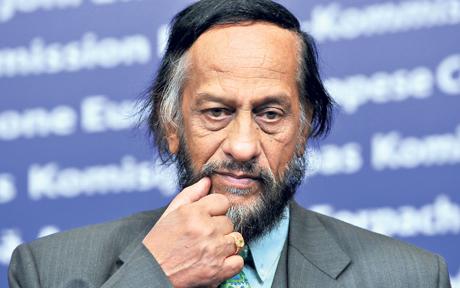
You will recall that Christopher Booker in the UK Telegraph wrote about IPCC head Rajendra Pachauri’s financial interests in the global warming scare (see here). Pachauri responded almost immediately, but now Booker has written a follow up, which is well worth a read:

A first point to emerge from these responses is how much of what we wrote they do not contradict. Dr Pachauri does not deny that he holds all the positions referred to in our article, such as giving advice on climate change to bodies ranging from major banks such as Credit Suisse and Deutsche Bank to the Chicago Climate Change, the worlds’s largest dealer in buying and selling the right to emit CO2.

He and Teri insist, however, that all the money he receives for his services, such as 100,000 euros from Deutsche Bank and $80,000 from Toyota Motors are paid not to him personally but to his institute (and that he receives no fee from the Chicago Climate Exchange). Teri denies that it does not publish its accounts simply by stating that its accounts are supplied to the relevant tax authorities.

Dr Pachauri repeatedly denied that Teri still has any links with the Tata Group, India’s largest privately-owned business empire, with interests ranging from coal and steel to renewable energy, and which set up Teri as the Tata Energy Research Institute in 1974. He now claims that Teri has had no “direct links” with Tata since 1999 (or, in another interview, 2001). But it was not until 2003 that the name changed to The Energy and Resources Institute, and then a Teri spokesman explained that “we have not severed our links with the Tatas” and that the change of name was “only for convenience”.

Indeed one of the Tata group of companies is still listed among Teri’s corporate sponsors, several directors of Tata serve on Teri’s Business Council for Sustainable Development, and one senior director serves on Teri’s Advisory Board. Other links include the fact that Dr Pachauri and Ratan Tata, the head of the group, both serve on the Indian Prime Minister’s Council on Climate Change, advising on all aspects of national climate policy.

In short, these initial responses to our article leave many questions unanswered. At the least it seems that Dr Pachauri’s position as the world’s “top climate official” has been earning a very substantial income for the institute of which he is director-general; and the only way to avoid further questioning must now be for both Dr Pachauri and Teri to come out into the open over all those issues that remain obscure.

Read it here.

Terry McCrann – Let's face it: the ETS is dead


Dead as a…

The only people who don’t know this already appear to be Kevin Rudd and Penny Wong, getting ready to re-introduce it to Parliament in February, despite the world having moved on. Copenhagen has shown that the desire to cripple economies with “carbon reduction” plans is virtually non-existent, and with Tony Abbott at the helm of the Coalition, there isn’t the slightest possibility of it getting through:

While an argument could have been mounted before Copenhagen for moving towards an ETS, that is not possible after the chaos in doleful Hamlet’s hometown that produced the “China solution”.

There will be no global agreement to cut emissions of carbon dioxide.

Formally, it was “Chindia” — China and India. But China is the elephant in that pairing. And in any event, nothing that President Barack Obama might have promised in Copenhagen was ever going to be endorsed by the US Senate, as it has to be.

While we wouldn’t have quite seen a replay of the 95-0 vote that rejected the Kyoto Treaty in 1997, there is zero prospect of the US adopting either binding CO2 emission targets or a cap-and-trade policy, their name for an ETS.

So we have a situation post-Copenhagen, where the two countries that between them are responsible for nearly half of all global emissions of CO2 are not committed to cutting emissions, far less binding targets. And more pointedly, they won’t have an ETS.

Read it here.

Merry Christmas, Happy Holidays from ACM


Thanks for all your support this year, I very much hope you have enjoyed reading. Have a great holiday, and we will be posting again straight after Christmas (no rest for the wicked sceptics!) to provide you with your daily dose of climate sanity.

I will leave you with a festive cartoon, courtesy of Nicholson in The Australian:

Wikipedia: MWP page "locked" due to "vandalism"


Censorship at work

And by “vandalism” it means honest attempts to remove the fraudulent and discredited hockey stick graph. William Connolley, climate editor in chief at the ‘pedia (and coincidentally Green party activist), still up to his old tricks, and since Lawrence Solomon’s article earlier in the week (see here), the plot has thickened further, as Solomon reports again:

With the hockey stick graphs so thoroughly discredited, you’d think they would become a footnote to a discussion of the Medieval Warm Period, or an object of amusement and curiosity. But no, on the Wikipedia page for the Medieval Warm Period, the hockey stick graph appears prominently at the top, as if it is settled science.

Because the hockey stick graph has become an icon of deceit and in no way an authority worthy of being cited, fair-minded Wikipedians tried to remove the graph from the page, as can be seen here. Exactly two minutes later, one of Connelley’s associates replaced the graph, restoring the page to Connelley’s original version, as seen here.

Battles like this occurred on numerous fronts, until just after midnight on Dec 22, when Connolley reimposed his version of events and, for good measure, froze the page to prevent others from making changes — and to prevent the public, even in two-minute windows, from realizing that today’s temperatures look modest in comparison to those in the past. In the World of Wikipedia, seen as here, the hockey stick graph, and Connolley’s version of history, still rules. (source)

Let’s look at Wikipedia’s own definition of “vandalism” in respect of content:

Vandalism is any addition, removal, or change of content made in a deliberate attempt to compromise the integrity of Wikipedia. Vandalism cannot and will not be tolerated. Common types of vandalism are the addition of obscenities or crude humor, page blanking, and the insertion of nonsense into articles.

Any good-faith effort to improve the encyclopedia, even if misguided or ill-considered, is not vandalism. Even harmful edits that are not explicitly made in bad faith are not vandalism. For example, adding a controversial personal opinion to an article once is not vandalism; reinserting it despite multiple warnings is (however, edits/reverts over a content dispute are never vandalism, see WP:EW). (source)

And the following is listed as an example of what is not vandalism:

Repeated deletion or addition of material may violate the three-revert rule, but this is not “vandalism” and should not be dealt with as such.

So by labelling such attempts at editing “vandalism,” Connolley isn’t even complying with Wikipedia’s own editorial guidelines. But Connolley has the final say anyway, and has the power to disable editing of pages where such edits don’t fit with his personal views.

So the moral is: you still can’t trust Wikipedia on climate.

Animals "on the run" from climate change


At least he'll be OK…

The UK Telegraph used to be a serious newspaper, but, as I have mentioned before, it’s now more like a broadsheet version of Hello. In fact, Private Eye always refers to it as the Daily Hellograph. Despite Climategate, they still parrot any old press release that lands on the “climate change desk” and this story is no exception. From our old friend, Chris Field (see here, and here), we have a lovely alarmist Christmas present:

Plants and animals will need to move at an average rate of a quarter of a mile a year to escape climate change over the course of this century, according to scientists.

For species in flatter, low-lying regions such as deserts, grasslands, and coastal areas, the pace of the retreat could exceed more than half a mile a year, it is claimed.

Creatures and plants only able to tolerate a narrow range of temperatures will be most vulnerable, said the researchers.

Those unable to match the migration speeds needed to escape the effects of global warming could vanish into extinction.

Plants in almost a third of the habitats studied were thought to fall into this category, the scientists reported in the journal Nature.

Author Dr Chris Field, director of the Carnegie Institution’s Department of Global Ecology in Stanford, California, said animals will be forced to migrate while many plants will die out.

“Expressed as velocities, climate-change projections connect directly to survival prospects for plants and animals. These are the conditions that will set the stage, whether species move or cope in place,” he said. (source)

Yawn. We’ve had enough of alarmism. We’re not listening any more. Climate change scientists need to rebuild their shattered credibility before we will take anything they say seriously again.

Copenhagen: UN appeals for calm after "bust-up"


De Boer: clearly wishing he was somewhere else

With the air thick with blame and recrimination, and with any hope of a global deal disappearing faster than a Himalayan glacier, UN climate chief Yvo de Boer has appealed to the various factions to stop bickering:

We need to work together constructively, whereas countries are in the media blaming each other for what happened, the same countries that are going to have to be back at the negotiating table next year with an open willingness to work together,” he told AFP in a phone interview from London.

“It’s bad for the atmosphere, it’s bad for the relationship among people that ultimately have a common goal to move this forward.”

De Boer did not name names but chose to give the interview after Britain and China swapped verbal blows as to who was to blame for the Copenhagen outcome, while Brazil took aim at the United States.

De Boer urged all parties not to inflate or pull down the importance of the Copenhagen Accord.

“We shouldn’t pretend it is anything more or anything less than what it is — an agreement, a sense of direction that can help us in further negotiations.”

He acknowledged, though, that what happened in Copenhagen “was a very extraordinary event.”

“The fact of the matter is a small group of countries put this accord together, there wasn’t enough time to get buy-in from the larger meeting and have it adopted in any kind of formal sense, and that’s the reality.” (source)

All a bit childish and unseemly, really.

Climategate: 30 years in the making


Amazing work

From Jo Nova:

You have to see this to believe it. Look up close and admire the detail while you despair at how long science has been going off the rails. To better appreciate the past and what was exposed by the CRU emails, the time-line chart consolidates and chronologically organizes the information uncovered and published about the CRU emails by many researchers along with some related contextual events. That the chart exists at all is yet another example of how skilled experts are flocking in to the skeptics position and dedicating hours of time pro bono because they are passionately motivated to fight against those who try to deceive us.

There is a dedicated page on Jo’s site where you can download various different versions for viewing on screen and printing:

Climategate Timeline Home Page

Copenhagen: climate alliance crumbles


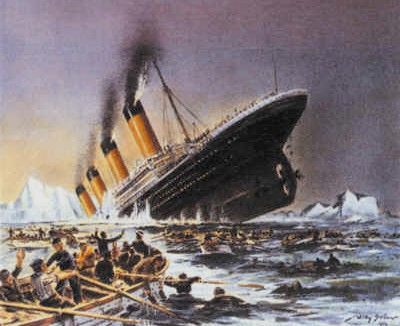
SS Copenhagen - doomed before she set sail

When did it finish? Last Friday? What day is it now, Wednesday? Five days later? A week is a long time in climate change negotiations:

Cracks emerged on Tuesday in the alliance on climate change formed at the Copenhagen conference last week, with leading developing countries criticising the resulting accord.

The so-called Basic countries – Brazil, South Africa, India and China – backed the accord in a meeting with the US on Friday night, and it was also supported by almost all other nations at the talks, including all of the biggest emitters.

But on Tuesday the Brazilian government labelled the accord “disappointing” and complained that the financial assistance it contained from rich to poor countries was insufficient.

South Africa also raised objections: Buyelwa Sonjica, the environment minister, called the failure to produce a legally binding agreement “unacceptable”. She said her government had considered leaving the meeting.

“We are not defending this, as I have indicated, for us it is not acceptable, it is definitely not acceptable,” she said.

There was even harsher criticism from Andreas Carlgren, environment minister of Sweden, current holder of the rotating European Union presidency, who proclaimed the Copenhagen accord “a disaster” and “a great failure”.

Can’t imagine Bonn or Mexico will be any different.

Read it here.

Indoctrination Alert: Build-a-Bear uses "climate change" in Christmas video


Ella: starred in An Inconvenient Truth, and now at Build-a-Bears worldwide

How a major retailer can shoot itself in the foot at Christmas, in three easy stages:

Stage One: indoctrinate thousands of children innocently visiting the B-a-B website with cute story about Santa which just happens to mention that the ice at the North Pole is melting because of the changing climate (transcript and comments from biggovernment.com):

Here’s an excerpt (1:07-2:22):

Girl Elf: Santa, it’s gone!

Papa Elf: It’s gone, It’s gone!

Santa: What’s gone?

Girl Elf: Tell ‘em, Dad!

Papa Elf: The North Peak.

Santa: A mountain? A mountain’s gone? How is that possible?

Ella the polar bear: Santa, sir, that’s why I’m here. That’s why we’re here. The ice is melting!

Santa: Yes, my dear, we know, the climate is changing. There’s bound to be a little melting.

Ella: It’s worse than that, Santa, a lot worse! At the rate it’s melting, the North Pole will be gone by Christmas!”

Santa: My, my…all of this gone by next Christmas? I don’t think so.

Ella: No sir, not next Christmas, this Christmas! The day after tomorrow!

And this is merely the tip of the dialogue iceberg, if you’ll forgive me for putting it that way … Children of the world can look forward to priceless exchanges such as, “Oh my! Where will the polar bears live?” and my personal fave: “Where will the elves live?”

I suspect you’d like to think it can’t get any worse than that. Thus, it pains me to tell you that animated characters actually break into a discussion of satellite photos and that Mrs. Claus conducts a rather unscientific experiment involving ice cubes.

Stage two: receive sackloads of complaints about subliminal indoctrination of children.

Stage three: pull the video and publish a grovelling apology on your web site:

Our intention with the Polar Bear story was to inspire children, through the voices of our animal characters, to make a difference in their own individual ways. We did not intend to politicize the topic of global climate change or offend anyone in any way. The webisodes concluded this week with Santa successfully leaving on his journey to deliver gifts around the world. The webisodes will no longer be available on the site.

Doesn’t matter what you intended, Ms Clark, the fact is, you did.

Read the full gory story at Watts Up With That (and watch the video too, if you can “bear” it).

CFCs and cosmic rays responsible for changes in climate


Waterloo's Science Isn't Settled department

Fresh from the “Science is Settled Department.”

Cosmic rays and chlorofluorocarbons (CFCs), both already implicated in depleting the Earth’s ozone layer, are also responsible for changes in the global climate, a University of Waterloo scientist reports in a new peer-reviewed paper.

In his paper, Qing-Bin Lu, a professor of physics and astronomy, shows how CFCs – compounds once widely used as refrigerants – and cosmic rays – energy particles originating in outer space – are mostly to blame for climate change, rather than carbon dioxide (CO2) emissions. His paper, derived from observations of satellite, ground-based and balloon measurements as well as an innovative use of an established mechanism, was published online in the prestigious journal Physics Reports.

“My findings do not agree with the climate models that conventionally thought that greenhouse gases, mainly CO2, are the major culprits for the global warming seen in the late 20th century,” Lu said. “Instead, the observed data show that CFCs conspiring with cosmic rays most likely caused both the Antarctic ozone hole and global warming. These findings are totally unexpected and striking, as I was focused on studying the mechanism for the formation of the ozone hole, rather than global warming.”

He wasn’t even looking for something on global warming! It must be so frustrating to the alarmists when researchers actually carry out unbiased research and come up with interesting, challenging results, instead of just fudging data, destroying emails and hiding inconvenient facts in order to fit a pre-conceived political agenda.

Read it here.