As we knew it would be, given enough time. Peter Costello is right when he says:
“In November 2007 maybe climate change did look like the great economic issue of the age, but its not looking that way now.”
Read it here.
Just don't tell me the debate's over…
As we knew it would be, given enough time. Peter Costello is right when he says:
“In November 2007 maybe climate change did look like the great economic issue of the age, but its not looking that way now.”
Read it here.
It had to happen (thanks to Tom Nelson). The UK Times Online reports:
Plans for binding European legislation by December were dropped as the EU watered down the carbon dioxide blueprint that it had announced with a fanfare 18 months ago.
The revolt by eight countries, led by Italy and Poland, left the EU’s self-proclaimed mission to shape a global, post-Kyoto agreement on greenhouse gases in disarray.
Italy has joined the “Iron Curtain Revolt” with Prime Minister Silvio Berlusconi “furious” at the pressure being applied, saying that the targets would “crucify” Italian industry.
“Our businesses are in absolutely no position at the moment to absorb the costs of the regulations that have been proposed,” Mr Berlusconi said later.
Donald Tusk, the Polish Prime Minister, said: “We don’t say to the French that they have to close down their nuclear power industry and build windmills, and nobody can tell us the equivalent.”
So, Kevin Rudd and Penny Wong, where does this leave your blinkered desire to cripple the Australian economy with an emissions trading scheme? I won’t wait up for an answer.
Read it here.
P.S. I can’t, however, wait to see how the Moonbat Herald and The Age spin this tomorrow…
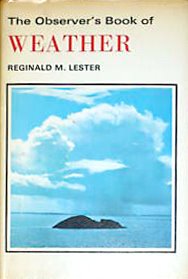 When I was a kid, I was fascinated by the weather (still am), and at school I was reading undergraduate meteorology textbooks during my O-levels. Some of my favourite books were in the Observers series, and the Observer’s Book of Weather, by Reginald Lester (see photo), was my favourite of all. It was a clear, concise introduction to the science of weather, and as a youngster I would pore over it for hours on end. There wasn’t a politically motivated sentence in it.
How different things are today. I have a copy of a modern book about weather, but it’s not just about weather, it’s about weather and climate change. It’s published by Usborne, who have a reputation for producing excellent books for children. However, this, like many books on the subject available today, is political propaganda aimed at young people, cloaked in the guise of impartial science.
It toes the IPCC line at every turn, and whilst devoting a double page to “Disagreement” humouring those who may not agree with the consensus, it goes on to brand them “sceptics”, and under the heading “So who’s right?” states:
“At the moment, most experts agree that global warming is happening and it’s largely due to humans. As research continues and climate models become more sophisticated, we might see more evidence that this isn’t the case.
But even if the sceptics are right and we’ve done no damage so far, we should still do everything we can to avoid causing any in the future.”
I’m sure there are many other books for children on this subject which are far worse than this. Indeed, a quick Amazon search revealed books, aimed specifically at young readers, entitled:
And I would bet a tidy sum that there aren’t any books for children that put the alternative view… But it’s still very sad that something as uniquely fascinating as the study of the weather has to be tainted by political propaganda.
The book in question is called “The Usborne Internet-Linked Introduction to Weather and Climate Change” – it can be found at Amazon.
It’s only anecdotal, but climate change news items appear to have dropped significantly over the past few days, with the number of stories in the news feeds today down by nearly 30% on last week.
This is intriguing, because you would have thought that if “climate change” was really the biggest challenge to mankind in all of human history, as Rudd, Wong, Garnaut etc. lead us to believe it is, the trifling matter of a temporary economic meltdown should have little or no effect on the media’s coverage of it. But the reality, however, is that even the mainstream media are finding it hard to justify taking up valuable column-inches on climate stories in the midst of the global financial crisis.
Let’s look out for even more desperate soundbites from Wong & Garnaut in the days ahead, as they struggle to keep their pet issue at the forefront!
Start here…
[Return to start and continue ad infinitum]
If you manage to escape from the clutches of the above infinite loop, you can read it here.
At least some countries have the sense not to waste valuable time and money attending yet more pointless climate gab-fests. There was head-scratching all around the table at the Samoan climate change conference when Fiji and PNG didn’t show. I wonder why? Maybe they have better things to do…
“He [the Director for the secretariat of the Pacific regional Environmental Program] said that they too have not been informed of why the two countries, the biggest in the Pacific Islands, have not turned up and he wouldn’t say whether he was disappointed or not, but certainly their absence from this meeting has been the talk of some delegates.”
Read it here.
Another few million bucks down the drain as Victorian scientists try to reduce cattle methane emissions by tinkering with their diet. This all started, you will no doubt recall, because of Ross Garnaut’s crazy suggestion that we all should abandon beef and lamb, and eat kangaroo instead, because they produce fewer emissions than sheep and cattle. The farming industry has been forced into self-preservation mode thanks to this nonsense, spending money to defend their industry that could have been much better spent elsewhere.
The DPI’s [Victorian Department of Primary Industries] Chris Grainger said in a trial, methane emissions were cut by 12 per cent, by feeding the cattle cotton seed.
“One of the most promising things that we can add to the diet seems to be fat or oil,” he said.
Read it here.
Who cares about the real effects of the economic downturn, such as the threat of unemployment, financial hardship and uncertainty for much of the Australian population? Certainly not Siobhain Ryan, journalist at The Australian, who is the recipient of the ACM “Idiotic Comment of the Day” gong, as she dances on the graves of the soon to be unemployed by trumpeting:
THE slowing world economy could help to cut back global emissions as factories close and car fleets stall, in a rare piece of good news amid the financial doom and gloom.
Since when was it good news that factories close and put thousands of people out of a job and possibly a home?
Read it here.

Much cuddlier than a frog…
An international conference of 300 wildlife, zoo and conservation leaders in Adelaide (carbon footprint the size of an elephant’s backside) has resolved to make zoos a key part of saving the world’s animals from climate change caused by evil humanity, reports the ABC with picture of cute, cuddly tiger cub for effect.
“Zoos are providing these sanctuaries already for frogs, frogs going through the largest mass extinction since the dinosaurs and zoos and other organisations are doing their best to prevent it being as big an extinction as it could be.”
There should have been a photo of a frog… no, hang on, not cuddly enough…
UPDATE: Chris West of Adelaide Zoo compares “climate change” to Apocalypse:
“But now climate change is looming as a huge new horseman of the apocalypse, whose impact threatens to dwarf that of all the others.
Read it here.
French-speaking nations have pledged to help cut global greenhouse gas emissions in half by 2050.
Representatives of the 55 member nations of the Francophonie made the pledge during a weekend-long summit in Canada’s Quebec City. (ABC)
Sounds impressive, eh? Trouble is that when you take France and Canada out of the equation (the EU agreement is on the rocks, and the Canadian election last week put paid to any kind of emissions reduction schemes there), the remaining “Francophonie” countries make up less than 3% of global emissions, so a 50% cut will reduce anthropogenic CO2 by 1.5% – about the same as Australia’s entire CO2 output – which, even if CO2 drives temperature, will achieve nothing.
But the real point here is that many of the Francophonie countries are desperately poor, and need to concentrate on developing their economies to even survive, and the last thing they need is to be hamstrung by pointless emissions reductions. The president of Gabon hit the nail on the head when he said that many countries were:
preoccupied with access to clean drinking water, water for agriculture, and management of cross-border waters.


Recent Comments