Anything goes if we say so
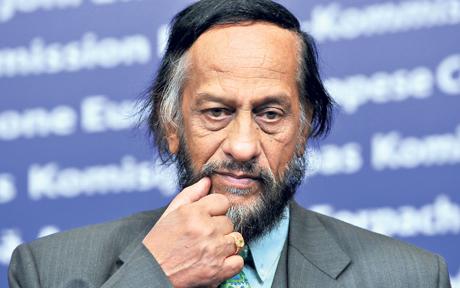
The UK Telegraph reports that Rajendra Pachauri has “defended the use of grey literature” in the IPCC’s reports. As long as it supports the IPCC’s pre-conceived conclusion of man-made warming, that is. Because whenever grey literature challenges the consensus, the knee-jerk response is “but it isn’t peer-reviewed!”. Hands up who can spot the hypocrisy there?
The head of the UN’s climate change panel has defended the use of unproven science to justify climate change by saying the “grey literature” cannot be ignored.
…
In a hearing at the InterAcademy Council, an organisation of the world’s science academies which is conducting an independent review of the processes and procedures of the IPCC, Dr Pachauri described the inclusion of the glacier claim as “human failure” which should not have happened. [No it wasn’t, it was deliberately put in to “pressure policymakers”, see here – Ed]
But the IPCC’s chairman said there was a need to use information which was not from peer-reviewed scientific journals, because in some places that was the only research that had been done.
He said the media and other sections of society had misunderstood the role of such information, labelling it grey literature, “as if it was some form of grey muddied water flowing down the drains”.
Dr Pachauri said academic work being done by bodies including the International Energy Agency, the World Bank, national governments and charities “cannot be ignored” [all backing the alarmist view, of course – Ed], but had to be closely examined [yeah, right – Ed] to make sure it was robust. (source)
And the IPCC was also very keen to use one particular journal that was unpublished at the time the report was finalised:
It was so impressed by one edition of the academic journal Climatic Change that it cited 16 of the 21 papers published that month. The journal editors should take a bow. When three-quarters of a single issue of your publication is relied on by a Nobel-winning report, you’re doing something right.
Except for one small problem. The issue in question – May 2007 – didn’t exist yet when the IPCC wrote its report. Moreover, none of the research papers eventually published in that issue had been finalized prior to the IPCC’s cutoff date. (source)
But hey, who cares? When an organisation and its chairman are so politically and financially motivated to come up with evidence to support a pre-conceived conclusion, anything goes. Yet it is on the advice of this organisation that governments around the world are basing their climate policies. Climate madness.











 Australian Climate Madness
Recent Comments