
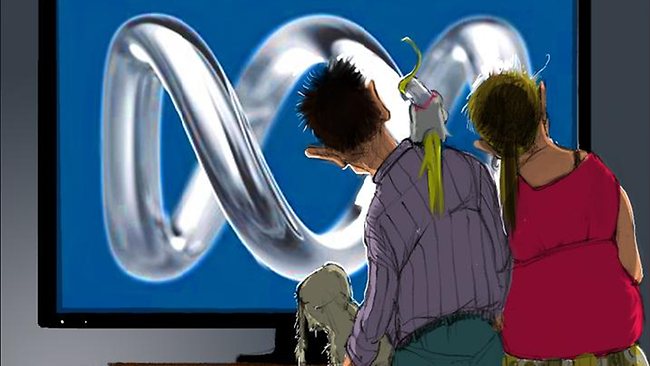
Alarmist Broadcasting Corporation
UPDATE: They just keep on comin’…
Warming planet to threaten native species
What effect will climate change have on Australia’s animal and plant species? This is the fourth of a five-part series in which environment reporter Sarah Clarke sets out to provide answers. [Oops, Sarah is at it again…]
Taskforce names regions most at risk of coastal inundation
The National Seachange Taskforce says coastal communities between Mackay and the Gold Coast are the most at risk in Queensland from predicted sea level rises.
Fish in hot water as climate changes
What effect will climate change have on Australia’s oceans and reefs? This is the final report in a five-part series in which environment reporter Sarah Clarke sets out to provide answers. [And again…]
Experts say oceans likely to continue warming
Scientists have recorded what they describe as the most dramatic marine heatwave in recent history off the WA coast.
And just for luck, another from ABC Science:
The 2013 climate change wake-up call
OPINION: Is an extreme heatwave enough for people to start taking the science of climate change seriously in Australia? Dr Paul Willis hopes so.
Enjoy that last one – “Dr” Willis uses “denier” or variants thereof five times. Just what exactly are we supposed to be denying exactly?
More to come, no doubt…
—
Timed to coincide nicely with the IPCC gas-a-thon in Tasmania, the ABC has gone gangbusters on climate alarmism – and that’s some achievement given previous form.
Ignoring the biggest story of the past couple of weeks, the UK Met Office’s downgrading of its warming forecast for the next five years, ABC News publishes no less than twelve alarmist climate stories in four days. Here they are in all their horrible glory:
Heart attacks and strokes: the climate change link
Heatwaves kill more Australians than car accidents – and medical authorities say that amplifies the risk posed by climate change.
Human health to feel impact of warmer future
What effect will climate change have on health in the Pacific? This is the third of a five-part series in which environment reporter Sarah Clarke sets out to provide answers.
UN group links heatwave to climate change
The United Nations’s (UN) chief climate science body says there is no doubt last week’s extreme heat in Australia is part of a global warming trend.
Extreme weather driving up food prices: Oxfam
Simon Bradshaw from Oxfam says extreme weather patterns are beginning to affect the food chain.
Climate change will force farmers to adapt: CSIRO
What effect will climate change have on agriculture and food production? This is the second of a five-part series in which environment reporter Sarah Clarke sets out to provide answers.
IPCC meets in Australia for first time
Chair of the Intergovernmental Panel on Climate Change, Dr Rajendra Pachauri says the latest research is still a work in progress but Australia’s recent weather events are part of an unmistakable trend.
Bushfires and heat a sign of climate change: Milne
The Greens leader Christine Milne says this summer’s bushfires and record temperatures are providing a glimpse of what Australia’s climate might look like in the future.
Scientists warn of glacier melt acceleration
The Government has scoped the potential areas of the Australian coastline at greatest threat after a sea level rise.
Coastal properties facing rising seas risk
Professor Alan Stokes from the National Seachange Taskforce says rising sea levels are a serious risk and coastal councils need to deal with the issue right now.
Rising seas may put $300b of property at risk: scientists
What impact are sea-level rises predicted to have on Australian cities?
Climate change increases fire risk
A Climate Commission report says a warmer globe increases the risk of extreme fire danger conditions.
Heatwave exacerbated by climate change: Climate Commission
A new report from the Federal Government’s Climate Commission says the heatwave and bushfires that have affected Australia this week have been exacerbated by global warming.
And a couple from ABC Science, just in case you haven’t had enough:
Emissions could cut climate damage by 60%
The world could avoid much of the damaging effects of climate change this century if greenhouse gas emissions are curbed more sharply.
Heatwave suddenly shrinks seaweed’s range
SHRINKING SEAWEED: A recent marine heatwave off Western Australia rapidly shrank the distribution range of an ecologically-important seaweed, researchers report.
There must be a policy in force at the ABC. All I need is someone to leak it…








 Australian Climate Madness
Recent Comments