Australia goes it alone… as EU back-pedals


Reality bites

The timing couldn’t be better (or should I say worse). Just as plucky little Australia, with 1.5% of global emissions, decides to unilaterally “save the planet” by possibly reducing global temperatures by a few thousandths of a degree Celsius, other, more sensible countries are realising that without a global agreement, punishing emissions reduction targets are pointless – and dangerous.

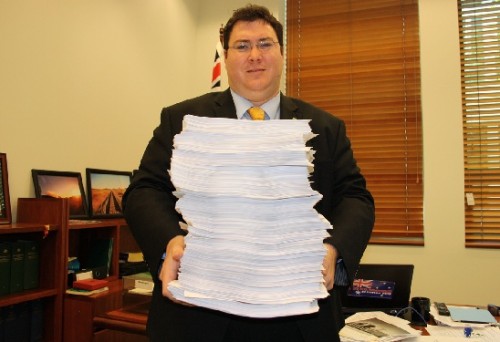
Just a few days ago, UK Chancellor George Osborne said “we are not going to save the planet by putting our country out of business”, yet that is exactly what Australia has decided to do! Well done, Julia and Greg!

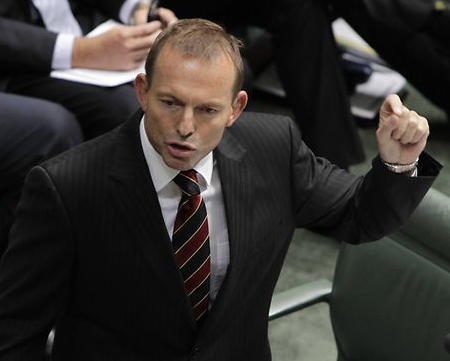
And even the EU’s moonbattish Connie Hedegaard (pictured) is sounding decidedly dejected, as reality finally dawns:

European Union environment ministers — responsible for only 11 percent of global carbon emissions [still nearly ten times more than Australia – Ed] — said they would commit to a new phase of the Kyoto climate change pact, on the condition that nations blamed for the rest join up too.

The environment council conclusions, agreed in Luxembourg on Monday, outline the bloc’s negotiating position ahead of the next global climate conference in Durban, South Africa, which starts at the end of November. [Well I can tell you that there is not a snowball’s chance of China and India signing up to such a restriction on their economic growth – Ed]

“What’s the point of keeping something alive if you’re alone there? There must be more from the 89 percent,” EU Environment Commissioner Connie Hedegaard told Reuters. (source)

There won’t be an agreement in Durban, and there is little possibility of a global agreement in the foreseeable future. Surely these thoughts must occur even to boneheaded politicians like Julia and Greg? Of course they do – privately, when they are alone – but then they suddenly remember, with a cold sweat, that they are being blackmailed by the Greens to take this pointless climate action, and as we have discussed before, desperately clinging to power is more important to Labor that doing what is right for Australia. Otherwise, they would have called another election to let the people decide.

The only consolation is that the longer Labor shows such contempt for the Australian people, the more savagely they will be punished at the next election – and that thought keeps me going.

Daily Bayonet GW Hoax Weekly Round-up


Skewering the clueless

As always, a great read!

Delingpole on the carbon tax


"What's that you say, Skip? They've all topped themselves?"

James kindly linked to my post on Ian Chubb’s nonsensical utterances (see here), and his piece is well worth a read, as always:

Australia commits suicide

One of the worst aspects of living in these apocalyptic times is that whenever you look around the world, wondering where you might escape to, you begin to realise that everywhere else is just as bad if not worse.

Take Australia, an island built on fossil fuel with an economy dependent on fossil fuel. What would be the maddest economic policy a place like that could pursue as the world tips deeper into recession? Why, to introduce a carbon tax, of course. Which, for reasons just explained above, means a tax on absobloodylutely everything. Which is exactly what Julia Gillard’s Coalition (why is it that word always makes me want to reach for my Browning?) has just gone and done, obviously.

Read it all.

Joint Select Committee: dissenting submissions excluded because they were not "relevant"


Submissions ignored (image from Andrew Bolt)

The Dissenting Report of the Joint Select Committee into the Clean Energy Bills makes very interesting reading, and shows evidence of a concerted attempt to suppress or exclude dissent from the debate, based on a subjective test of “relevance”.

It appears that many submissions were intentionally classified as “mere correspondence” in order to avoid their publication, and obviate the need for the Committee to have regard to their content.

In this report of Coalition Members and Senators we have included the comments of hundreds of Australians – not just those few who appeared before the committee in its select few days of hearings in south-eastern Australia, or those professional organisations who made detailed submissions, but also many comments from the more than 4,500 people who made submissions to this inquiry, which the Labor-Greens-Independent majority refused to have published.

To the thousands of people who feel like Noel Bowman, who stated in his submission that ‘I suppose no one will ever read this submission and in consequence I am wasting my time’, the Coalition members say we have tried to give you a voice. We could not quote or reference everybody, but in contrast to Labor’s determination to shut people out of this process we were even more determined to ensure that as many voices as possible from across Australia were heard. (page 129)

This Joint Select Committee – dominated by the Labor and Greens proponents of the legislation into which it is inquiring – allowed just a week for the committee to receive submissions, determining at its first meeting on Thursday 15 September that it would advertise for the first time on Saturday 17 September 2011 but with a closing date for submissions of Thursday 22 September 2011.

Hearings for this inquiry were scheduled in the week following the closing date of submissions, which did not allow the committee to properly consider the more than 4,500 submissions it received. In fact, the Labor-Greens dominated committee opted not to accept the vast majority of submissions and merely received them as ‘correspondence’, despite unsuccessful Coalition attempts to extend both the deadline for making submissions and the time allowed for the committee to report.

This volume of correspondence demonstrates the level of engagement and the depth of feeling Australians have in relation to the Government’s policy approach on this issue, but which Labor and the Greens have effectively sought to silence as far as this inquiry is concerned. (page 253)

On what grounds, therefore, did the committee exclude such a vast amount of correspondence? Let’s look at the requirements for submissions, from the Committees web site:

  • There is no prescribed form for a submission to a parliamentary committee. Submissions may be in the form of a letter, a short document or a substantial paper. They may include appendices and other supporting documents.
  • Submissions should be prepared solely for the inquiry and should be relevant to the terms of reference. They may address all or a selection of the points outlined in the terms of reference. Submissions may contain facts, opinions, arguments and recommendations for action.
  • It is helpful if submissions are prefaced by a brief summary of the main points.
  • Supplementary submissions may be lodged during the course of an inquiry to provide additional information or comments on other evidence.

Nothing particularly challenging there. The Clean Energy Committee had no specific terms of reference (see here), so that removes one hurdle. Let’s have a look at the checklist:

Before lodging your submission you may find it helpful to consider the following checklist:

  •  Have I commented on some or all of the terms of reference? [There were none for this inquiry – Ed]
  • Have I provided a summary of the submission at the front (for lengthy submissions)?
  • Have I provided my return address and contact details with the submission?
  • If the submission contains confidential information, have I made this clear at the front?
  • Have I provided an electronic version of the submission (if possible)?

There is nothing there which would permit the Committee to exclude 4,500 submissions as mere correspondence. An email with a return address should be sufficient for it to be accepted as a submission.

But here is the Committee’s explanation – and it is based on the wholly subjective test of “relevance”:

A large amount of correspondence was received by the committee. These items were not received as submissions to the inquiry because they did not address the actual legislation being considered. The correspondence was read and noted. The majority of the correspondence questioned the following issues:

  • The legitimacy of the science behind climate change and whether it is due to human action;
  • The legitimacy of the government to introduce the legislation;
  • The impact of the carbon ‘tax’ on individuals and the economy; and
  • Why should Australia go it alone on introducing measures to reduce carbon pollution putting us at a claimed competitive disadvantage? (Introduction, p12, here – PDF)

The next paragraph quotes the Chief Scientist, Ian Chubb, at the Inquiry hearings (see here for more of Chubb’s nonsense at that hearing) as if this somehow justifies their relevance test:

The latest information I have seen shows that the CO2 levels are high and that the rate of accumulation is accelerating. The scientists who study this would argue that it is getting to the point where something has to be done quickly in order to cap them at least and start to have them decrease over a sensible period of time. You could easily argue that it is urgent and that something needs to be done because of the high level presently and the accelerating accumulation presently (sic). We do need to do something.

Well that clinches it for me…!

It is almost beyond comprehension that the Committee felt that those four issues “did not address the actual legislation being considered.” They may not be relevant for considering individual sections of the Bills, but those four key issues go straight to the heart of whether the legislation is prudent, or even necessary at all! Is the Committee expecting us to believe that questions of prudence or necessity are outside its scope? Laughable.

Remember, there were NO terms of reference for this Inquiry, so the Committee should not have been able to exclude correspondence on the grounds of relevance. Even if there were terms of reference, issues raised in correspondence are clearly relevant to the matter being considered.

I have to keep reminding myself that this is Australia and not the former Soviet Union. Is this where we are at, in 2011, where the genuine concerns of the public, in a formal parliamentary committee, are simply ignored?

The Dissenting Report is here (PDF).

Quote of the Day: Tony Abbott


Australia's only hope

Something to make you smile. Go TA!

“We will repeal this tax, we will dismantle the bureaucracy associated with it.

“I am giving you the most definite commitment any politician can give that this tax will go. This is a pledge in blood this tax will go.

“If the bills pass today this will be an act of betrayal on the Australian public. We will repeal the tax, we can repeal the tax, we must repeal the tax.” (source)

Labor's great betrayal


So the carbon tax bills are expected to pass through the Lower House today [UPDATE: The Bills passed the lower house at around 9.30am AEST]. In a strange kind of way, I am glad, because it demonstrates to the electorate clearly what principles Labor stands for. None – apart from its own survival.

If any Labor MPs had shown even a trace of any backbone and stood up for the democratic rights of the Australian people by voting against the Bills, it may have lifted Labor’s support in the polls, and made people reconsider Labor’s principles and values. As it is, however, they act true to form, like a bunch of gutless lemmings, more concerned with keeping their own jobs than respecting the wishes of the electorate.

Julia Gillard’s pre-election promise not to introduce a carbon tax was swiftly forgotten when it became clear that the Greens’ support would have to be bought with a commitment to rapid action on climate change. And clearly, in the minds of Labor, buying support was more important than an explicit pre-election promise. Over the next few months, there was much talk of “consultation” with the public about the carbon tax, but in reality it was all a sham. All the inquiries and meetings were simply a pretence, because if they had genuinely listened to public opinion, they would have abandoned the tax.

And Labor have deluded themselves by believing that global action is just around the corner. Only blind Freddy (and Labor) think that – the evidence is clear that the chance of any global deal is retreating faster than an IPCC-fudged Himalayan glacier.

But nothing was going to stop Labor passing these bills and therefore, with the Green’s continuing support, staying in power.

Because that is all that matters to Labor – power. Forget the wishes of the Australian people or the “national interest” (funny isn’t it how Labor uses this term so frequently), what drives Labor is staying in power.

And as a final insult, demonstrating Labor’s contempt for the people it is supposed to represent, they hope that the electorate are stupid enough to “forget” this betrayal, and “get used” to the pointless carbon tax.

Well this voter will neither forget the betrayal, nor get used to the tax. It will be at the front of my mind when I enter the polling booth at the next election, and I hope it will be in yours as well.

Fair play at the Joint Select Committee?


Level playing field?

A number of commentators have reported that the number of submissions sent to the Joint Select Committee (JSC)  far exceeds the number published. Figures of 4,500 public submissions have been floating around the blogosphere for a while, but it is clear from the JSC’s web site that only 73 have been published. What happened to the other 4,427?

Some confusion has arisen because there were in fact two submission processes taking place almost simultaneously, one organised by the Department of Climate Change (DCC), and another by the JSC. The DCC was very happy to allow multiple standard form letters supporting the tax (see here), probably spoon-fed by GetUp! and Say Yes, but it is very possible that less strict rules were in place for that process.

However, the DCC states that only 326 submissions were “received”, so at this stage we must assume the majority were communicated to the JSC.

An article in Quadrant shows evidence of bias against those opposing the bills, taking examples from both the JSC and the DCC:

The Department of Climate Change published this:


To whom it may concern,

I am writing to express my support for the Government to legislate to put a price on Carbon. I urge the government to continue to move ahead with the Carbon tax.

Rob Feith


The Department of Climate Change published this:


To Whom It May Concern

Even with all the confusion surrounding the Carbon Tax, I would like to support the move the Government is making. In order to reduce our Carbon Pollution you have to place a monetary value on the air we breathe. I hope this is a step in the right direction and, I hope the Government sets a model and digs their heels in to become a world leader in this arena.

My support is with the Government at present.

 Kerrie Chandler


The Select Committee did not publish this:


Submission on theClean Energy Bill 2011

To the: Joint Select Committee on Australia’s Clean Energy Future

By: Peter Smith

Opening Comment and Summary View

My submission is as a private citizen of Australia. I am basing my submission on the “Explanatory Memorandum” (“EM”) to the Clean Energy Bill (“the Bill”) and on media reports of the contents and implication of various parts of the Bill. I have neither the time nor resources to study and consider all of the constituent parts of the Bill in detail.

I note that the time given for considering the Bill and providing a submission is extremely short given its complexity and import. It is not clear why the Government has allowed so little time for the public to consider a piece of legislation which is described as a “major reform” and which is designed to have far-reaching effects.

Though it does not reflect on the Bill per se, the political process surrounding its introduction is disquieting. The Government went to the election only a little over 12 months ago with an explicit undertaking by the Prime Minister “to develop a Citizens’ Assembly to examine climate change over 12 months, the evidence on climate change, the case for action and the possible consequences of introducing a market-based approach to limiting and reducing carbon emissions”. She went on to link any action with the views of the group comprising the Assembly: “if I am wrong, and that group of Australians is not persuaded of the case for change then that should be a clear warning bell that our community has not been persuaded as deeply as required about the need for transformational change”.

Making a transformational change – one so hard to unpick – contrary to the PM’s undertaking, brings our political processes into disrepute and calls into question the trust we should have in our democratic processes. To be clear, election promises are not always kept; that is not the issue. The issue arises from the circumstances of the about-face and its dimensions. The Bill is making changes of great moment and effective permanency under no pressure of circumstances, contrary to a clear and explicit commitment which may have been instrumental in winning a very narrow election. I doubt whether a similar instance could be found in Australia’s past.

My conclusion is that whatever its merits, the Bill should be withdrawn because of the process surrounding its introduction. My quite separate conclusion, based on my comments set out below, is that the Bill will damage Australia, for no measurable gain, and should be withdrawn also on that account.

[Editors note: this particular submission elaborates further, and is cogently argued – see original post here]

If these allegations of suppression of dissent are correct, it is a disgraceful affront to open democracy, of which Labor (as the sponsors of the Clean Energy bills) should be thoroughly ashamed. Therefore, in order to try to get to the bottom of this important story, I have today filed a request with the Clerk Assistant (Committees) at Parliament House in the following terms, to establish the proportion of submissions received that were rejected:

Please would you provide, by return of email, the following information regarding the communications received by the above Committee:
  1. Total number of communications received by the Committee (whether classified as formal submissions by the Committee or otherwise).
  2. Number of communications received by the Committee (whether classified as formal submissions by the Committee or otherwise) SUPPORTIVE of the Government’s Clean Energy legislation.
  3. Number of communications received by the Committee (whether classified as formal submissions by the Committee or otherwise) OPPOSING the Government’s Clean Energy legislation.
  4. Number of communications from question (2) above rejected for publication by the Committee (for whatever reason).
  5. Number of communications from question (3) above rejected for publication by the Committee (for whatever reason).

I will report any response I receive, although I won’t be holding my breath.

The Mutant Radish of climate change


Who on earth designed the logo for COP17 in Durban?

Nightmare vegetables

Global climate action a distant dream as Kyoto crumbles


No hope

What is the government’s carbon tax modelling based upon? Global trading of emissions by 2016 (see here). What is the chance of that? Zero.

Not only is Kyoto about to fall apart, but the divisions between developed and developing countries as to who should bear the greatest burden of emissions cuts are as wide and unbridgeable as ever:

U.N. climate chief Christiana Figueres lauded a climate change meeting in Panama as “good progress” this weekend, even as environmental activists warned that the world’s only structure for curbing greenhouse gas emissions appears about to crumble.

The next time diplomats meet, it will be in Durban, South Africa, in December for the year’s final climate change summit. There, countries must finally decide what they have put off for several years: the future of the Kyoto Protocol.

“South Africa is the tipping point in terms of the future of the climate regime,” said Tasneem Essop, international climate policy advocate for the World Wildlife Fund in South Africa. [Just like Copenhagen and Cancun were both the “last chance” for a deal – Ed]

The 1997 treaty requires carbon emission cuts from industrialized countries, and the first phase of the agreement ends in 2012. Developing countries are adamant that a second commitment period is non-negotiable. Moreover, they insist any follow-up should closely hew to the original agreement: Wealthy countries must agree unilaterally to cut steeper emissions, and poorer ones would cut carbon voluntarily after financial assistance from the rich. (source)

The fragility of the global negotiations on climate change only make Labor’s pointless carbon tax seem all the more ridiculous.

ABC's spin on Alpine catchment report


Following on from the “no snow by 2050” story earlier today, the ABC gleefully reports more doom and gloom on the state of the alpine catchments. Perhaps they thought nobody would check:

SIMON SANTOW (ABC World Today): Sixty per cent of the 235 catchments are rated poor to moderate – most are declining. (source)

Here’s the reality:

Catchment condition

If the ABC (and the report) were not desperate to paint an awful picture of a wasteland ravaged by man-made climate change (which they most certainly are), you could alternatively say that over 90% of the catchment areas were in either moderate or good condition. Well done.

But what’s more obvious are the trends in condition:

Catchment trends

There is no way that anyone could possibly say that “most are declining”. In fact, over 80% are “no change” or “improving”. ABC, please explain.

Source is here (9MB PDF).