Devastating bush fires in Spring 1895, when CO2 was “safe”


Safe bush fires?

Safe bush fires?

In 1895, atmospheric CO2 levels were 290 ppm, well below the 350ppm “safe” levels that we are told we need to return to by the likes of 350.org:

350 parts per million is what many scientists, climate experts, and progressive national governments are now saying is the safe upper limit for CO2 in our atmosphere.

Accelerating arctic warming and other early climate impacts have led scientists to conclude that we are already above the safe zone at our current 400ppm, and that unless we are able to rapidly return to below 350 ppm this century, we risk reaching tipping points and irreversible impacts such as the melting of the Greenland ice sheet and major methane releases from increased permafrost melt.

But even at 290 ppm, extreme weather events still occurred, cyclones still hit, and bush fires still burnt, as this extract from the Colac Herald of September 1895 recounts:

Drought, acompanied by raging gales and devastating bush fires, still afflicts the greater part of the colony. The reports from the country become daily more hopeless in tone, as vegetation gradually succumbs to the want of moisture or the quicker method of fire. A Bulli telegraph states that Sherbrooke township has been partly de stroyed. the holiday resorts in the Blue Mountains, Kurrajong Heights and scores of other places have been destroyed by the ravaging of bush fires.

The IPCC acknowledges that there is no link between recent warming and more frequent or extreme weather events. In fact, there is evidence to point the other way. In the US, it will be 3,142 days since the last Category 3+ hurricane landfall, the longest period on record. Also at that link, accumulated global cyclone energy remains at almost historical lows.

For the Climate Council to use recent bush fires as evidence of the urgent need for action on climate change is misleading, irresponsible and alarmist in the extreme.

(h/t Real Science)

ABC’s Catalyst forgets about “consensus”


Consensus when it suits

Consensus when it suits

Consensus is optional, where the ABC is concerned. Naturally, with climate change, consensus is paramount, and anyone daring to question it is a denier in the pay of Big Oil.

But when it comes to cholesterol-reducing medications (statins), Catalyst appears happy to take the word of a few “outliers”, as the following transcript demonstrates:

NARRATION
For the last four decades, dietary fat and cholesterol have been the villains in heart disease.

Dr Michael Eades
You very seldom see the words ‘saturated fat’ in the public press when they’re not associated with artery clogging. So it’s like it’s all one term – ‘artery clogging saturated fats’.

NARRATION
But now some medical experts are coming forward to challenge this medical paradigm.

Dr Jonny Bowden
I think it’s a huge misconception that saturated fat and cholesterol are the demons in the diet, and it is 100% wrong.

Dr Stephen Sinatra
Saturated fat has been vilified for years because of the cholesterol theory.

NARRATION
A multibillion dollar food industry has fuelled our phobia of fat and cholesterol and dramatically influenced our diet.

Dr Michael Eades
That’s not science. That’s marketing.

Dr Jonny Bowden
It’s lived past its expiration date, and it’s one of these hypotheses that just won’t die.

NARRATION
Have we all been conned?

Dr Maryanne Demasi
In this episode, I’ll follow the road which led us to believe that saturated fat and cholesterol cause heart disease, and reveal why it’s being touted as the biggest myth in medical history.

But the story has had such an effect on viewers that many are ceasing medication entirely, without any supervision from GPs or specialists, with potentially tragic consequences:

AN ABC report about cholesterol medication could cause as many as 3000 heart attacks in the next five years and cost the health system between $12 and $33 million.
The Heart Foundation has made the estimate after a survey it conducted found a third of those taking cholesterol lowering statin medications stopped them or reduced them in the wake of the Catalyst program on ABC.

When extrapolated to the entire population of 2.1 million Australians who take statins the survey found 55,000 people completely stopped taking their pills after the program.

A further 130,000 changed their medication by stopping it then restarting it or they reduced how much they took.

And 120,000 people saw their GP about their medication as a result of the Catalystepisodes.

One in four of those who altered their medication had previously had a heart attack, the research found.

The program has been heavily criticised by health experts who claim it was biased and the ABC is investigating 80 official complaints.

The ABC’s own health expert Dr Norman Swan has warned “people will die” because of the program.

Heart Foundation cardiovascular health director Dr Rob Grenfell says it is “alarming the survey found one in three people were worried or confused about their medication after the program.

“What Catalyst has done is create great confusion in the general public, unfortunately people have ceased their medication and that will cause harm,” he told News Corp Australia.

So who are Bowden, Sinatra and Eades? Media Watch reports:

Well, Dr Jonny Bowden and Dr Stephen Sinatra are co-authors of this popular American potboiler.

The Great Cholesterol Myth—why lowering your cholesterol won’t prevent heart disease and the statin-free plan that will

— The Great Cholesterol Myth, Jonny Bowden and Stephen Sinatra

The foreword to this book was written by the other “expert” we saw in the opening clip, Dr Michael Eades.

Three men with one mind, presented as three independent points of view.

There’s much more at the link.

Whereas Catalyst (and the ABC in general) is reluctant ever to investigate opposing views in the climate debate, based on a belief that climate change may cause problems for mankind in centuries or millennia, it appears all too eager to give air time to issues that may cause suffering and even death right here and now.

Flannery still pushing alarmist bullshit


Failed fortune teller

Failed fortune teller

At least the Climate Council is not being paid for by the taxpayer, so he can say what he likes.

Mammalogist Failed End-of-the-Pier fortune teller Tim Flannery is up to his old tricks, spouting alarmist claptrap about bush fires:

In October, huge bushfires devastated communities, property and livelihoods in the Blue Mountains, west of Sydney. Tragically, two lives were lost. As the Climate Council’s first major report makes clear, our changing climate is increasing the chances of similar events in future.

Yes, bushfires are part of the Australian experience, but large and severe bushfires in October are unusual.

There has been considerable discussion in the media around the link between climate change and bushfires. So let’s get the facts straight.

Hot, dry conditions create conditions favourable for bushfires. Australia has just experienced its hottest 12 months ever recorded, and September 2013 was the hottest September on record. (source)

As Jo points out, the reality is far different. Fractions of a degree changes in average temperature have made little if any difference to bush fire frequency or intensity and rainfall hasn’t declined.

So what can it be that is causing such intense fires? Oh yes, I remember. The extreme Greens who have insisted for decades that there should be no back burning, resulting in massive fuel loads just waiting to go up in smoke. That or a few shells exploding on an army range. Or fires being lit by arsonists.

Flannery conveniently ignores all of those. Wonder why?

Skeptical Science bombs again…


Dumb and offensive

Dumb and offensive

The morons at Un-Skeptical Pseudo-Science have developed a “widget” for blogs, which purports to show the energy accumulated by “global warming” since 1998 in terms of the new Un-Sk Ps-Sc unit of energy, the  “Hiroshima bomb” (Hb).

In a desperate attempt to scare people, who generally will not have any idea of the huge amounts of energy involved in  atmospheric heat transfers, the widget claims 4 Hbs-1 accumulating in the atmosphere due to AGW, and gives a running total. Quick, panic!

Well, not so fast, because the Sun, our life giving star, obliterates Earth with no less than one thousand Hbs-1. So the horribly scary 4 per second now seems rather tame, doesn’t it?

Apart from the callous and thoughtless tarnishing the memory of the thousands who died at Hiroshima, it just goes to show how low the headbangers at Un-Sk Ps-Sc will sink to peddle their tawdry brand of alarmism.

More here at WUWT (which provides the calculations).

Typhoon Haiyan: ABC’s hysteria vs realists’ calm


Yeb Sano: feeling a bit peckish by now, I imagine…

Yeb Sano: feeling a bit peckish by now, I imagine…

On the one hand, we have their ABC, breathlessly parroting the mindless hysteria of the UN in its hermetically sealed über-Gruppendenken bubble, like this:

The United Nations meteorological agency has found the effects of climate change are making the impact of severe storms like Typhoon Haiyan worse.

The World Meteorological Organisation’s Michel Jarraud says Australia’s record-breaking summer helped push average global temperatures higher this year, and rising sea levels worsened the situation in the Philippines.

“The impact of this cyclone was definitely significantly more than what it would have been 100 years ago because of the simple mechanical fact that the sea level is higher,” Mr Jarraud said.

“Storm surges have a much more devastating effect than they would have had decades ago.” (source)

and slathering the opinion pages with weepy articles like this:

Sano announced that he will be taking part in a solidarity hunger strike for those “who are now struggling for food back home”, and will continue to fast until the international gathering shows “real ambition on climate action”. The Assembly — with high-level political representations from around the world — met Sano’s speech with a standing ovation.

Abbott’s speech took place in Canberra just 36 hours later. On Wednesday morning our new Prime Minister stood before the freshly sworn-in Parliament and tabled a set of bills designed to repeal the carbon price and — perhaps even more significantly — remove Australia’s limit on carbon pollution.

And the best bit:

Tony Abbott’s voice was steady with resolve; Sano’s voice, on the other hand, shook with the raw emotion of a man witnessing the terrible price climate change is exacting on his country. (source)

Geez, pass the sick bag.

On the other hand, however, we have rational thought, careful analysis and calm reflection from Benny Peiser:

Climate activists claim that tropical cyclone activity, including the frequency and intensity of typhoons, has increased as the global temperature has gone up. Yet empirical observations published in scientific journals show that despite the moderate warming during the 20th century, the number of tropical cyclones making landfall in the Philippines did not increase and has remained unchanged for more than 100 years.

Hours before the typhoon hit the Philippines, authorities moved nearly 1 million people to evacuation centres. Many of these structures collapsed when the tropical storm hit coastal towns and villages, killing thousands. Much of the initial destruction that killed so many was caused by winds blowing at 235 kilometres per hour — and occasionally at speeds of up to 275 kph/h. But it didn’t have to be that way.

A superstorm of similar magnitude, Cyclone Yasi, hit Queensland, Australia, in February 2011. The cyclone hit Queensland with an eye of 100 km in diameter and wind speeds of up to 285 km/h. Yet local disaster management committees had initiated their plans long in advance. Evacuation, including of hospitals, was completed more than four hours before the cyclone struck. Because Australia is an advanced nation that can afford to implement highly effective disaster warning systems, not a single person died as a direct result of this destructive cyclone.

As a result of economic development and technological advancement, the world is getting increasingly better at coping with and adapting to the effects of extreme weather events. As Goklany concludes: ‘Currently many advocate spending trillions of dollars to reduce anthropogenic greenhouse gases, in part to forestall hypothetical future increases in mortality from global warming induced increases in extreme weather events.  Spending even a fraction of such sums on the numerous higher priority health and safety problems plaguing humanity would provide greater returns for human well-being.’ (source)

Which demonstrates even more clearly that wasting those trillions of dollars on pointless GHG reductions will simply make developing countries poorer and less able to adapt. Climate Madness, once again.

Typhoon Haiyan in perspective


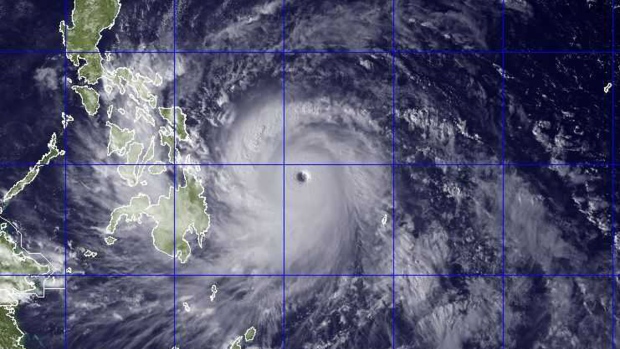
Typhoon Haiyan

Typhoon Haiyan

It goes without saying that Typhoon Haiyan is a terrible tragedy for the Philippines. But the hyperventilating that has followed, concerning the alleged “link” to climate change, has been frenzied and emotive.

We have all come to expect the climate change alarmists and green media to link any extreme weather event to AGW, despite the fact that such events happened in the past, when the planet had apparently “safe” levels of CO2.

Chip Knappenburger and Patrick Michaels put some much needed perspective on Haiyan:

Nowadays, in the aftermath of every weather-related disaster, proponents of restricting fossil fuel use in the name of halting climate change are quick to place the blame for the tragedy on human-caused climate change (i.e., industrialized nations like the U.S.). The calls to “do something” amplify.

This is happening right now in Warsaw, at the latest (19th) in a long string of U.N.-organized Climate Change Conferences aimed at getting countries to agree to some sort of action aimed at mitigating climate change.

On the conference’s opening day, an envoy form the Philippines, Yeb Sano, gave an emotional address to the delegates in which he vowed to stop eating until something was accomplished.

“I will now commence a voluntary fasting for the climate. This means I will voluntarily refrain from eating food during this (conference) until a meaningful outcome is in sight.” 

Adding,

“We can fix this. We can stop this madness. Right now, right here.”

Sano got a tear-filled standing ovation.

While the outpouring of sympathy was certainly deserved, an outpouring of action on climate change is certainly not. A story from the Associated Presscovering the events at the conference summed up the science on anthropogenic climate change and tropical cyclones pretty accurately:

Scientists say single weather events cannot conclusively be linked to global warming. Also, the link between man-made warming and hurricane activity is unclear, though rising sea levels are expected to make low-lying nations more vulnerable to storm surges.

In other words, limitations, even strict ones, on anthropogenic emissions of carbon dioxide and other greenhouse gases—the very thing that Sano seeks—will have no detectable (at least based on our current scientific understanding) impact on the characteristics of future tropical cyclones, such as Haiyan, or Sandy, or Katrina, or any other infamous storm. And as for sea level rise, projections are far more lurid than observations.

The hard numbers (from Ryan Maue’s excellent compilation) show that global tropical cyclone activity for the last 40+ years—during the time of decent observations and the time with the greatest potential human impact from greenhouse gas emissions—while showing decadal ups and downs, show little overall change. In fact, global cyclone activity has been below average for the past 5 years.

The science on tropical cyclones is complicated and ultimately unclear in terms of the influence of greenhouse gas emissions, but is quite clear when it comes to the influence of demographics and wealth vs. climate change—the former grossly dominates the latter when it comes to future tropical cyclone disasters. So, no matter what this year’s U.N. climate confab does (forecast:  nothing significant), it will not result in any meaningful changes to damages from future tropical cyclones.

Category 5 storms like Haiyan, Andrew, and Camille will always pose a threat to coastal communities (and beyond) in tropical cyclone-prone areas of the globe. The best defense against them is resilient infrastructure and preparedness—characteristics surely better achieved through a free-market, than global governance. But no matter what actions are taken, more Category 5 monster storms are coming. When they arrive, the news ought to focus on where they hit, not that they hit.

Source.

ABC: time to shoot a furry animal


Fluffy story

Fluffy story

The ABC, Anything but Climate (sceptics), has successfully avoided mentioning any of the numerous problems with the IPCC’s recent report, like changing a graph to make it look like climate models hadn’t wildly overestimated warming in the last decade.

In order to distract attention even further, this morning it wheeled out one if its “choose an Aussie icon and put a gun to its head” stories, accompanied by a cute picture to tug at the heart strings:

Rising temperatures pose risk for koalas

A new study on vulnerable koala populations has found the Australian icon could struggle to survive rising temperatures.

Dr Crowther says the results of the research call for a change in the management and conservation of koalas.

“One quarter of the koalas we studied perished in a heatwave in 2009 and Australia has just experienced the hottest year since climate records began,” he said.

With temperatures increasing, without more help koalas could really start to feel the heat.

“The lack of understanding of the importance of shelter trees for koalas is particularly concerning given the increasing frequency of extreme weather events,” Dr Crowther said.

“Exposure to prolonged high temperatures can result in heat stress, dehydration and eventually death.” (source)

Gimme all your fossil fuels, or the koala gets it!

Even if the IPCC predictions were 100% correct…


Mutual distrust

Adversarial process required?

… why should anyone trust them?

The AGW advocates delight in making shrill claims about sceptics being funded by “Big Oil”, which the advocates believe is a perfectly good reason to dismiss much, if not all, of what they say as compromised. But what’s the difference with the IPCC? It is an organisation that is funded by “Big Green”, comprised of governments desperate to appear politically correct, vested interests from academia and business, and environmental activist groups. What goes for one, goes for the other. By analogy, anything the IPCC says must be regarded as equally compromised.

The only differences, as far as I can see, are that:

  • Big Green funds the AGW advocates a thousand dollars for every one dollar funding sceptics;
  • the IPCC shies away from transparency and open debate, whereas sceptics encourage it.

So even if all the dire predictions of the IPCC were correct, why should anyone believe them? And how is such a problem resolved?

The success of the adversarial process in a court of law relies on cross-examination and forensic analysis by those on the other side of an argument. By forcing a witness to answer difficult questions, and putting to him an alternative set of circumstances, a skilled counsel can drill down to reveal the uncomfortable truth that the witness may be reluctant to reveal. At the moment, the IPCC is a courtroom with a defendant (human emissions of CO2), but no defence lawyers present. All we get is the prosecution case. And the defendant is, unsurprisingly, quickly found guilty.

The alarmist industry, including the IPCC, must engage with those on the other side of the debate, and willingly bring them into the process, instead of excluding, and then demonising them. The IPCC should actively want its reports fact-checked and picked over by those who disagree. It must embrace the cross-examination of sceptics, as such a forensic examination would lend huge credibility to its findings.

But that change is not going to happen in a hurry, and until it does, the IPCC’s predictions are as worthless and compromised as the alarmists claim those of the sceptics to be.

The Skeptical Science Escalator … of Alarmism


Escalating hysteria

Escalating hysteria – click to watch

No visit to the Skeptical Science website is complete without having one of their smug “escalator” graphics shoved down your throat.

Not content with the temperature escalator, which paints anyone who questions their zealous devotion to “The Cause” as a simpleton, they have now come up with the sea ice escalator, along similar lines.

So finally, ladies and gentlemen, we present the Australian Climate Madness version of [drum roll, please], The Escalator!!!

CLICK HERE to watch animation (opens in new window).

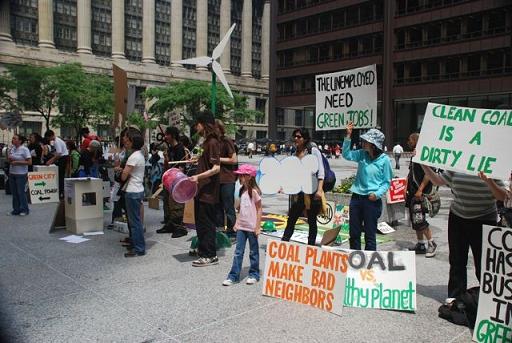
Climate Commission’s latest report slammed as ‘environmental activism’


The Climate Commissioners on their days off...

The Climate Commissioners on their days off…

Tell us something we don’t already know. The Climate Commission has got nothing whatsoever to do with impartial, free-thinking scientific enquiry. It’s sole purpose is to regurgitate government climate policy, couched in pseudo-science and alarmism.

Monday’s “Critical Decade” report, which claimed that there is a one-in-two chance that there will be no humans left on the planet by 2100, has been rightly exposed as extremist environmental propaganda:

THE mining industry has lashed out at the latest Climate Commission report, labelling it taxpayer-funded environmental activism that would devastate the Queensland economy.

Minerals Council of Australia chief executive Mitch Hooke said the report, which called for an end to most coal mining, crossed the line from scientific analysis into environmental campaigning.

The report warns that unchecked climate change would hit hard at Queensland’s biggest industries: mining, cattle and potentially tourism, through impacts on the Great Barrier Reef and Wet Tropics.

Climate Commissioner Will Steffen said an orderly transition had to be made from most fossil fuel use such as coal if the climate was to be stabilised this century.

Mr Hooke said extreme green groups had promoted an end to the coal industry in a secret campaign called Stopping the Coal Export Boom.

The document outlined a plan to eliminate the industry and he wanted to know why a taxpayer-funded agency with a charter that demanded scientific rigour was following the same approach.

Professor Steffen hit back, saying there were no conspiracies [Conspiracy? Quick, where’s Loon-dowsky when you need him? – Ed], he had not heard of the campaign and his organisation had no contact of any sort with conservationists.

“If he’d cared to read the report [Sarcasm, lowest form of wit – Ed], he would find pages of [alarmist] scientific references in it [and none that challenged the consensus],’’ Professor Steffen said. “(The report) is based on the [fudged and fiddled] science and consistent with what the International Energy Agency says, what the Grantham Institute says and what (economist) Lord Stern says.

“It’s well understood in investment and science communities [both of which are making shed-loads of cash from the climate scare].’’

The stopping coal document, which is sponsored by Greenpeace, Coalswarm and the Graeme Wood Foundation [remember to boycott Wotif.com] and is available on the internet, says its strategy is to disrupt and delay key projects while eroding support for coal mining.

Mr Hooke said there would be severe economic consequences if coal mining ended but no tangible environmental dividend.

“Eliminating the Australian coal industry would reduce Australia’s GDP by between $29 billion and $36 billion per year,’’ he said. “It would reduce Australian jobs by almost 200,000 and reduce income to the Commonwealth by $6 billion.’’ (source)

But that’s OK, because the activists’ quasi-religious duty to ‘save the planet’ trumps everything, including common sense, apparently.