Quote of the Day: Julia Gillard


Quote of the Day

From a speech in Adelaide last night:

Ms Gillard said human-induced climate change was real and opinion polls could not change that. ‘‘I ask, who would I rather have on my side?” she said. ”Alan Jones, Piers Akerman and Andrew Bolt?

”Or the CSIRO, the Australian Academy of Science, the Bureau of Meteorology, NASA, the US National Atmospheric Administration, and every reputable climate scientist in the world?” (source)

Bolt responds here.

ACM Comment: The retreat of reason


Astrology and pseudo-science rules

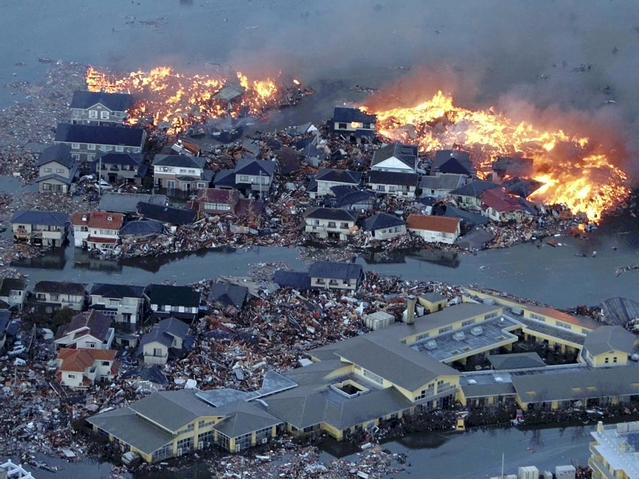
I have been thoroughly amazed at the response to the Japanese earthquake from both the public and the media, and the similarities between the reactions to that event and the hysteria surrounding climate change. I believe that what we are witnessing is a wholesale abandonment of rational thought and a retreat into astrology and pseudo-scientific, apocalyptic sooth-saying. It is as if the Enlightenment, and the triumph of rational thought and scientific enquiry over mythology and witchcraft, never happened.

Whenever there is a natural disaster, people seem to rush to blame Earth gods for “punishing humanity” for its sins against the planet, rather than analysing the situation rationally, and understanding that we live on a dynamic and dangerous planet, comprising tectonic plates moving relative to one another, resulting in earthquakes, volcanoes and tsunamis.

The Sydney Morning Herald reports:

First came the earthquake, then the tsunami and now there’s a storm of speculation, myth and rumour.

If you believe everything you hear or read, the natural disaster in Japan is linked to climate change and was a “sign from nature”, while some even believe it’s a sign of the beginning of the end of the world.

Social networking sites are riddled with theories that the earthquake was a prophecy written in the gospel of Luke and people should prepare for “the end”.

Some are linking the September 11 terrorist attacks to the Haiti earthquake on January 11 last year to the latest disaster on March 11.

On 2UE talkback radio yesterday morning, callers were also talking about apocalypse theories.

“[There will be] thunderbolts like you’ve never heard and the whole earth will shake,” one caller said.

“19th of March, this month, is the one we have look out for.”

We are rapidly regressing into a frightening new Dark Age, an age of ignorance, scientific illiteracy, witchcraft and superstition, when such nonsense should have remained firmly in the dustbin of history. It is the same forces that drive the notion of Gaia – Earth as an organism – with enough “consciousness” to punish humanity for its wickedness. Even the theologians can see through such ridiculous notions:

Canon Scott Cowdell, an associate professor of theology at Charles Sturt University, said people always panicked after large scale disasters, but such theories did not bring out the best in people.

“I think people in the popular imagination associate God with stability and order and predictability and control and whenever those things are lost, people panic that the world’s coming to an end,” he said.

“The best instincts of Christians are not to associate God with all those things.

“Christians, at their best, don’t go looking for signs in history like this.

“Even in the gospels Jesus warned about it, he said there’d be wars and rumours of wars and all sorts of signs, but they’re not to be gone after.

“They’re not to be obsessed about.”

“There really are just things that happen.” (source)

Precisely, they are just things that happen. Earthquakes and tsunamis are what the earth does, and has done for billions of years. And the arrogance that we have to think that somehow we caused it, is utterly breathtaking.

So given the ludicrous hysteria that has accompanied the Japanese tragedy, is it any wonder that we rush to blame ourselves for climate change, despite the fact that climate has likewise changed for billions of years without humanity’s help. There seems to be this bizarre psychological and quasi-religious urge to self-flagellate and take responsibility for any disaster that befalls us, viewing it as a punishment from nature, and that we must atone for our sins by sacrificing our standards of living with carbon taxes – the modern equivalent of purchasing indulgences from the Catholic Church.

What this demonstrates, more than anything, is a horrifying ignorance in the general population about the nature and history of the planet we live on, its workings and place in the solar system, and indeed the solar system’s place in the universe as a whole. One must therefore conclude that there has been a staggering failure of our educational system to properly equip the population with the necessary scientific knowledge and tools to understand even the most basic natural phenomena. Without any concept of our insignificant role in the workings of the cosmos, our hubris grows unchecked, to the point where we believe that we can significantly influence the climate or the geology of the planet.

Benjamin Franklin must be turning in his grave.

So now it's a "pollution tax"?


More spin than a launderette

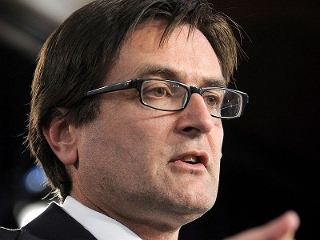
Greg Combet coins another lie this morning to deceive the Australian public, naming the “carbon dioxide tax” a “pollution tax”. We’ll come on to that in a minute, as Combet spins yet another yarn in The Daily Telegraph today, full once again of misrepresentations and half-truths, in a desperate attempt to justify a pointless “tax on everything”.

Once again he refers to Tony Abbott’s questioning of the policy as a “full-blown scare campaign”, but cannot actually answer the simple questions people have about a carbon tax. He goes on to describe the potential effects of climate change (as told to him by his alarmist advisers), which I guess he doesn’t believe is a scare campaign…

Australia, as a very hot and dry continent, has a lot to lose from the effects of climate change. Our industries in the areas of agriculture, resources and tourism will all suffer from these impacts. Also as most of our population lives on the coast we can expect severe social and economic impacts if predicted sea level rises occur.

The most recent [alarmist – Ed] science indicates that the potential effects of climate change are only getting worse, and the chance of them happening is much more certain.

Economic studies show that the effects will also affect our economy which means less economic growth and fewer jobs.

As opposed to a carbon tax which will mean even less economic growth and even fewer jobs… And I am getting really bored of asking this, Greg, but what will a unilateral carbon tax in Australia do to mitigate any of these things? NOTHING AT ALL.

So let’s move on to the big one, the “pollution tax”:

The Government has now announced a pricing framework that allows us to engage with the community on the detailed design, and provides business with certainty so they can begin to plan.

That framework has a carbon price that will effectively operate as a pollution tax before moving to an emissions trading scheme.

The reality is that this tax has nothing to do with pollution at all. The harmless trace gas carbon dioxide, even at many multiples of the current level of about 390 parts per million, cannot possibly be regarded as “pollution”. It’s toxicity only becomes apparent at 10,000 ppm (or 1% of the atmosphere), which is more than 25 times the current levels. But by using the word “pollution”, Greg obfuscates and confuses the issue in people’s minds, so they are not sure what he is referring to, and the immediate reaction would be “Pollution = bad, we should do something about it.”

This lie is compounded further:

The environmental benefits of cleaning up our pollution will also become clearer as this debate unfolds, but facts not fear campaigns should be the basis for the community making decisions about the Government’s plans.

“Cleaning up our pollution”? This is just a brazen attempt to mislead the public into thinking that the carbon tax is about “cleaning up pollution”, when in reality it is about a pointless attempt to control the climate by reducing emissions of a harmless trace gas.

So who is the real merchant of misinformation, Greg?

Read it here.

Combet smears expose Labor's carbon tax desperation


Last act of desperation

As the polls slide and the public’s loathing of this deceitful government continues to rise unabated, Greg Combet has revealed the desperation that must be felt in Labor circles, as he unleashes against Tony Abbott. Denier Alert:

CLIMATE Change Minister Greg Combet has intensified his attack on Tony Abbott as a climate change denier, seizing on the Opposition Leader’s comments to a Perth community forum in which he declared: “I don’t think we can say that the science is settled here.”

“But having said that, whether carbon dioxide is quite the environmental villain that some people make it out to be is not yet proven,” Mr Abbott said.

“We should take precautions against risks and threats, potential ones as well as actual ones, but I don’t think we should assume that the highest environmental challenge, let alone the great moral social and political challenge of our time, is to reduce our emissions.”

But Mr Combet said Mr Abbott’s comments demonstrated “what we all know, and that is that Mr Abbott is a climate change denier, which explains why his climate policy is nonsense”.

“Despite his best efforts to convince people that he really does accept the climate science, these comments make clear he has not changed his view that the science is, in his own words, ‘absolute crap’.

“Mr Abbott’s comment confirms that at the core of the Liberal Party is the extreme view that climate change doesn’t exist.” (source)

Nobody denies climate change exists, Greg. Are you really that stupid or are you just pretending? What people question is the magnitude of the effect that humanity has, and whether the massive costs of mitigation are worth the almost zero benefits (which they aren’t). But that’s too subtle for Greg, who resorts to the hysterical “denier” rhetoric when confronted with an opposing view, which is always the last act of a desperate man with nowhere to go.

You have to feel sorry for Greg [only a tiny bit – Ed], trying to sell a crock of a policy which he knows as well as blind Freddy won’t do a thing for the climate. Whether Abbott is a “denier” at all is irrelevant. Nothing Australia does on its own will change the climate so a carbon tax or an ETS will be a huge amount of pain for no gain whatsoever. In that regard, Abbott’s direct action plan is as pointless as Labor’s carbon price.

And what’s probably annoying Greg even more is the fact that the public are seeing through the futility of a unilateral carbon tax:

Voter hostility to tackling climate change with a carbon price has jumped sharply since the federal government announced the plan last month.

A Nielsen telephone poll, published in Fairfax newspapers on Tuesday, surveyed 1400 voters last week and shows found 56 per cent were opposed to the introduction of a carbon price, while 35 per cent supported it.

A month earlier, 44 per cent of voters opposed the introduction of a carbon price, compared to 46 per cent which supported it. (source)

Twelve percent increase in opposition in a month. That must sting. And it will only get worse.

Bob Carter's "Ten Little Facts" about global warming


Climate sense

Climate Sense from Professor Carter, as always, from Quadrant:

Control the language, and you control the outcome of any debate


Ten dishonest slogans about global warming, and ten little facts.

Each of the following ten numbered statements reproduces verbatim, or almost verbatim, statements made recently by Australian government leaders, and repeated by their media and other supporters. The persons making these arguments might be termed (kindly) climate-concerned citizens or (less kindly, but accurately) as global warming alarmists.

Despairing of ever hearing sense from such people, some of whom have already attributed the cause of the devastating Japanese earthquake to global warming, a writer from the well regarded American Thinker has badged them as“idiot global warming fanatics”.

Be that as it may, most of the statements below, self-evidently, were crafted as slogans, and all conform with the obnoxious and dishonest practice of political spin – in which, of course, the citizens of Australia have been awash for many years. The statements also depend heavily upon corrupt wordsmithing with propaganda intent, a technique that international Green lobbyists are both brilliant at and relentless in practising.

The ten statements below comprise the main arguments that are made in public in justification for the government’s intended new tax on carbon dioxide. Individually and severally these arguments are without merit. That they are intellectually pathetic too is apparent from my brief commentary on each.

It is a blight on Australian society that an incumbent government, and the great majority of media reporters and commentators, continue to propagate these scientific and social inanities.


1. We must address carbon (sic) pollution (sic) by introducing a carbon (sic) tax.

The argument is not about carbon or a carbon tax, but rather about carbon dioxide emissions and a carbon dioxide tax, to be levied on the fuel and energy sources that power the Australian economy.

Carbon dioxide is a natural and vital trace gas in Earth’s atmosphere, an environmental benefit without which our planetary ecosystems could not survive. Increasing carbon dioxide makes many plants grow faster and better, and helps to green the planet.

To call atmospheric carbon dioxide a pollutant is an abuse of language, logic and science.


2. We need to link much more closely with the climate emergency.

There is no “climate emergency”; the term is a deliberate lie. Global average temperature at the end of the 20th century fell well within the bounds of natural climate variation, and was in no way unusually warm, or cold, in geological terms.

Earth’s temperature is currently cooling slightly.


3. Putting a price on carbon (sic) will punish the big polluters (sic).

A price on carbon dioxide will impose a deliberate financial penalty on all energy users, but especially energy-intensive industries. These imaginary “big polluters” are part of the bedrock of the Australian economy. Any cost impost on them will be passed straight down to consumers.

It is consumers of all products who will ultimately pay, not the industrialists or their shareholders.


4. Putting a price on carbon (sic) is the right thing to do; it’s in our nation’s interest.

The greatest competitive advantage of the Australian economy is cheap energy generated by coal-fired power stations.

To levy an unnecessary tax on this energy source is economic vandalism that will destroy jobs and reduce living standards for all Australians.


5. Putting a price on carbon (sic) will result in lower carbon dioxide emissions.

Economists know well that an increase in price of some essential things causes little reduction in usage. This is true for both energy (power) and petrol, two commodities that will be particularly hit by a tax on carbon dioxide emissions.

Norway has had an effective tax on carbon dioxide since the early 1990s, and the result has been a 15% INCREASE in emissions.

At any reasonable level ($20-50/t), a carbon dioxide tax will result in no reduction in emissions.


6. We must catch up with the rest of the world, who are already taxing carbon dioxide emissions.

They are not. All hope of a global agreement on emissions reduction has collapsed with the failure of the Copenhagen and Cancun climate meetings. The world’s largest emitters (USA and China) have made it crystal clear that they will not introduce carbon dioxide tax or emissions trading.

The Chicago Climate Exchange has collapsed, chaos and deep corruption currently manifests the European exchange and some US states are withdrawing from anti-carbon dioxide schemes.

Playing “follow the leader” is not a good idea when the main leader (the EU) has a sclerotic economy characterised by lack of employment and the flight of manufacturers overseas.


7. Australia should show leadership, by setting an example that other countries will follow.

Self-delusion doesn’t come any stronger than this.

For Australia to introduce a carbon dioxide tax ahead of the large emitting nations is to render our whole economy to competitive and economic disadvantage for no gain whatsoever.


8. We must act, and the earlier we act on climate change the less painful it will be.

The issue at hand is global warming, not the catch-all, deliberately ambiguous term climate change.

Trying to prevent hypothetical “dangerous” warming by taxing carbon dioxide emissions will be ineffectual, and is all pain for no gain.


9. The cost of action on carbon (sic) pollution (sic) is less than the cost of inaction.

This statement is fraudulent. Implementing a carbon dioxide tax will carry large costs for workers and consumers, but bring no measurable cooling (or other change) for future climate.

For Australia, the total cost for a family of four of implanting a carbon dioxide tax will exceed $2,500/yr* – whereas even eliminating all of Australia’s emissions might prevent planetary warming of 0.01 deg. C by 2100.


10. There is no do-nothing option in tackling climate change.

Indeed.

However, it is also the case that there is no demonstrated problem of “dangerous” global warming. Instead, Australia continues to face many self-evident problems of natural climate change and hazardous natural climate events. A national climate policy is clearly needed to address these issues.

The appropriate, cost-effective policy to deal with Victorian bushfires, Queensland floods, droughts, northern Australian cyclones and long-term cooling or warming trends is the same.

It is to prepare carefully for, and efficaciously deal with and adapt to, all such events and trends whether natural or human-caused, as and when they happen. Spending billions of dollars on expensive and ineffectual carbon dioxide taxes serves only to reduce wealth and our capacity to address these only too real world problems.

Preparation for, and adaptation to, all climate hazard is the key to formulation of a sound national climate policy.


Professor Bob Carter is a geologist, environmental scientist and Emeritus Fellow at the Institute of Public Affairs.


Notes:

*Assuming a tax rate of $25/tonne of CO2, and Australia’s emissions being 550 million tonnes, indicates a total cost of $13.8 billion. Spread across a population of 22 million persons, that equates with $627/person/year.


Government campaign of climate misinformation on the way?


Think propaganda

I guess that would finally finish off Gillard and her crooked Government. Spending tax-payer dollars to promote a policy that was explicitly ruled out before the election won’t go down too well, I would suspect. Excellent. Bring it on.

AUSTRALIANS face bombardment with glossy brochures, emotive TV ads and subliminal “below the line” marketing under a ready-made strategy to sell the government’s proposed carbon tax.

A communications plan drawn up for the dumped carbon pollution reduction scheme urged a “call to action” campaign to boost public support for cutting carbon emissions.

The plan reveals a $6.5 million mailout of 6-8 page information booklets was under consideration by the former Rudd government to win public support for its climate response.

It also recommended a $7-$20 million media buy to explain to households the need for climate action, which would cost them $4-$5 a week more in electricity bills and $2 more a week for gas.

The December 2009 document, obtained by the opposition under freedom of information laws, urged a multi-pronged campaign worth up to $30 million to address an “information gap” in the community.

“It is important to note that advertising will need to be a core component of the communications program,” the plan said.

It said “below the line activities”, involving public relations specialists and digital marketers, should also play a role. (source)

Can’t wait, and I bet neither can you…

Hippies can't decide which is worse: "carbon pollution" or nuclear power


Temple of the Anti-Hippies

Because they hate them both. They hate nuclear power because they are still stuck in the 1960’s “Nuclear Power No Thanks” bumper-sticker mentality, despite the fact that technology has advanced to the point that nuclear is the cleanest and safest form of electricity generation. And they hate “carbon pollution”, in fact harmless carbon dioxide, because they’re saving the planet. But which is worse? This is the dilemma facing the ecotards.

Now the Japanese earthquake has reignited their hatred of nuclear power because of possible incidents at a couple of nuclear facilities. So the logic goes like this: you build a nuclear power station on an active fault; everyone is surprised when the fault ruptures and damages the station; therefore, nuclear power should be abandoned everywhere. Capisce?

The BBC is flying the flag for the hippies as usual:

However, possible implications outside Japan are already beginning to emerge.

In Germany, scene of a big anti-nuclear protest on Saturday, Environment Minister Norbert Roettgen suggested that safety systems at nuclear plants would be analysed anew in the light of the Fukushima incident.

“This happened in a country with very high safety standards… the fundamental question of whether we can guard against all dangers is now open again, and we will address that question,” he said.

In the UK, the Stop Hinckley pressure group has called for a halt to a proposed new reactor at Hinckley Point in southwest England, on safety grounds.

Environment groups are beginning to feature Fukushima in their energy communications – and whatever actually happens at the site, it is likely to become a major card in campaigns to promote renewable energy above nuclear. (source)

Because obviously we could switch off all our nuclear plants tomorrow and rely on farts and sunbeams.

But as James Delingpole points out:

I’m grateful to “David” – a reader at Watts Up With That – for putting this into perspective: in the last decade the wind farm industry, it turns out, has killed far more people for far less electricity produced than the nuclear industry

Nuclear fatalities in the last ten years: 7

Wind farm fatalities [PDF] in the last ten years: 44.

In those ten years nuclear provided thirty times the energy of wind. This means in the last decade, nuclear has been around 200 times safer than wind on an energy produced/accidents basis. (source)

GetUp's gullible lemmings protest FOR a pointless tax


Saving the planet… yeah, right

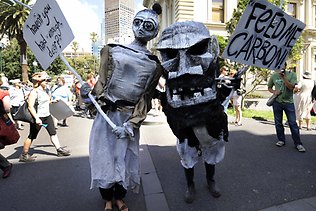
The stupidity of the urban Green Left knows no bounds, as 8000 gullible fools protest in favour of an utterly pointless tax which will:

  1. Make no difference to the climate whether locally or globally; and
  2. Damage Australia’s economy and consequently everyone’s standard of living (including that of each and every protester at the demonstration).

But they don’t have the insight to understand these blindingly obvious statements, because they’re too busy saving the planet, right?

More than 8000 people showed their support for putting a price on carbon outside Treasury Place in Melbourne, but only about 400 demonstrators fronted at Julia Gillard’s electorate office in Werribee to protest against the carbon levy.

Paul Mackay of GetUp!, which helped organise the Treasury Place rally, said most people supported a cap on emissions. [delusional as well – Ed]

“This rally was more or less a response to planned protests against the carbon tax,” he said.

“It was a chance for people to come out and show that they still support action on climate change.

“We had families with children and a lot of older people too.

“I think a lot of people left buoyed that the issue is still on the radar.” (source)

Climate Madness. I sincerely hope that the rally in Canberra on 23 March puts this in the shade…

Unbelievable


Devastation in Japan

Yep, you’ve guessed it. In the wake of the tragic events in Japan, a hysterical global warming activist site [grist.org – no link because I don’t want to give that bunch of ecotards any more traffic, but you can find it yourself] has linked climate change to increased earthquakes and tsunamis. We’ve heard this before, of course, see here, but to publish so soon after such an event shows astonishing bad taste.

So far, today’s tsunami has mainly affected Japan — there are reports of up to 300 dead in the coastal city of Sendai — but future tsunamis could strike the U.S. and virtually any other coastal area of the world with equal or greater force, say scientists. In a little-heeded warning issued at a 2009 conference on the subject, experts outlined a range of mechanisms by which climate change could already be causing more earthquakes, tsunamis, and volcanic activity.

“When the ice is lost, the earth’s crust bounces back up again and that triggers earthquakes, which trigger submarine landslides, which cause tsunamis,” Bill McGuire, professor at University College London, told Reuters.

Melting ice masses change the pressures on the underlying earth, which can lead to earthquakes and tsunamis, but that’s just the beginning. Rising seas also change the balance of mass across earth’s surface, putting new strain on old earthquake faults, and may have been partly to blame for the devastating 2004 tsunami that struck Southeast Asia, according to experts from the China Meteorological Administration.

Never let a good crisis go to waste, right? And as Soylent Green rightly points out:

Earthquakes and tidal waves never happened before industrialisation.

These half-wits have no concept of the fact that earth is, and has always been, a dynamic planet. Earthquakes and tsunamis are what the earth does.

h/t Soylent Green [offensive language alert – he was rightly very, very angry at this]


Combet on climate action


Half-truths and misrepresentations

The Sydney Moonbat Herald prints Greg Combet’s response to an article by Julie Bishop, which gives me a perfect opportunity for a spot of deconstruction and hopefully demolition. Fasten your seatbelts, ladies and gentlemen. Here we go:

The puerile opinion piece by Deputy Leader of the Opposition Julie Bishop shows how the Coalition perpetuates misinformation to hide the fact it does not have a credible plan to cut Australia’s carbon pollution.

Combet accuses the Coalition of misinformation? That’s ripe for a start. How much of a cut in global temperature will our “carbon price” achieve Greg? What did Julia Gillard say before the election about “no carbon tax under the government I lead”? And what is “carbon pollution” anyway? Soot? Because it certainly isn’t carbon dioxide. Misinformation is your speciality, and it’s there for all to see. And his petulant use of the word “puerile” to dismiss any dissenting view speaks volumes of the arrogant, contemptuous mindset of this government. And all of that in the first sentence? It’s not looking good so far…

It is appropriate to correct the record.

It is incorrect to imply that Australia risks going it alone on pricing carbon.

Thirty-two countries and 10 US states already have emissions trading schemes. California, one of the largest economies in the world, is due to start emissions trading next year.

Other countries, including China, Taiwan, Chile and South Korea, and a number of Canadian provinces, are either considering developing their own or already have trial emissions trading schemes in place.

Carbon taxes are in place in Britain, Denmark, Finland, Norway, Sweden, the Netherlands and Canada and under discussion elsewhere, including in the EU, Japan and South Africa.

China has a tax on coal, oil and gas extraction in its largest gas-producing province and plans to extend this to all other western provinces.

India has nationwide tax of 50 rupees per tonne levied on both imported coal and coal produced domestically, to be used for clean energy development.

South Africa has released a discussion paper for public comment on a broad carbon tax.

This, again, is simply nonsense. Most of the countries in the world with emissions trading schemes are part of the EU arrangement, where corruption, fraud and organised crime have made the carbon market over there a joke. The US has abandoned federal plans for climate mitigation schemes, with Obama desperately trying the EPA back-door route. US states are bailing out of their go-it-alone plan, with New Hampshire voting to leave the scheme (which only covered less than a fifth of US states anyway). Japan has just abandoned plans for an ETS.

And please don’t insult us by quoting China or India. Both of those massive emitters are far more concerned about their economic growth than tilting at climate windmills (or wind farms, perhaps). Their emissions will continue to rise over the coming decades, dwarfing any mitigation that Australia may put in place. To believe that the world is heading towards greater climate action is just delusional.

Bishop suggests it is not relevant if Australia’s per capita emissions are high. The fact is that Australia has the highest per capita emissions of all developed countries, about 27 tonnes per person.

This compares to a world average of about 6 tonnes per person, and an average of about 14 tonnes per person in other developed countries.

Developing countries consistently point to Australia’s high per capita emissions to justify why we should take strong action on climate change.

If we did not make our fair contribution to international efforts, how could we expect the big emitting developing countries such as China and India to take meaningful action?

Of course, a country’s total level of carbon pollution is important. That’s why the government is working with the main emitters – the 20 countries responsible for about 80 per cent of the world’s emissions – to support an effective global outcome. Australia is one of these top 20 emitters.

A really good effort to justify pointless unilateral action, Greg, but no-one will buy it. Australia has a small population, with a very high emissions economy – due primarily to the geology of our country. Therefore per capita emissions will inevitably be high. But that is totally irrelevant in these discussions. We contribute less than 1.3% of global emissions, and nothing, repeat NOTHING, we do alone will make the slightest bit of difference to the climate. One of my commenters pointed out that by land area, Australia’s emissions are negligible: 60 tonnes per square km compared to 700 t/km2 in China and 3000 t/km2 in Japan.

Australia is in the top 20 emitters, but again, that is meaningless, because the top ten alone contribute nearly 80% of global emissions. The remaining 20% comprises the entire rest of the world, including Australia.

It is the case that the 2009 conference in Copenhagen did not deliver all that was hoped for. But it is wrong to say that there is no action happening globally or that Copenhagen did not make important progress.

In the lead up to Copenhagen all the big emitters pledged to reduce their carbon pollution. These pledges were formally incorporated into the United Nations process at the most recent negotiations, in Cancun last December. The Cancun meeting also made concrete progress on other key elements needed to underpin an effective global response.

Irrespective of what happens under the UN negotiations, countries, regions and states around the world are taking real action on climate change now.

Please don’t mention Copenhagen… oh, you just did. Copenhagen was an utter disaster, irrespective of how you spin it. The worthless Copenhagen accord was of less value than the paper it was printed on. And you know it. And Cancun did very little to advance that process. And you know it. The reality is that there is less desire for global action on climate now than there was five or ten years ago. And the GFC has focussed people’s minds on what is really important – economic growth and prosperity, rather than chasing the nebulous chimera of climate change.

The Coalition has ridiculed the Regional Greenhouse Gas Initiative in the US. But look at some facts. The RGGI scheme caps carbon pollution for the electricity sector in the 10 participating north-eastern states. The combined population for these 10 states is 50 million – more than double Australia’s total population.

Each state auctions pollution permits to power stations, and commits to use at least 25 per cent of their auction revenue for clean energy programs, and to assist consumers to reduce their use of electricity.

In practice all participating states are far exceeding this commitment, investing 80 per cent of their proceeds – totaling $775 million so far – in renewable and energy efficiency programs.

The RGGI’s executive director has said that these programs show $3-$4 in benefits for every $1 invested. Furthermore, several businesses have realised energy cost savings great enough to retain or add new employees.

See above. New Hampshire has bailed out. And what effect will this have on the climate? NOTHING. Nada, Zip, Zilch. Just money thrown away that could have been spent on hospitals, schools, or in fact anything other than climate mitigation. And don’t start on the mythical “green economy”. It doesn’t exist. For every “green job” created, between 3 and 4 proper jobs are lost. And for every dollar spent on “green investment”, real investment suffers.

The Coalition has also alleged that emissions trading schemes are bad because of vulnerability to fraud, referring to cyber attacks on the European Emissions Trading System. Europe has taken steps to strengthen the integrity of its carbon market to prevent criminal activities in the future.

See above – the EU ETS is mired in fraud.

High standards of security and a range of anti-fraud measures are being applied to Australian emissions registries. For example, Australia’s Kyoto Protocol registry complies with IT security standards set by the Defence Signals Directorate and the United Nations. Australia’s registry systems have remained safe from cyber attacks.

Big deal.

It is all very well for Bishop to tell the electorate what she doesn’t like. What she and the Opposition need to tell everyone is what they actually propose to do to reduce Australia’s carbon pollution at the lowest cost.

A fizzle-out ending for a fizzle-out article, full of half-truths and misrepresentations. If this is the best that our minister for climate change can come up with, it shows a total lack of any grip on reality. What the Opposition should do is say we will do nothing to mitigate climate change, because it is money down the drain, but we will spend where necessary to adapt, at far less cost.

Even Bjørn Lomborg, the non-sceptic’s sceptic, who believes in the reality of man-made climate change, thinks that carbon taxes are the worst way to deal with climate change:

“The current solution is to make fossil fuels so expensive that nobody will want them,” Dr Lomborg said, adding that this is “economically inefficient and politically impossible”. (source)

And finally, it’s “carbon dioxide”, Greg, not carbon pollution.

The article source is here.