Even if the IPCC predictions were 100% correct…


Mutual distrust

Adversarial process required?

… why should anyone trust them?

The AGW advocates delight in making shrill claims about sceptics being funded by “Big Oil”, which the advocates believe is a perfectly good reason to dismiss much, if not all, of what they say as compromised. But what’s the difference with the IPCC? It is an organisation that is funded by “Big Green”, comprised of governments desperate to appear politically correct, vested interests from academia and business, and environmental activist groups. What goes for one, goes for the other. By analogy, anything the IPCC says must be regarded as equally compromised.

The only differences, as far as I can see, are that:

  • Big Green funds the AGW advocates a thousand dollars for every one dollar funding sceptics;
  • the IPCC shies away from transparency and open debate, whereas sceptics encourage it.

So even if all the dire predictions of the IPCC were correct, why should anyone believe them? And how is such a problem resolved?

The success of the adversarial process in a court of law relies on cross-examination and forensic analysis by those on the other side of an argument. By forcing a witness to answer difficult questions, and putting to him an alternative set of circumstances, a skilled counsel can drill down to reveal the uncomfortable truth that the witness may be reluctant to reveal. At the moment, the IPCC is a courtroom with a defendant (human emissions of CO2), but no defence lawyers present. All we get is the prosecution case. And the defendant is, unsurprisingly, quickly found guilty.

The alarmist industry, including the IPCC, must engage with those on the other side of the debate, and willingly bring them into the process, instead of excluding, and then demonising them. The IPCC should actively want its reports fact-checked and picked over by those who disagree. It must embrace the cross-examination of sceptics, as such a forensic examination would lend huge credibility to its findings.

But that change is not going to happen in a hurry, and until it does, the IPCC’s predictions are as worthless and compromised as the alarmists claim those of the sceptics to be.
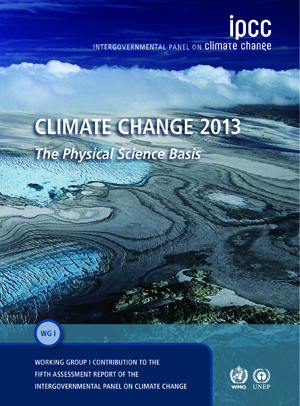

IPCC’s political exercise in consensus building


Climate politics

Climate politics

The IPCC has never been about science. It has always been about building a gargantuan “consensus” by which to fashion the alarmist narrative and steamroller any attempt at genuine debate.

The organisation is stacked with scientists who are already convinced that global warming is man-made and dangerous and that something must be done. It is riddled with environmental activists from Friends of the Earth, WWF and other extreme-green organisations who are on a crusade to save the planet. Despite claims that the IPCC only considers “peer-reviewed” literature, previous reports have relied heavily on grey literature which, oddly enough, always supports the consensus. Funny that.

So it is of very little consequence that the latest Summary for Policymakers for Working Group 1 (Physical Science Basis) of the 5th Assessment Report, continues in the same way, building on the alarmism created in reports 1 – 4. As we have learned, this document is pored over by scientists and policy wonks for days, with every paragraph, sentence and word subjected to tough negotiation in order to ensure the message remains focussed, and isn’t diluted by, oh, I don’t know, er… facts?

It helpfully advances the narrative created over the past thirty years, so that compliant journalists can continue to print the same old rubbish (more ABC: same old rubbish) they’ve been printing for years. At the press conference, virtually every journalist was a subscriber to the cause, with only David Rose of the UK Daily Mail daring to ask something “off script”.

You only have to look at environmental journalists in Australia to realise that they are almost invariably eco-warriors. Why would anyone who isn’t want to be an environmental journalist in the first place?

It’s bizarre, but since temperatures have actually fallen slightly since the last report in 2007, the IPCC is now more certain that humans have been the dominant cause of observed warming since the 1950s. The IPCC claims that climate models have improved since AR4, but cannot give a best estimate for climate sensitivity, the only number that really matters in the end, because of, quote:

“a lack of agreement on values across assessed lines of evidence and studies.”

Feeling confident so far? The pause in warming is brushed aside as due to:

“reduced trend in radiative forcing and a cooling contribution from internal variability, which includes a possible redistribution of heat within the ocean (medium confidence). The reduced trend in radiative forcing is primarily due to volcanic eruptions and the timing of the downward phase of the 11-year solar cycle.”

In other words, the dog ate it. Where’s my heat, dude? It’s in the ocean, where we can’t measure it.

Whether the IPCC’s dire warnings will be proved correct is yet to be seen. But as an exercise in political spin, it will no doubt succeed. All we can remember is the old adage, if it’s about consensus, it isn’t science.

Note: For the inside peek at the highly suspect IPCC process, head to Donna Laframboise’s excellent Delinquent Teenager.

Suzuki’s ignorance


An extreme environmental ideologue, who advocates action on global warming and saving the planet, David Suzuki flies around the world on carbon-fuelled speaking tours and charges thousands of dollars per appearance, whilst exhorting the rest of us to cut back on our excessive lifestyles.

The ABC therefore thinks he’s Gaia incarnate and offered him a full Q&A to himself to spout his propaganda.

Bill Koutalianos, of the Climate Sceptics Party, hit him with the first question on temperature flatlining since 1998. When Suzuki asked how he got to that conclusion, Bill rattled off the acronyms for the four main global temperature sets, GISS, HadCRUT, UAH, RSS. Suzuki was baffled. Ideology and ignorance combined.

Alarmists’ zeal causes more climate scepticism


Skeptical Smears

Skeptical Smears

The alarmists refuse to budge on global warming. Despite widespread head-scratching regarding the cause of the current 15-plus year pause or slowdown in warming (and the obvious failings of climate models to predict it) the alarmists don’t ever want to give an inch.

Over the years, they have painted themselves into a corner – any admission of uncertainty or doubt would now be regarded as weakness, at least in their minds. So they plough on with the wilful blindness, misrepresentation and name-calling.

The image shows how Skeptical Science used to smear its opponents, with links to “Christie Crocks” [a “crock” in Australian slang is short for “crock of sh*t”], “Monckton Myths”, “Spencer Slip Ups” etc.

SkS has now removed them, but they have since been replaced with a stream of psycho-babble which attempts to medicalise “denial”  by branding anyone who queries their version of the “consensus” as a conspiracy theorist. And anyone who questions that assertion is themselves also a conspiracy theorist… and so on and so on.

Ben Pile, writing at Climate Resistance, analyses this polarising effect, with reference to the Guardian, but equally applicable to SkS (my emphasis):

The Guardian’s [and SkS’s] regular coverage of the climate debate is notable for two reasons. One: its attempts to sustain the climate change narrative is unremittingly alarmist and increasingly shrill. Two: it polarises the debate into binary, opposing categories of scientist versus denier, truth verses falsehood, good vs bad, thus excluding any nuance, complexity or middle ground from the debate.

The problem for the Guardian is that, when you divide and polarise the debate as it does, when the alarmist story you tell turns out to be nonsense, you force people with the sense or intuition to see it as nonsense to the other, opposing camp. In other words, if you do not let people assent to the climate story by degree, you alienate yourself in an attempt to alienate ‘denial’. And the view that the climate has not warmed for over a decade and a half is no longer controversial — only people assembled at the Guardian [SkS] argue otherwise, albeit they argue the point with (far too much) vehemence. The Guardian’s [and SkS’s] ire is too much for science to sustain, even if there are plausible hypotheses about where the warming is going. Those who are making the argument that the non-warming of the surface of the planet is not a problem for the climate narrative of 2006 — the ‘travesty’, to use the word of the most vocal proponent of the ocean warming theory of the missing heat — are simply shifting the goalposts, and the whole world can see them being hoist by their own noxious petards: bogus surveys intended to shine a light into the mechanisms of the sceptical mind, to measure the consensus, and to ‘frame’ the debate in such a way as to gently coerce non-believers into ‘behaviour change’ and ‘attitudinal adjustment’. They don’t recognise themselves as the cause of so much climate scepticism. 

That last sentence is the key: SkS and the Guardian are themselves responsible for a great deal of the scepticism. By requiring followers to subscribe 100% to every aspect of their position on climate, no matter how extreme, with no dissent brooked, rational thinking people will say no. Suddenly, they are unclean and labelled “deniers”. If you dare to suggest that perhaps Roy Spencer “might” have a point on something, or Lindzen is a highly qualified scientist and may have something to add to the debate, that’s sufficient to have you thrown out of the club.

There is no middle ground, no room for debate. It’s black and white. So rather than be white (as defined by the Guardian and Skeptical Science) people choose black. In a vicious circle, the alarmists are helping to create the very enemy they then go on to demonise. Pile concludes, all equally applicable to our friends over at SkS:

The question that remains then, is, how come all this emphasis on ‘science’ — calls to put ‘science’ at the heart of policy-making and information provided to the public — hasn’t been able to change the quality of the pronouncements made by the likes of Stern and the Guardian? Why hasn’t it been able to challenge alarmist memes finding their way into cheap and shrill Guardian copy? And why is pointing out that the climate change pudding has been over-egged is still dismissed as ‘denial’ by the climate Great and Good? The reason the public switch off is that it is by now completely obvious that there is more to the climate debate than science vs denial, and anyone claiming otherwise is pulling your leg. The only people who don’t understand this are writing for the Guardian.

If the Guardian and SkS toned down their smears and preaching, they may find “deniers” more willing to engage with their arguments.

Curry vs. Cook (with a bit of Flannery)


Flannery finished...

Unrelated but couldn’t resist!

No contest, I’m afraid. Judith Curry writes in The Australian this morning on the skewed nature of the climate consensus:

The IPCC’s consensus-building process relies heavily on expert judgment; if the public and the policymakers no longer trust these particular experts, then we can expect a very different dynamic to be in play with regards to the reception of the AR5 [Fifth Assessment Report, due later this year] relative to the release of the AR4 [Fourth Assessment Report] in 2007.

THERE is another, more vexing dilemma facing the IPCC, however. Since the publication of the AR4, nature has thrown the IPCC a curveball: there has been no significant increase in global average surface temperature for the past 15-plus years. This has been referred to as a pause or hiatus in global warming.

Almost all climate scientists agree on the physics of the infrared emission of the CO2 molecule and understand that if all other things remain equal, more CO2 in the atmosphere will have a warming effect on the planet. Further, almost all agree that the planet has warmed across the past century and that humans have had some impact on the climate.

But understanding the causes of recent climate change and predicting future change is far from a straightforward endeavour.

My chain of reasoning leads me to conclude that the IPCC’s estimates of the sensitivity of climate to greenhouse gas forcing are too high, raising serious questions about the confidence we can place in the IPCC’s attribution of warming in the last quarter of the 20th century primarily to greenhouse gases, and also its projections of future warming. If the IPCC attributes the pause to natural internal variability, then this prompts the question as to what extent the warming between 1975 and 2000 can also be explained by natural internal variability.

Nevertheless, the IPCC concludes in the final AR5 draft of the summary for policymakers: “There is very high confidence that climate models reproduce the observed large-scale patterns and multi-decadal trends in surface temperature, especially since the mid-20th century.”

SCIENTISTS do not need to be consensual to be authoritative. Authority rests in the credibility of the arguments, which must include explicit reflection on uncertainties, ambiguities and areas of ignorance, and more openness for dissent. The role of scientists should not be to develop political will to act by hiding or simplifying the uncertainties, explicitly or implicitly, behind a negotiated consensus. I have recommended that the scientific consensus-seeking process be abandoned in favour of a more traditional review that presents arguments for and against, discusses the uncertainties, and speculates on the known and unknown unknowns. I think such a process would support scientific progress far better and be more useful for policymakers. 

The Editorial takes up the same theme:

The issue of climate change is a significant political, economic and environmental dilemma confronting our nation and the international community. At its heart is science. While we can engage in complex debates about the variety of mechanisms, technologies and practices that can be employed to deal with the issue, none of it makes perfect sense until we grasp the dimensions of the problem. And this is where science is pre-eminent. Yet, thanks largely to the Intergovernmental Panel on Climate Change, the debate has been centred not on scientific claim and counter-claim — or scientific theory and measurable results — but on what’s referred to as the “scientific consensus”. This is almost an oxymoron; to at least some extent, the two words don’t belong in the same sentence.

John Cook, also writing in The Australian, simply rehashes the same old tired arguments we have seen so many times before, plugging his junk-science ‘97% consensus’ paper to justify his incessant alarmism. At no point is there any acknowledgement from Cook about the problems with the IPCC process, and the unexpected halt in warming, which is becoming too big for even the mainstream media to ignore.

He also oddly fails to disclose his authorship of the climate activist website Skeptical Science (Curry, on the other hand, is open about her blog) – is he embarrassed by its zealotry, perhaps? Cook also claims his “server” was “hacked” and emails were “stolen” last year, when in fact it appears more likely a back door was simply left open at the SkS website, and the files were inadvertently made public. This is a cheap attempt to portray his critics as prepared to engage in unethical or illegal behaviour when in fact it was a self-inflicted wound.

The only positive is that Cook manages to avoid the “D” word for a change. Well done…

UPDATE: The Daily Mail reports that many countries have tried to suppress the inconvenient truth of a warming halt:

Germany called for the references to the slowdown in warming to be deleted, saying looking at a time span of just 10 or 15 years was ‘misleading’ and they should focus on decades or centuries.

Hungary worried the report would provide ammunition for deniers of man-made climate change.

Belgium objected to using 1998 as a starting year for statistics, as it was exceptionally warm and makes the graph look flat – and suggested using 1999 or 2000 instead to give a more upward-pointing curve.

The United States delegation even weighed in, urging the authors of the report to explain away the lack of warming using the ‘leading hypothesis’ among scientists that the lower warming is down to more heat being absorbed by the ocean – which has got hotter.

When the facts don’t fit the political agenda, don’t change the agenda, spin the facts. Shocking.

Flannery fired


Pack yer bags, mate

Pack yer bags, mate

The Herald Sun reports:

PROFESSOR Tim Flannery has been sacked by the Abbott Government from his $180,000 a year part time Chief Climate Commissioner position with the agency he runs to be dismantled immediately.

Environment Minister Greg Hunt called Prof Flannery this morning to tell him a letter formally ending his employment was in the mail.

Public service shake-up as heads go

In the letter, Mr Hunt tells Prof Flannery: “The Climate Commission does not have an ongoing role, and consequently I am writing to advise you that the Climate Commission has been dissolved, with effect from the date of this letter.

He thanked him for his personal contribution and then said “The Department of the Environment will soon write to you concerning administrative arrangements for finalising your engagement as Chief Climate Commissioner.”

All other climate commissioners will also be sacked with the move to save more than $500,000 this financial year and $1.2 million next financial year.

The Coalition will now take advice on climate change from the Department of the Environment. (source)

The Climate Commission didn’t have one single climate realist on board, and was stacked with Australia’s worst alarmists, Will Steffen, David Karoly and Flannery himself. Far from being an independent climate body, it was a mouthpiece for Labor government propaganda and shameless scaremongering.

Good riddance to the lot of ’em.

UPDATE: Commission’s Twitter account (@ClimateComm) has vanished already! Sad to see the website still there… not for long, however.

UPDATE 2: The ever-warmist ABC (Anything But Conservatives) gives Flannery space to gnash his teeth and wail about the injustice of it all:

Professor Flannery, who is also a former Australian of the Year, has defended the commission’s role.

“We’ve stayed out of the politics and stuck to the facts,” he said. [BAHAHAHAHAHAHAHA!!! – Ed]

“As a result we’ve developed a reputation as a reliable apolitical source of facts on all aspects of climate change. [Stop it!! Stop it!! My sides are splitting!!!!! – Ed]

“I believe that Australians have a right to know – a right to authoritative, independent and accurate information on climate change. [Er, I think I just wet myself… – Ed]

“We’ve just seen one of the earliest ever starts to the bushfire season in Sydney following the hottest twelve months on record.” [And, Flannery goes out true to form, with a ridiculously alarmist statement… See ya’ later pal. Glad we won’t have to hear from you any more – Ed]

(h/t Baldrick)

The Skeptical Science Escalator … of Alarmism


Escalating hysteria

Escalating hysteria – click to watch

No visit to the Skeptical Science website is complete without having one of their smug “escalator” graphics shoved down your throat.

Not content with the temperature escalator, which paints anyone who questions their zealous devotion to “The Cause” as a simpleton, they have now come up with the sea ice escalator, along similar lines.

So finally, ladies and gentlemen, we present the Australian Climate Madness version of [drum roll, please], The Escalator!!!

CLICK HERE to watch animation (opens in new window).

Celebrate! Climate Commission to be abolished!


The Climate Commission

The Climate Commission

The hopelessly politicised Climate Commission, the function of which was apparently to spin government propaganda as “science”, is to be abolished, along with a raft of other pointless climate organisations.

Here’s how ACM reported some of the worst Climate Commission excesses:

Time for Tim Flannery and Will Steffen to pack their bags and ship out. The party’s over, as The Australian reports:

PUBLIC servants are drawing up plans to collapse 33 climate change schemes run by seven departments and eight agencies into just three bodies run by two departments under a substantial rewrite of the administration of carbon abatement schemes under the Coalition.

Coalition climate action spokesman Greg Hunt briefed public servants on the dramatic restructure of the federal climate change bureaucracy before the election was called and yesterday confirmed the Coalition was committed to proceeding with the plan.

Under the simplification, the Department of the Environment and the Department of Resources and Energy will run all of the climate change programs under the Coalition’s direct-action program.

The move is forecast to save the government tens of millions of dollars. The Coalition budgeted for savings of $7 million this financial year rising to $13m in each of the next three years for a saving of $45m across the budget period.

The changes will see all carbon abatement schemes run by three bodies: the Australian Renewable Energy Agency, which will be overseen by the Department of Resources and Energy; and the Clean Energy Regulator and Low Carbon Australia, which will be run by the Department of the Environment.

The Climate Change Authority, which sets emissions caps, the Climate Commission, which has conducted research into climate change, and the Clean Energy Finance Corporation, which funds renewable technologies, are all slated to be abolished under the plans. (source)

At last, the Green madness is being unwound. Australians should breathe a heavy sigh of relief.

Climate at the heart of Abbott’s election victory


So claims Tom Switzer, in an article at WSJ Online:

For two years, the global warming debate had been conducted in a heretic-hunting and illiberal environment. It was deemed blasphemy for anyone to dare question not only the climate science but the policy consensus to decarbonize the economy. Mr. Rudd even claimed that climate change was the “great moral challenge” of our time and even denounced critics of cap and trade as “deniers” and “conspiracy theorists.” The hapless Liberals led by Mr. Turnbull—an Oz version of Mitt Romney—were in the deepest political valley.

Mr. Abbott, then widely written off as a remnant of the Howard era, decided to challenge the media-political zeitgeist. Cap and trade, he argued, merely amounted to economic pain for no environmental gain, especially for a nation that accounted for only 1.4% of greenhouse gas emissions. He contested the Liberal party leadership, winning by a single vote.

Like Margaret Thatcher‘s victory in the U.K. Conservative party leadership ballot and Ronald Reagan’s nomination as the Republican presidential candidate in 1980, this delighted the left. They considered him too divisive and—gasp!—conservative to be electable. According to one distinguished intellectual, under Mr. Abbott’s leadership the Liberals would become “a down-market protest party of angry old men and the outer suburbs.”

Then along came the failed 2009 Copenhagen summit, which exposed the Rudd agenda as a sham. When the rest of the world refused to endorse the climate enthusiasts’ fanciful notions for slashing carbon emissions, Mr. Rudd imploded. Mr. Abbott seized the moment and highlighted the higher energy costs created by Labor’s emissions trading scheme.

Almost overnight, Mr. Rudd’s stratospheric poll figures cratered. Facing a changing (political) climate, he ditched the emissions trading scheme, his government’s key-note legislation.

Rudd’s popularity slipped and he was knifed by his own party soon afterwards. In the election of 2010, as climate alarmism’s downward spiral was well underway, Julia Gillard shackled her fortunes to the Greens, environmental extremists who demanded urgent action on climate as part of the deal to support Labor. Gillard was forced to break her pre-election promise on the introduction of a carbon [dioxide] tax, and from that moment, trust in her and Labor was gone.

Once again languishing in the polls, Labor, in a fit of desperation, reinstated Kevin Rudd, forgetting all the leadership dysfunction and chaos of his first stint, and believing him to be the Messianic figure that would transform Labor’s fortunes. Wrong. The veneer of “new Kevin” chipped and cracked within days to reveal the same “old Kevin” underneath. Voters (and his own party) had had enough.

Thus, Tony Abbott became Prime Minister of this great country.

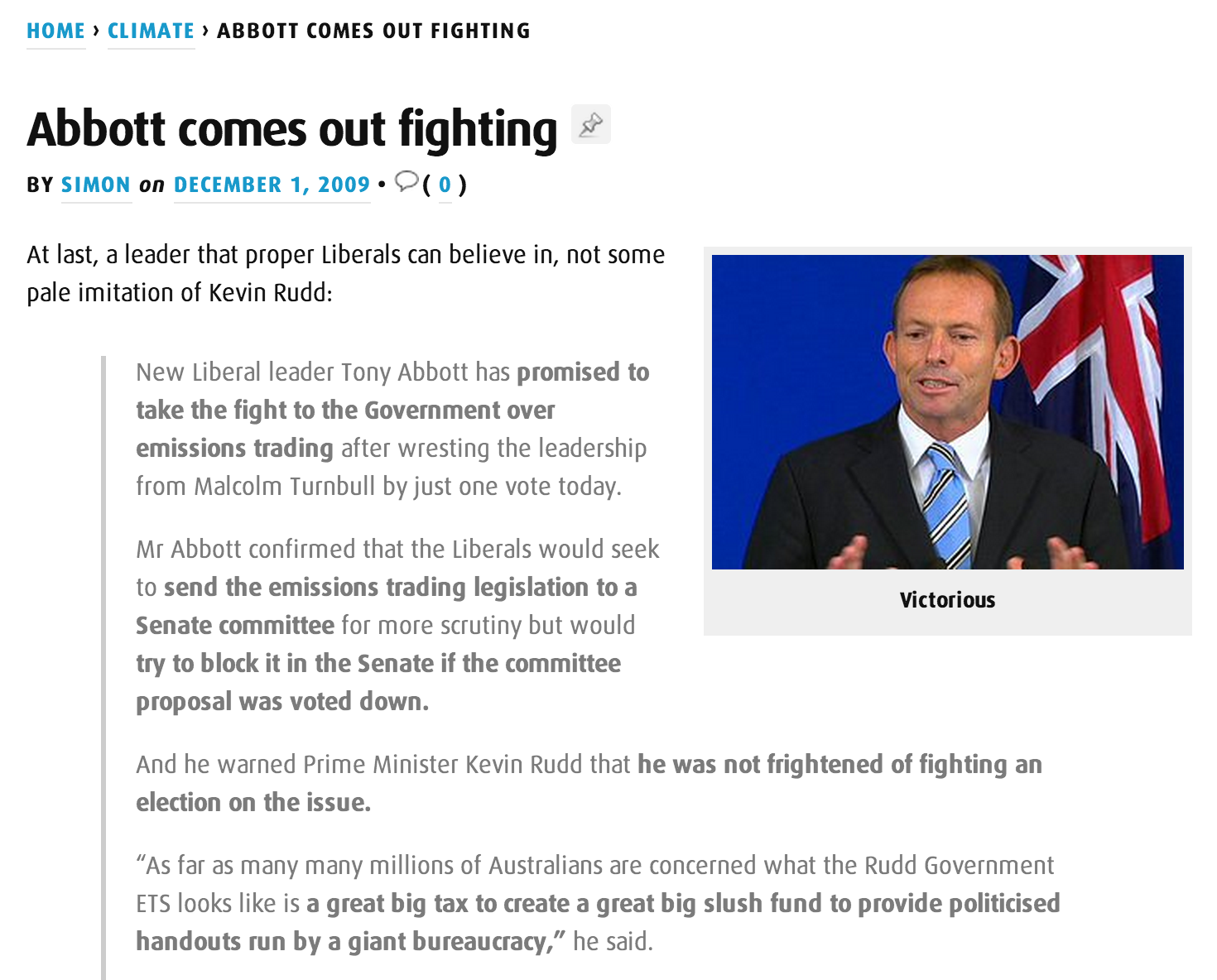
From the archives: How Australian Climate Madness reported on Abbott’s victory in the leadership election, 1 December 2009:

Abbott claims the leadership

Abbott claims the leadership

Australia awakens from the Labor/Green nightmare


Abbott - PM at last

Abbott – PM at last

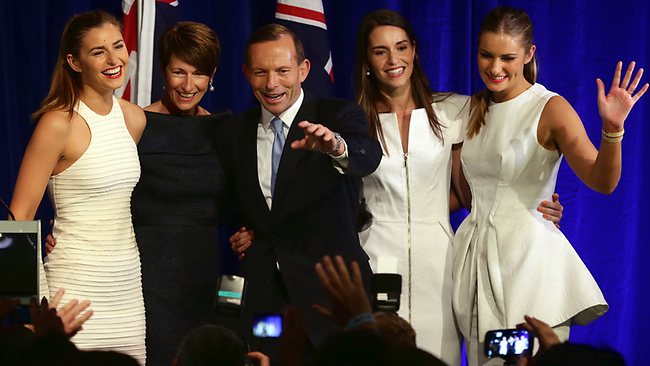
The six-year Labor/Green nightmare is finally over. Tony Abbott is the nation’s new Prime Minister.

Abbott gave a brief, dignified victory speech, promising to govern for all Australians, in stark contrast to Labor who only sought to entrench division and disunity. Rudd, on the other hand, rambled on for what seemed like an eternity in his concession speech, as if he himself was the victor – delusional to the last.

Whilst Rudd will not contest the Labor leadership, he will remain in parliament as an ever-present threat of destabilisation.

Labor’s nightmare has only just begun.

UPDATE: James Delingpole – Go, Tony, go!