Warmer weather affects cognition in MS patients


Gore effect?

Another in the series “Warmer is bad for you”:

Warm weather may hinder cognitive performance in people with multiple sclerosis (MS), according to results of a Kessler Foundation study e-published online ahead of print by Neurology. An accompanying editorial by Meier & Christodoulou, MS and heat: The smoke and the fire, details the study’s unique aspects, ie, longitudinal followup in a cohort with apparently quiescent disease.

Victoria M. Leavitt, Ph.D., research scientist at Kessler Foundation, is principal investigator for the study, which for the first time, shows a link between warm weather and cognition in people with MS. With more research, this information might help guide people with MS in making life decisions and assist their clinicians in choosing clinical treatment. Scientists may also want to consider the effect of warmer weather on cognition when designing and conducting clinical trials. (source)

But warmer is still preferable to the alternative (pictured). Cognitive performance will be pretty close to zero after you’ve frozen to death because you can’t pay your electricity bill.

[Editor’s note: although this article doesn’t relate directly to climate change, and no link is made in the article itself, it was published in Eurekalert’s “Earth Science” feed, and also appeared in Science Daily’s “Climate change” feed, so a link is clearly implied – Simon]

Bureau's Annual Alarmism Summary


Bushfires = climate ©BoM

UPDATE: Graham Lloyd, The Australian’s environment editor displays a staggering gullibility in his accompanying opinion piece “Plenty of data to compel doubters” – at least he didn’t say “deniers”. Take the following:

“For anyone who doubts the role played by mankind in rising levels of atmospheric CO2, the graph that shows how it remained at a constant level for 2000 years before shooting up with the industrial revolution should be compelling.”

Er, really? Ignoring the fact that such a visual trick is achieved by choosing the y-axis scale appropriately, few people doubt the fact that mankind has raised CO2 levels. So your point is? That such a rise correlates with higher temperatures? Lloyd avoids all the issues with causation, the Roman and Medieval Warm Periods (which occurred when CO2 levels were “safe”) and the fudging of feedbacks, trusting completely the words of the BoM and CSIRO. The rest is just as bad here.

When you look at the cover image of the latest Bureau of Meteorology Climate Summary for 2011, it tells you all you need to know. Illustrated with a raging bush fire (didn’t know bush fires were “climate”) it gives the impression that such events are something we haven’t ever experienced until the last 50 years, when we started pumping out evil carbon dioxide.

Like the UK Met Office, the Bureau is now less a weather reporting organisation than a political activist group, plugging the consensus AGW line and abandoning any vestiges of scientific impartiality.

Therefore, as we would come to expect from the Bureau, the report is packed full of alarmism, and despite the fact that temperatures have been much lower in 2011, it blames that squarely on La Niña, and assures us that underneath, temperatures are still rising.

Throughout, it is painfully obvious that the Bureau is desperate to prop up “The Cause” at any cost, as The Australian reports:

COOLER weather in Australia in the past two years due to the rain-inducing La Nina weather pattern does not undermine the collective evidence of climate change, the nation’s peak scientific and weather organisations say.

In their second State of the Climate report released today, the CSIRO and Bureau of Meteorology say evidence shows global warming continued and human activities were mainly responsible.

The report says natural climate variability had affected the global mean temperature and sea levels during the past century but much less than greenhouse gases, which continued to rise.

“It is clear that increasing greenhouse gas concentrations will result in significant further global warming,” the report says.

Bureau of Meteorology climate monitoring manager Karl Braganza said the scientific community found it difficult to communicate the climate change message because of the long timeframes involved.

“People want to see the things projected for the next 20 to 30 years happening now and if they don’t see it, their acceptance of the science is ameliorated by that,” Dr Braganza said.

Maybe it’s because people have lost trust in climate scientists, because of evidence of data manipulation and other unscientific and disreputable activities. And any old excuse is suddenly wheeled out for the lack of warming, reduced solar activity and aerosols:

“We are probably at a period where solar forcing (the sun’s energy) has been lower than recent decades,” he said.

There was an influence from China’s rapid economic development, which was causing more particles to be put into the atmosphere that reflect sunlight. “I think all of those things are affecting the climate system but the dominant, real standout influence is the increase in greenhouse gases, mostly CO2,” Dr Braganza said.

And we all know why they reach this conclusion – because every climate model accentuates the effect of CO2 relative to natural drivers.

The report says the concentration of CO2 in the atmosphere last year was 390 parts per million, higher than at any time for the past 800,000 years. (source)

And just to round off, a lovely piece of pointless alarmism, which just about sums up this report.

The only thing to be said is: “We will see.”

The full report is here.

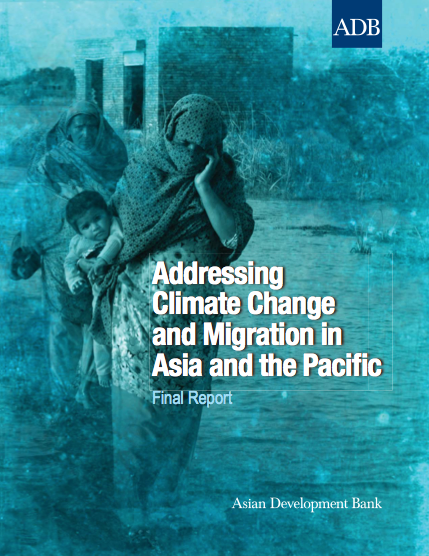
Climate change to cause 'mass migration'


More fearmongering?

Add it to The List. Mass migration is the latest scare to be attributed (very tenuously) to ‘climate change’ – it doesn’t specify whether that means man-made or natural, but I think we can guess:

THE Asian Development Bank is warning countries to prepare for influxes of people fleeing natural disasters as climate change exacerbates rising sea levels, soil degradation and seasonal flooding.

Natural disasters drove 42 million people from their homes in the Asia-Pacific in 2010 and 2011, though it was unclear how many of those were caused by climate change, the bank said in a study released today.

“Unclear how many of those were caused by climate change”… hmm.

It said one-third of Southeast Asia’s population lived in at-risk areas, including Indonesia, Burma, the Philippines, Thailand and Vietnam.

Six of the 10 countries most vulnerable to climate change are in the Asia-Pacific. Bangladesh tops the list followed by India, Nepal, the Philippines, Afghanistan and Burma.

The study did not make any specific projections for migration induced by climate change.

“Given that climate change acts as an aggravating factor for environmental degradation, it is expected to boost the number of people migrating because of environmental changes, both sudden and slow onset. Though the amplitude of these movements remains difficult to forecast, climate change is likely to become a major driver of migration in the 21st century,” it said. (source)

Likely, expected, could… all the weasel words we have come to expect to tie in scaremongering to climate change.

You can download the report here (large PDF).

Carbon tax cost to Aussie economy: $30 billion by 2018


Australia's economy with the carbon tax

But who cares when you’re “saving the planet”? The fact that the European carbon price is less than half of Gillard’s starting point is brushed aside. The fact that whatever emissions reductions Australia makes will have no effect on the climate whatsoever is ignored. The pleas from businesses to reduce the initial carbon tax to something much lower (or preferably zero) go unheeded and rebuffed by the arrogant likes of Swan and Combet.

AUSTRALIA faces a $30 billion hit to growth by 2018 if domestic carbon prices remain higher than the European price, according to new economic modelling that will add to business pressure to bring the $23 starting price closer to Europe’s $10.

The modelling, by the Centre for International Economics consultancy, warns that keeping the $23 fixed price regime and the floor price of $15 a tonne – key elements of the current package – will have almost twice the impact on economic growth by 2018 as allowing the Australian price to track international prices.

A higher price in Australia than in comparable international markets could also cost the mining industry a cumulative $4bn and durable manufacturers $1.5bn over six years, the CIE modelling predicts. In a blow to the Coalition’s direct action policy alternative, leading CSIRO researcher Michael Battaglia has warned that the abatement figures in Tony Abbott’s alternative policy are “ambitious”. The centrepiece of the policy – sequestering 85 million tonnes of carbon in soil by 2020 – might only achieve abatement of between 5 million and 20 million tonnes, he said yesterday.

Which is why the Coalition should abandon their direct action policy at the same time as scrapping the carbon tax. Put the funds towards adaptation when required.

The CIE research, commissioned by the Minerals Council of Australia, comes amid projections that slow growth in Europe will mean international carbon prices will not rise significantly above the $10 around which they are currently sitting.

When Australia’s carbon package was announced, Treasury assumed an international carbon price of between $29 and $61. But the European credit crisis caused prices to slump. The research will amplify calls by key business backers of carbon pricing, including the Australian Industry Group’s Heather Ridout and the Business Council of Australia’s Jennifer Westacott for the policy to be rewritten. (source)

Fat chance. Labor doesn’t care about business (or about the climate). They only care about sucking up to the Greens to stay in power and creaming off the revenue from the tax to plug the massive hole in the budget caused by their reckless spending and waste.

Remainder of the article follows.

[Read more…]

'Modify humans' to combat climate change


Probably has a fairly large carbon footprint

I had to check my calendar to make sure it wasn’t April 1 when I read this:

The threat of global climate change has prompted us to redesign many of our technologies to be more energy-efficient. From lightweight hybrid cars to long-lasting LED’s, engineers have made well-known products smaller and less wasteful. But tinkering with our tools will only get us so far, because however smart our technologies become, the human body has its own ecological footprint, and there are more of them than ever before. So, some scholars are asking, what if we could engineer human beings to be more energy efficient? A new paper to be published in Ethics, Policy & Environment proposes a series of biomedical modifications that could help humans, themselves, consume less.

Some of the proposed modifications are simple and noninvasive. For instance, many people wish to give up meat for ecological reasons, but lack the willpower to do so on their own. The paper suggests that such individuals could take a pill that would trigger mild nausea upon the ingestion of meat, which would then lead to a lasting aversion to meat-eating. Other techniques are bound to be more controversial. For instance, the paper suggests that parents could make use of genetic engineering or hormone therapy in order to birth smaller, less resource-intensive children. 

“Less resource-intensive children”?? But it’s OK because it would all be voluntary (for now, that is):

Neither Liao or his co-authors,  Anders Sandberg and Rebecca Roache of Oxford, approve of any coercive human engineering; they favor modifications borne of individual choices, not technocratic mandates.

And if you believe that the eco-totalitarians will exercise restraint when it comes to their crusade to “save the planet”, then more fool you.

Congratulations to the authors of this paper for once again exposing the dangerous dictatorial instincts of extreme greens.

Read it here (h/t Marc Morano)

Nuclear paranoia will wipe out EU's planned emissions cuts


Dilemma

It’s the environmentalists’ worst nightmare – the choice between fossil fuel power stations, which emit carbon dioxide – allegedly harmful to the climate, on the one hand, or nuclear, zero emissions but feared and loathed in equal measure, on the other.

They are sitting on the extremely sharp and painful horns of an insoluble dilemma.

It is one year since the Japanese earthquake and tsunami that put the Fukushima nuclear power plant out of action. The resilience of Fukushima to such an event, however, convinced even George Monbiot to support nuclear power, since in his view it is by far the lesser of two evils.

But knee-jerk reactions of certain countries, Germany in particular, to withdraw nuclear power stations from the grid, will actually increase fossil fuel emissions, and cancel out all their painful and costly efforts to curb emissions:

One of the less-noted consequences of the nuclear disaster at Fukushima is the effect on carbon dioxide emissions. Two of the world’s six largest emitters are switching off their nuclear power stations, leaving them needing to source energy from elsewhere.

Germany has permanently shut eight of its older nuclear reactors and promised to close the remaining nine by 2022. The decision was cemented in September, when Siemens, which built all of Germany’s nuclear plants, withdrew from the nuclear industry. It also seems increasingly unlikely that Japan will restart the more than 50 nuclear reactors that have been closed for safety checks since the accident. Last week, the cities of Osaka, Kyoto and Kobe told utility companies that they no longer wanted nuclear power.

Elsewhere, the impact has been lower than many anticipated. The US and UK still intend to resume building nuclear power after a long pause. China, India and France all aim to carry on as before. Italy and Switzerland have decided to abandon plans for future plants, but existing plants will live out their remaining lives.

All told, that is nearly a billion-tonne jolt to the planet’s climate by 2020, and more beyond. That is small compared with global CO2 emissions – likely to be more than 400 billion tonnes in the same period. But it would send the wrong signal from two of the world’s largest emitters. And anyone involved in climate negotiations will tell you that cuts aren’t easy to agree on. The additional German emissions alone could add up to more than 300 million tonnes by 2020, which, according to the World Nuclear Association, would “virtually cancel out the 335-million-tonne savings intended to be achieved in the entire European Union by the 2011 Energy Efficiency Directive”. (source)

Oops. If the environmentalists are so concerned about the dangers of catastrophic AGW, then they really should get their priorities right.

Scientists predict… more of whatever we've just had


Climate astrology

The role of natural variability in climate must be squashed at all costs. Just think of the consequences if natural variability were allowed to persist: we wouldn’t be able to “control” the climate by tinkering with a harmless trace gas, and we wouldn’t be able to shame Western civilisation into abandoning centuries of progress in order to “save the planet”. We might have to just accept what nature throws at us – and adapt.

And, more worryingly for The Cause, we wouldn’t be able to fill government and research coffers with taxpayers money, extracted by means of “carbon pricing”. And that would be a disaster. So whatever weather phenomenon happens, we can be sure that we will get more of the same, and it will be blamed on “man made global warming” to keep the bandwagon rolling.

For the last decade, Australia has suffered a period of drought. Prior to its recent end, scientists were falling over themselves to say that this was the “new climate” that we must get used to. Paid government hacks like Tim Flannery wailed about dams never filling again, and billions were spent on desalination plants to cater for the future without water.

How things change. After some of the worst floods in recent history in New South Wales, the alarmist Sydney Morning Herald finds a scientist to say that in future we will have… more floods. In other words, more of whatever we’ve just had:

EXPERTS PREDICT SURGE IN FLOODS

SPORTS fields, car parks and parklands will be important assets; houses will have walls that open, and some people might need to lose their water views to prepare for bigger, more frequent floods due to global warming, according to experts contacted by the Herald.

As global temperatures rise, short storm bursts will increase in frequency and severity, resulting in more flash flooding, especially in urban areas. But the outlook for longer periods of extreme rain, such as those that caused the flooding of the Darling, Lachlan and Murrumbidgee rivers, and which made the Warragamba Dam overflow this year, is less certain.

There is consensus in the scientific literature that ”the flooding that happens on small urban type of catchments, which is a result of short rainfall bursts, is going up, because convection is intensifying”, Professor Ashish Sharma, an Australian Research Council future fellow in the school of civil and environmental engineering at the University of NSW, said.

He said it was ”99 per cent sure” that the cause was global warming. A warmer atmosphere holds more water and releases it in shorter bursts, as seen in the tropics, Professor Sharma said. 

And notice that they have a bob each way – claiming that long term trends are less certain – so we can have more floods AND more drought and they’ll be right in both cases! There’s more:

What scientists agree on is that the assumption the future climate will mirror the past, known among scientists as ”stationarity”, no longer holds. This has implications for flood planning.

”This represents a major break with past practice”, Seth Westra, a senior lecturer in the school of civil, environmental and mining engineering at the University of Adelaide, said.

”The notion that the climatic drivers of flooding are changing through time not only poses profound challenges on how we estimate future floods, but also challenges the way we design [for] and manage future floods,” he said in a paper written for the federal government-funded National Climate Change Adaptation Research Facility. (source)

How anyone could possibly “assume” that future climate will mirror the past, when climate has been changing for 4.5 billion years, is almost incredible. Even without the AGW scare, climate has always changed, over every time period, and always will.

What’s so amazing about this kind of article is the almost unbelievable lack of any historical perspective. So desperate are the Herald to link any weather phenomenon to global warming (especially with the Herald-sponsored Earth Hour just around the corner), that they will purposefully find a scientist who will say the right thing.

The unfalsifiable hypothesis gets stronger, and ever closer to climate astrology.

Poland blocks EU's climate policy nightmare


Hero of the EU

Out of 27 countries, only Poland has the common sense and foresight to oppose the EU’s suicidal, and ultimately utterly pointless, emissions reduction policy, guaranteed to send the bloc back to the Dark Ages.

Poland rightly considers that allowing its population access to cheap and affordable energy is more important than politically-correct environmental posturing which will achieve nothing for the climate. Reuters is shocked:

BRUSSELS, March 9 (Reuters) – Coal-reliant Poland on Friday vetoed European Union efforts to move further towards a low carbon economy, pitting itself against the rest of the 27-member bloc.

Denmark, holder of the rotating EU presidency, has placed the environment at the heart of its leadership, backed by the Commission and the business community on the need for clear direction on EU climate policy beyond an existing set of 2020 goals.

Only the Danes could be so blinkered. At a time of global financial uncertainty, Greece on the verge of default, the US up to its neck in debt, the bacon and Lego country believes “the environment” should be front and centre…

But Poland, which relies on carbon-intensive coal for more than 90 percent of its electricity, said it could not agree to any inclusion of milestones for future carbon reductions in an EU text debated at a meeting of environment ministers.

“Unfortunately, one delegation has blocked,” Denmark’s Climate and Energy Minister Martin Lidegaard told reporters. “It has been a tough day. It would have been better if 27 countries would have been on board, but 26 is very encouraging.”

That translates as one custodian of common sense, and 26 ecotard lemmings…

The text of an environmental council meeting does not have firm policy status within the EU’s complex decision-making process, but it is a signal, which is weakened if consensus cannot be achieved.

Climate Commissioner Connie Hedegaard said the backing of almost the entire bloc was enough to allow the Commission, the EU’s executive arm, to keep working on further progress.

“Twenty-six member states want us to move ahead with the low carbon road-map,” she told Reuters.

In other words, the EU will find a way to go ahead with this nonsense at any cost.

To help fill the policy vacuum after a firm goal of a 20 percent carbon cut by 2020 expires, the roadmap lays out a route towards a long-term aim to reduce the bloc’s carbon emissions by 80 percent by the middle of the century. (source)

Eighty percent by 2050 is sheer madness. Even 20% by 2020 will be extremely damaging for the European economy, and will make no discernible difference to global temperatures (even if we assume CO2 is a driver of global temperature), since China and India will more than make up for any such reductions.

30% of OCD patients worry about "global warming"


Scaring the population

I assume that those 30% also get their news from Fairfax, the ABC, BBC, Reuters, AAP etc, and believe every word of the government’s alarmist climate change propaganda.

Having whipped up so much fear over the past decade, it’s little wonder that such a high proportion of those with a predisposition towards anxiety and OCD behaviour cite “global warming” as a major concern:

A new study has found that many people with obsessive compulsive disorder (OCD) are worrying about the effects of climate change and global warming.

Researchers from the University of Sydney looked at patients attending an anxiety disorders clinic.

They found one-third of the patients had anxiety about the effects of climate change.

Their behaviours included checking and rechecking pets water bowls, light switches, taps and stoves.

Researchers say while these behaviours are common in obsessive compulsive disorder, the rationale was unique.

They said they were checking appliances to reduce their global footprint.

Researchers say theirs is the first study on the impact of climate change in patients with obsessive compulsive disorder.

They recommend that doctors be aware of the anxiety in the community about climate change. (source)

What a world we live in, where the mainstream media (abetted by the government) literally scares thousands of vulnerable people out of their wits.

Maybe there should be some kind of media regulator after all… /sarc.

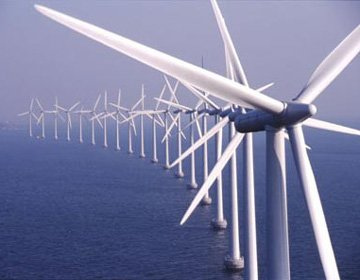
Billions wasted on wind power: study


Freaking useless, and expensive

It doesn’t matter how many times the eco-loons are told that wind is a complete and utter waste of money, they refuse to listen, as they view the monstrosities as a symbol of their cause.

Earlier this week, Matt Ridley argued that the case for wind power had been torpedoed, and now another UK study demonstrates (yet again) that wind power is highly expensive, inefficient (and ugly), claiming that wind power is ten times more expensive than using gas-fired power stations to achieve the same emissions reductions:

GOVERNMENTS are squandering billions of dollars on “uneconomic” wind farms, according to a landmark study that undermines the case for Labor’s huge renewable energy subsidies.

 Investment in wind turbines will fail to cut enough greenhouse gas emissions to justify their cost, economists warned yesterday after a detailed British analysis released this week

The conclusions challenge a cornerstone of Labor’s climate change policy as the federal government pours taxpayer funds into wind projects using direct subsidies, a planned $10 billion investment fund and renewable energy targets.

In a finding with direct relevance to Australia, the study by University of Edinburgh economics professor Gordon Hughes warns that using wind turbines to cut emissions costs 10 times the price of a gas-fired power station.

“Wind power is an extraordinarily expensive and inefficient way of reducing CO2 emissions when compared with the option of investing in efficient and flexible gas combined-cycle plans,” he concludes.

Professor Hughes, a commissioner on Britain’s Infrastructure Planning Commission and a former World Bank senior adviser, conducted his study for the Global Warming Policy Foundation, which is chaired by former Conservative chancellor Nigel Lawson.

The British study warns of the rising cost to consumers of wind power subsidies on the grounds that governments could achieve the same environmental benefits by other means at much lower cost.

Comparing a £13 billion ($19bn) outlay on a combined-cycle gas plant against a £120bn outlay on wind farms, Professor Hughes found the renewable energy option was too expensive by any standard. (source)

Note that this isn’t just about rubbishing renewable energy, this is about reducing emissions in the most cost effective manner (if you believe that such reductions are required, that is). And on any basis for comparison, wind just sucks – big time. In years to come, when they are finally abandoned,  they will be regarded as a monument to astonishing Green stupidity.

The full report (PDF) is here.