Yes, I was "a bit rude to Fairfax"


Set the agenda

That’s how The Australian described my question on The Sunday Age’s Climate Agenda. Yesterday’s Cut and Paste reported the top questions (mine is number two):

THE Sunday Age is launching The Climate Agenda — giving you the chance to decide what stories we cover. What are you confused about in the climate debate? The Sunday Age commits to reporting on the 10 most popular questions and publishing regular updates . . . So if you’ve ever been critical of the media’s coverage of climate change, here’s your chance.

Top question so far (961 votes):

THE very point of Australia’s carbon tax is to reduce global warming. How much will reducing 5 per cent of Australia’s about 1.5 per cent contribution of global CO2 emissions reduce global temperature by?

Question two (303 votes):

 THE magnitude of any future warming is highly uncertain. Why is it, therefore, that the Fairfax press is reluctant to engage with and investigate this uncertainty with an open-minded impartiality, and instead continues to publish articles based on a rigid editorial agenda that “the science is settled”? (source)

And today in Strewth:

Vox populi paper

THE Age website yesterday ran the story “Hypersonic plane: Fly Sydney to London in 49 minutes”, which we suspect wouldn’t be the preferred direction just now. Meanwhile, The Sunday Age was continuing its quest, as meticulously noted in Cut & Paste yesterday, to give readers “the chance to decide what [climate debate] stories we cover . . . The Sunday Age commits to reporting on the 10 most popular questions and publishing regular updates.” A cry for help or a courageous piece of crowd-sourcing? Either way, the most popular question last night — with nearly 2700 votes — began, “The very point of Australia’s carbon tax is to reduce global warming. How much will reducing 5 per cent of Australia’s around 1.5 per cent contribution of global CO2 emissions reduce global temperature by?” The second was nearly 2000 votes behind but was a bit rude to Fairfax, which struck us as akin to arriving at someone’s else’s party and spitting on the Jeffrey Smart print. (source)

Not exactly what the Sunday Age was after…!

See here for the poll and here for my question.

What's driving the "lack of respect" for scientists?


Yo, respect!

Rosslyn Beebe pens a “why, oh why?” piece in the Canberra Times about an alleged lack of respect for scientists:

The global science journal Nature has suggested it’s driven by “a suspicion of elites and expertise” mixed with religious anti-Darwinism and hostility to any form of government regulation. The journal points out that the Deepwater Horizon oil spill in the Gulf of Mexico, is just one timely reminder “of why the US government needs to serve the people better by developing and enforcing improved science-based regulations. Yet the public often buys into anti-science, anti-regulation agendas that are orchestrated by business interests and their sponsored think tanks and front groups.”

In 1996, Scientific American journalist John Horgan published a book titled The End of Science, Facing the Limits of Knowledge in the Twilight of the Scientific Age in which he claimed the “great era of scientific discovery is over”. He coined the term “ironic science” to describe research which, in his view, “resembles literary criticism in that it offers points of view, opinions, which are, at best, interesting, which provoke further comment. But it does not converge on the truth.”

She is also shocked, shocked I tell you, that anyone should take a swipe at Tim Flannery (and gets in a dig at the great unwashed, as embodied, in her view, by the “shock jocks”):

In Australia, a posse of shock-jocks and media commentators – as well as politicians – are taking aim at scientists. “Tim Flannery – Professor Bullshit” screamed a blog headline recently doing the rounds via email. Only last week, a Sydney shock-jock was all a-flurry about his discovery that Professor Flannery lives (has done for well over a decade) in a house on the Hawkesbury River. The Australian newspaper took up the issue, publishing a Google Earth image of the location. A news report headlined, “Do as I say, not as I do: Flannery’s all at sea”, tried to link prior comments Professor Flannery had made about climate change and sea level rise with his home.

Why she should defend Flannery against this obvious case of hypocrisy isn’t clear. In reality, however, there isn’t a lack of respect for scientists as a whole, there is a lack of respect for CLIMATE scientists and their associated advocates and public figures. We still trust doctors to make the right diagnoses, trust our engineers to build safe buildings and bridges, trust the particle physicists when they tell us that a multi-billion dollar circle of magnets kilometres across is required to find a new sub-atomic particle. No-one questions any of that.

The problem with climate scientists and their hangers-on is the result of the actions of a small but visible minority, who are guilty of:

  • politicising science by advocating particular responses to climate change (most of which will damage our standards of living for no benefit)
  • claiming that the IPCC is an impartial review of climate science
  • passing off Greenpeace and WWF propaganda as credible science
  • making catastrophist predictions about future climate
  • conflicting themselves by accepting research grants from a government that itself advocates AGW alarmist policies
  • playing down uncertainty in their results and claiming the science is settled
  • fudging data in order to make it fit with their pre-conceived conclusions
  • silencing dissent and skewing the peer-review process (so that it essentially becomes “pal-review”)
  • refusing to share methods and calculations for independent confirmation of their results
  • hypocritical do-as-I-say-not-as-I-do attitudes (eg. Al Gore and Flannery, above)
  • abusing and smearing (dare I say, disrespecting) anyone that dares mention any of the above

Those are the simple reasons why climate science as a discipline has lost respect. The public is not stupid, and it can see when it is being misled. More openness, more debate, more honesty and less divisive language would help reverse the trend.

Article source is here.

Sydney launch of "The Greens"


Essential reading

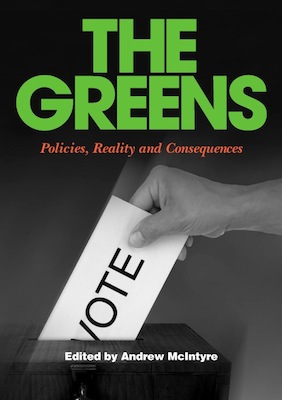
I attended the relatively low-key launch of this important book in the basement of Portico bookshop in Sydney last Friday. Janet Albrechtsen, who was to be the main speaker, was unfortunately indisposed, but Greg Melleuish, associate professor at the University of Wollongong, himself a contributor to the book, stepped in to fill the gap.

The book is a collection of essays analysing in detail the policies of the Greens, from constitutional reform and the economy to refugees, science and security. Andrew McIntyre was very keen to emphasise that he believed the Greens were simply misguided and naïve, and that the book was only concerned with the unintended consequences of the Greens’ policies, as the Introduction notes:

“This book is not a jeremiad. It does not wish to trace the historical roots of Green politics or impugn the motivations of individual Greens, or question the motivations of their party. What id does set out to do, however, is to provide an informed, objective examination of the consequences of the policies whilst putting the in the context of present day Australian reality.”

And it does this comprehensively. Each chapter is written by an expert in the particular field, analysing the real-world effects of the Greens’ policies, if they were ever put into effect. And the result is not pleasant:

“Taken as a whole, the impression given in reading these chapters is that the Greens have an uncontrollable urge to spend, almost everywhere and for everything; a mania for control – through legislation and regulation of both institutions and individuals; a disturbing and unwarranted confidence in central planning and belief that government knows best; an antagonism to initiatives by the private sector or individuals; and at best, a systematic and naive misunderstanding, both historical and practical, of how the world works.”

And the reason for this is clear. The Greens’ policies could only survive in a prosperous, free economy driven by market forces – the antithesis of Greens’ centralist political ideology. As a party which, historically at least, has had little influence in government, its policies were constructed in a vacuum, where moralistic ideals could be floated without a thought given to the result. Now that the Greens have power in the lower house and the Senate, suddenly their political ideals appear juvenile and gullible – the equivalent of the crusading teenager who wants to save the planet – and lacking any consideration for the issues that must be addressed in the real world.

I can understand McIntyre’s reluctance to get into the nitty gritty of the Greens and their motivations – but there are plenty of intended consequences of the Greens’ policies which are as dangerous and destructive as any that might be unintended.

Highly recommended – an essential read. Link to publisher’s page is here.

Labor's death spiral


No change

There is no respite for Labor. Julia Gillard has talked of everything except the carbon tax, and her popularity, and that of her government are still at record lows. As I have said before, people have simply switched off to Gillard and the government – no-one is taking the slightest bit of notice.

JULIA Gillard’s burst of policy outcomes in health, border protection and climate change has failed to lift her popularity, with the latest Newspoll showing no improvement for Labor in the past fortnight.

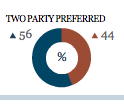
Despite a flurry of government policy activity in recent weeks, the Newspoll conducted exclusively for The Australian at the weekend found the Coalition ahead of Labor by 56 per cent to 44 per cent in two-party-preferred terms.

With the Coalition on a 47 per cent primary vote and Labor on 29 per cent, the results were identical to those of the previous Newspoll conducted from July 22-24.

Labor has been in the polling doldrums for months, with its attempts to bond with voters smashed by the Coalition’s campaign of opposition to its proposed carbon tax.

Read it here.

Tree ring proxies are shithouse


Wider tree rings this year!

No wonder they had to “hide the decline”. It appears that trees are a proxy for just about everything, except ancient temperatures. Rings from a particular tree are more likely to tell you whether:

  1. it was wetter there;
  2. there was more CO2 in the atmosphere;
  3. the local bear population decided to use it as a shithouse.

And now it appears that trees actually grow less in warmer temperatures:

They found that a 2C (3.6F) increase resulted in the average maximum height of trees shrinking by 11%, while a 2C decrease in the nation’s average temperature saw a 13% increase in the predicted maximum height of trees. (source)

So I think we can consign tree rings and the whole dodgy discipline of dendrochronology to the dustbin of climatological history.

Attempts to control atmospheric CO2 are futile


From Jo Nova

Futile for so many reasons, practical and political. Grinding developed economies to a halt is an entirely unrealistic aim. China and India will press on with industrialisation in order to raise their populations out of a miserable life of poverty. Much of the developed world has its eyes firmly fixed on the forthcoming GFC Mark II, and when the going gets tough, touchy-feely environmentalism gives way to hard-nosed reality. Without anything else, this simple list demonstrates why adaptation is infinitely preferable to attempts at mitigation.

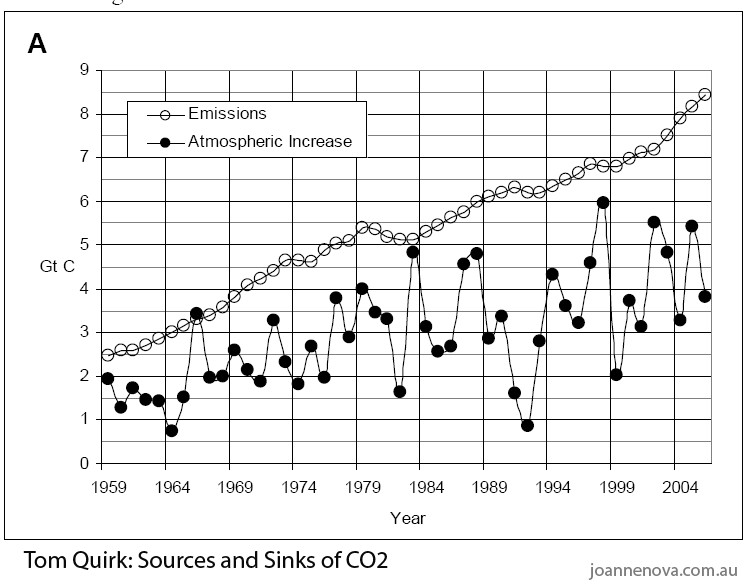
And now another nail in the coffin, as respected climatologist Murry Salby claims that natural drivers have a far greater effect on CO2 levels than anthropogenic sources, and if anthropogenic source have little effect, then reducing them by means of carbon taxes will in all probability achieve nothing for CO2 concentration, much less the climate:

Carbon dioxide is emitted by human activities as well as a host of natural processes. The satellite record, in concert with instrumental observations, is now long enough to have collected a population of climate perturbations, wherein the Earth-atmosphere system was disturbed from equilibrium. Introduced naturally, those perturbations reveal that net global emission of CO2 (combined from all sources, human and natural) is controlled by properties of the general circulation – properties internal to the climate system that regulate emission from natural sources. The strong dependence on internal properties indicates that emission of CO2 from natural sources, which accounts for 96 per cent of its overall emission, plays a major role in observed changes of CO2Independent of human emission, this contribution to atmospheric carbon dioxide is only marginally predictable and not controllable.

The podcast of Prof Salby’s talk is here. A paper on this topic is apparently being prepared for publication.

The Sunday Age launches "The Climate Agenda"


Set the agenda

This could be interesting. The Sunday Age (part of the Fairfax press, and one of the true believers in man-made global warming) has launched a new initiative entitled “The Climate Agenda”:

What are you confused about in the climate debate? What do you want investigated? Are you furious about the proposed carbon tax, or curious about the role renewable energy will play in Australia?

We are using the website OurSay.org to gather our ideas. Oursay is a Melbourne-based group committed to enabling more people to be involved in public debate. Using it is easy: Go to sundayage.oursay.org to post a question you want answered, or vote on other peoples questions. Voting ends on September 2. (source)

I’m not sure what the SA is hoping to achieve by this, and whether they truly take any notice of the questions people ask, and given the anger surrounding the carbon tax, it might not be pretty. But bearing in mind the urban-green readership of Fairfax, I don’t think they need worry, looking at one of the early questions:

“We need action on climate change. Why can’t the government communicate the issue properly? The government has wasted millions of dollars of advertising on an awful communication strategy but still can’t gain popular support. Why is this?”

Yawn. It will, however, be interesting to check back on 2 September to see what the final ten questions are.

P.S. I couldn’t resist: Read my question and you can register and vote as well.

Flannery fears "Norway-style attack"


Offensive

Because as we all know, anybody who dares question the ridiculous predictions of the Official Government Climate Prophet is only a whisker away from buying a machine gun and killing dozens of innocent people.

Desperate to regain what little is left of his credibility after it emerged this week that he owns a waterfront property, having previously warned of drastic sea level rises, Flannery makes deeply offensive remarks tarring all “conservatives” with the brush of Norwegian madman Anders Breivik.

As The Australian reports:

While his place was, he admitted, “very close to the water”, the issue was how far it was above the water — something Professor Flannery would not reveal because, he said, it could help identify the location and subject him to a Norway-style attack by conservatives.

There really is no limit to the depths alarmists will go to protect their own interests and smear those who dare question them.

Read it here.

Labor climate change glossary


Cut out 'n' keep!

Fed up with the spin? Confused by the lies? You need ACM’s handy cut-out-n-keep glossary.

Here are a selection of Labor’s climate buzzwords and phrases translated into English for the rest of us:

  • Carbon: carbon dioxide
  • Pollution: environmentally beneficial
  • 500 biggest polluters: 500 most productive industries
  • A carbon tax will help tackle climate change: I failed Kindergarten science
  • Green jobs: unemployment
  • There will be no carbon tax under the government I lead: Bob Brown leads the government
  • Greens: Marxists
  • Hottest decade on record: hottest decade in the last 3 hundred-millionths of the planet’s lifespan
  • Unprecedented: I have the memory of a goldfish
  • Wind power: an oxymoron
  • The science is settled: shut up
  • The debate is over: shut up
  • Bob Brown: a watermelon
  • Consensus: don’t mention the science
  • Climate change is a moral issue: don’t mention the science
  • Green economy: the Stone Age
  • We must invest in clean technologies: I own shares in the companies that manufacture them
  • The Central Coast is most at risk from rising sea levels: Tanya Plibersek has lost her marbles
  • China is taking action on climate: Greece is a paragon of economic integrity
  • We must respect the science (© M Turnbull): we must respect the science that fits our ideology
  • 80% cuts in emissions by 2050: the lunatics have taken over the asylum
  • Deniers: the Government

Open Thread


I’m going to take a few days break from blogging to recharge the batteries.

Discuss any current climate issues here. Play nicely!

NOTE: Please can I ask Facebook users to comment on the blog rather than on the Facebook page? Comments on the FB page will be removed to avoid duplication.

Simon